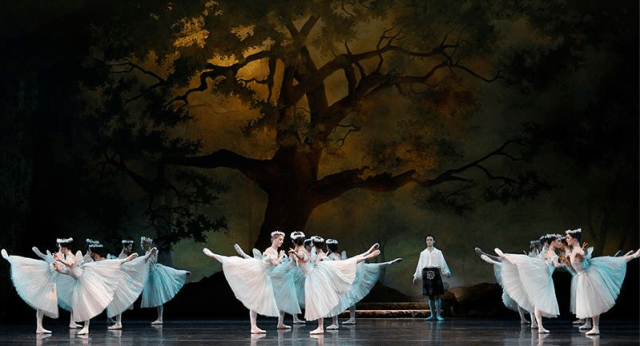
La Sylphide (The Australian Ballet)

lasylphideVenue: Sydney Opera House (Sydney NSW), Nov 7 – 25, 2013
Choreographers: Marius Petipa (Paquita), Erik Bruhn after August Bournonville (La Sylphide)
Image by Jeff Busby

Theatre review
The Australian Ballet’s latest classical offering is a double bill with works from the Romantic era, La Sylphide from 1836 and Paquita,1847. The “grand pas de deux” from Paquita opens the program with electric vibrancy. It is an exciting extract from the original full length work, with principal dancers Lana Jones and Kevin Jackson showcasing their extraordinary technical abilities. Jackson has a dynamic hold of the stage, with magnetic presence and a strapping physique that is undeniably exquisite. Jones’ confidence is spellbinding, and puts on a riveting performance that thrills with its sheer beauty.

In La Sylphide, the story of a Scottish farmer who falls in love with a forest spirit is brought to life with some of the most stunning set and lighting design on the Australian stage. The sense of ethereality they produce is seductive, and the fantasy the audience craves is magically rendered so that we are transported through time and space. Vivienne Wong is memorable as the farmer’s fiancee, impressing with her dancing as well as acting abilities. Madeleine Eastoe is the Sylph, creating lines and movement that are delightful and almost supernatural in their delicacy and lightness, but the slightness of her frame does mean that she can at times, be obscured by the vastness of the production. Daniel Gaudiello as the farmer James is handsome and strong (physically and technically), and every bit the leading man of fairy tales but requires a small dose of artistic hubris to be even more compelling.

Modern lives are increasingly mundane. Technology encourages us to retreat and evolve into beings more and more insular and impassive. Witnessing the dancers of our national ballet company is a reminder of the human capacities at achieving unfathomable heights of beauty and athleticism. Like all great artists, they bring to us the great gift of inspiration that uplifts us from our daily lives; as we stop to smell the roses at the theatre, and realise the potential each ordinary day may hold.
www.australianballet.com.au

Bodytorque.Technique (The Australian Ballet)

bodytorqueVenue: Sydney Theatre at Walsh Bay (Sydney NSW), Oct 31 – Nov 3, 2013
Choreographers: Joshua Consadine, Halania Hills, Richard House, Ty King-Wall, Ben Stuart-Carberry, Alice Topp
Image by Branco Gaica

Theatre review
The Bodytorque seasons by The Australian Ballet feature works by emerging choreographers, and this year the company presents six excellent and diverse pieces. There is an emphasis on the idea of technique this season, and these young artists have all brought to the event their individual perspectives, which are distinct, confident, and strong.

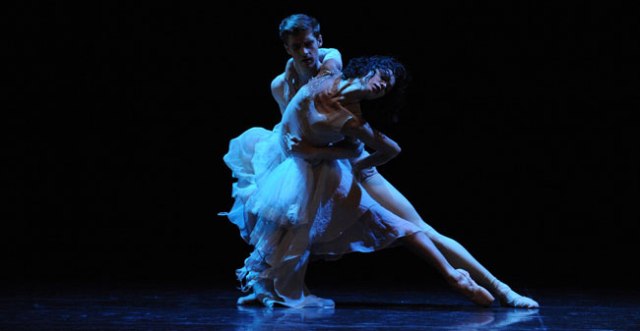
Alice Topp’s Tinted Windows is modern and romantic, with an immense sensuality that is quite overwhelming. It conveys romance so effectively, proving that narrative storytelling is no match for dance forms when appealing to those emotions of longing and intimacy.

Finding The Calm by Richard House is memorable for its theatrical sensibility, juxtaposing stillness with dance to create poignantly moving moments. Some of the shapes he creates in various pas de deux are surprising, and deeply affecting in a way that only flesh on flesh connection can communicate.

In Polymorphia, Benjamin Stuart-Carberry focuses on the beauty of movement, as well as of the human body. It is the perfect commencement to the night’s program, and is immediately arresting and captivating.

The dancers are of course, divine. Vivienne Wong exudes extraordinary aura from every pore; she is a real star of the evening. Jarryd Madden has the rare ability to create dramatic tension in his dance, with minimal reliance on facial expression. Chengwu Guo’s athleticism and the uniqueness of his discipline allows him to stand out, and his abilities are showcased perfectly in Ty King-Wall’s The Art Of War.

This is a breathtaking night at the theatre. Some of the music is performed live, and listening to these emotive and sometimes euphoric classical compositions is a truly special experience. The same euphoria is delivered time and time again through each choreographer’s work, all varied but all accomplished. Ballet is not always for everyone, but this program has wide appeal, and it is hard to imagine anyone able to resist the unquestionable genius of these artistic triumphs.

www.australianballet.com.au

Happy As Larry (Shaun Parker & Company)

happyaslarryVenue: Everest Theatre, Seymour Centre (Sydney NSW), Sep 10 – 14, 2013
Director & Choreographer: Shaun Parker
Music: Nick Wales, Bree van Reyk
Dancers: Timothy Ohl, Josh Mu, Marnie Palomares, Jana Castillo, Joshua Thomson

Theatre review
Dance culture frequently situates itself in tradition and times past, but Shaun Parker & Company’s is a culture that grounds itself firmly in the here and now. Everything about their look, sound and feel stands for a contemporary aesthetic that is not usually seen in the theatre but in other media, especially on film and television. It is a more accurate representation of modern day Australia than those of lofty and more prominent groups, and the company should also be commended for its efforts at showcasing ethnic and gender diversity.

The dancers have a physical carriage that sets them apart from other professional dancers who tend to be from balletic backgrounds. There is a b-boy/breakdance sensibility that permeates this crew, even though their work is much more varied than that single genre reference might suggest. In fact, it seems to be an ambition of the work to encompass as many dance forms as possible, which provides the show with variety and freshness, and extremely high entertainment value.

Dancer Josh Mu stands out in a memorable sequence that fuses the opposing styles of breakdance with lyrical. Mu is able to be equally powerful in these divergent forms, and the fluidity in his blending of both is completely arresting. Other dancers are less technically brilliant in their abilities, but all are athletic and authentic in their approach. It is also noteworthy that this is a group that places some emphasis on acting and facial expressions, which is always a crowd-pleasing feature.

The invention of a big black rotating box (picture a shipping container) in the middle of the stage is genius. By simply introducing countless options for entrances and exits, the choreography quickly becomes layered and complex. The mobility of the box also removes predictability by altering the stage and performance space, creating a show that continually surprises. It is a matter of contention when considering where “direction” starts and “choreography” ends, but Shaun Parker is undoubtedly strong at both. His work seeks to use dance as a communicative medium, and his point of view comes across with clarity and conviction.

www.shaunparkercompany.com

Les Illuminations (Sydney Dance Company)

816436-les-illuminations[1]Venue: Sydney Opera House (Sydney NSW), Aug 28 – 31, 2013
Choreographer: Rafael Bonachela
Music: Benjamin Britten
Musicians: Sydney Symphony Orchestra
Vocalist: Katie Noonan
Dancers: Sydney Dance Company

Theatre review
Rafael Bonachela’s latest work with the Sydney Dance Company is set to the music of Benjamin Britten from the 1930s. Bonachela’s immense respect for the music has produced a work that is sensitive to the audience’s aural experience, where the dancers are never allowed to overwhelm or contradict Britten’s essence. It is a successful meeting of creative art forms, but the music is kept paramount.

If beauty is ever a theme in theatre, Les Illuminations embraces it wholeheartedly. Eight dancers perform with a variety of moods and energies, but ultimately all the nuances they bring to the stage dissolve into fleeting moments, for what remains in the aftermath is a sense of sublime beauty. In part 1, Bernhard Knauer embodies a certain lightness and delivers a dream-like quality to the dance. The effortlessness he displays is delightful, and representative of Bonachela’s style, which is chiefly of a sensual nature, rather than giving prominence to technical athleticism. Janessa Dufty impresses as always with her magnetic presence and supreme confidence. Her performance style is characterised by strength and freedom, with a quality that is exceptionally alluring. In part 2, Thomas Bradley’s androgyny is important to the reading of Bonachela’s work, which in this instance, will be remembered for featuring multiple pas de deux sequences. A queer influence gives “partner work” texture, elevating gender dynamics from mere romance to more interesting ideas, and more complex notions of relationships and love.

Katie Noonan’s voice in the classical space is a marvellous revelation. Her singing comes to us with a transportative other-worldliness. It is perfect. Memorable segments of the show involve the dancers engaging us and each other, but with minimal movement. Our eyes and ears are seduced into a state of rapture, with Noonan’s timber ringing as though in dreams of purity and beauty, as though suspended in time.

www.sydneydancecompany.com

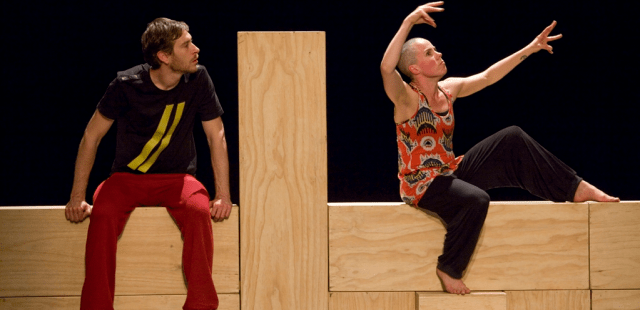
Double Think (Force Majeure)

Double_Think_5104__bg.jpg  1024×683Venue: Reginald Theatre, Seymour Centre (Sydney NSW), Aug 21 – 24, 2013
Choreographer: Byron Perry
Music: Luke Smiles
Dancers: Kirstie McCracken, Lee Serle

Theatre review
In Force Majeure’s Double Think, the space of dance theatre is explored to its fullest extent and possibilities. The company pushes aggressively at the boundaries of dance and music, introducing concepts from all aspects to dismantle and to re-create a form of performance that is about dance, but not the way we know it. The use of inanimate objects and its relationship with light, for example, or the substitution of music for silence and speech, open up ways for the presentation of a kind of show that is not only fresh and unusual, but also seductive, communicative and intellectual. It is the ultimate application of talent and opportunity that one witnesses in this production.

Dancers Kirstie McCracken and Lee Serle are about a foot apart in height, but their symbiotic closeness delivers a sense of divinity and awe that gives their performance a feeling of sublime magic. Their ability to portray one being in two bodies, with unimaginable unison can only be a result of discipline, coloured by blood, sweat and tears. There are breathtaking sections where they display superhuman memory with the most intricate and lengthy choreography, astonishing their audience with the seemingly infinite capacities of their bodies and minds. It is noteworthy also, that both, but especially Serle, have the ability to reach out and connect with a crowd like true entertainers, rather than lofty professional dancers who tend to be more detached in their approach.

Production values are very accomplished, and thoroughly enjoyable. Lighting design is crucial in physical theatre, and Benjamin Cisterne’s work here is a triumph. The final sequence in which the dancers move very quickly in very dim light creating images that the eyes perceive but the brain fails to comprehend, is probably going to be an effect copied by many in the future. Choreographer Byron Perry has his fingerprints all over this creation. Nothing has escaped his attention, and we are beneficiary of his wonderful vision.

www.forcemajeure.com.au

G (Australian Dance Theatre)

G-Hero-feature[1]Venue: Sydney Theatre at Walsh Bay (Sydney NSW), May 16 – 18, 2013
Choreographer: Garry Stewart
Music: Luke Smiles

Theatre review
This re-construction of the classical Giselle delivers an incredible amount of punch and excitement, leaving its audience on a high as though it had witnessed an action movie in the flesh, rather than a work created from the deconstruction of ballet.

One could argue that the star of the show is composer Smiles, whose music overwhelms and guides the viewer through the hour long performance, providing logic and narrative to the dancers’ work. Less effective is the massive electronic screen, which spouts words throughout, supposedly complementing the choreography in some way, but is actually both ugly and distracting.

Stewart’s choreography is intriguing and captivating. The pace of the work is urgently energetic, but he also provides variety throughout to prevent any moments of monotony. The incessant procession of bodies only ever entering stage right, and their frequently breathtaking super-human feats make this a real spectacle of a performance, but in the end, the beauty of its dance still breaks through and touches. What remains is sublime.

www.adt.org.au