Review: The Best Brothers (The Old 505 Theatre)

old505Venue: Old 505 Theatre @ 5 Eliza St (Newtown NSW), Apr 13 – 30, 2016
Playwright: Daniel MacIvor
Director: Gareth Boylan
Cast: Sean Lynch, Johann Walraven

Theatre review (of a preview performance)
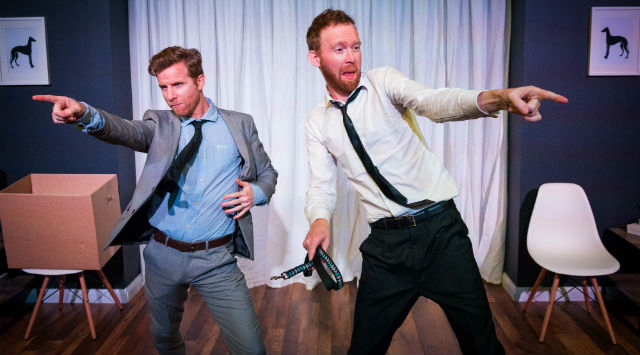
Like many other brothers, Hamilton and Kyle Best are not an affectionate pair. There is something about the closeness of siblings that can often prevent them from expressing tenderness for each other; a kind of certainty and confidence resides in their bond that renders physical and verbal assurances of love unnecessary. Of course, there is also the issue of maleness, of always assuming a hard exterior in the daily practice of gender, that ensures minimal sentimentality between men. Canadian playwright Daniel MacIvor’s The Best Brothers is a quirky look at family dynamics and a witty depiction of contemporary masculinity. Its comedy is subtle and unconventional, but deeply charming.

Gareth Boylan’s quiet, almost stoic approach as director provides a stylish framework for our enjoyment of the Bests. There is a story to be followed, but the play’s real concern is its characters and relationships, and Boylan’s unique aesthetic is a delightful aperture through which we explore the brothers, their mother and her dog. It is a smartly designed production, with just enough lighting and sound embellishment adding interest, in order that our senses may engage meaningfully. Set design is sleek and effective, although greater care should probably go into the masking of wings to minimise distraction from backstage activity.

Playing Kyle is Sean Lynch, dynamic and affable, with a charismatic presence bringing authenticity to the show’s artfully minimalist aura. The performer has strong instincts that allow him to connect well with viewers, and is often very entertaining with minute flourishes revealing an inventive mind. Equally enthusiastic is Johann Walraven as Hamilton, memorable for demonstrating a strong conviction but is perhaps less suited to the material at hand. There is good chemistry to be found between the two, and although their show is a well-rehearsed one, more nuance could be developed for greater emotional response. At the centre of The Best Brothers is a process of mourning, but sorrow seems to be missing from the men’s antics and high jinks. They spend all their energy taking care of things on the surface, so that no time is left for grief, allowing us only glimpses of truth behind their shiny exteriors. The Bests never wallow. Eruptions are left to subside on their own, while they keep calm and carry on.

www.venue505.com/theatre

Review: Good People (Ensemble Theatre)

ensembleVenue: Ensemble Theatre (Kirribilli NSW), Apr 7 – May 21, 2016
Playwright: David Lindsay-Abaire
Director: Mark Kilmurry
Cast: Gael Ballantyne, Drew Livingston, Tara Morice, Zindzi Okenyo, Jane Phegan, Christopher Stollery
Image by Clare Hawley

Theatre review
When a baby is born, we want to think that the world is their oyster, and where they are today will have little bearing on where they may end up many years after. In David Lindsay-Abaire’s Good People, we meet two people with roots in the same rough part of town, but whose lives have taken drastically different turns over time. One is enjoying the fruits of a meteoric rise up the socio-economic ladder, while the other finds herself stagnated in poverty. It is a thoughtful play about opportunity and privilege, with the most basic of narratives, but its sharp-witted dialogue is expertly crafted not only to stimulate our minds but also to deliver some very big and clever laughs.

Tara Morice leads a formidable cast in a production that will be remembered for its outstanding quality of acting. Morice’s humour is acerbic but subtle, much like her character Margaret’s resentment. Bitterness is not her predominant feature, but it emerges periodically to overtake her easy exterior and everyone is caught off guard. The actor never makes a big deal of her punchlines, but the dryness of her delivery is somehow no inhibition to the power of her comedy. Morice is absolutely hilarious on stage, yet is able to communicate all of Margaret’s complexities with thorough clarity. Hers is not a life that every bourgeois theatregoer is familiar with, but her performance illustrates each detail and essence so that we achieve a level of understanding that feels exhaustive and genuine. Christopher Stollery’s skills are on par, and the combination of the two is pure theatrical gold. Stollery’s captivating performance brings an electrifying playfulness keeping us engrossed and alert, while portraying his character Mike with an unyielding sincerity that prevents him from turning caricature. In the role of Kate is Zindzi Okenyo who presents surprising nuance for a woman determined not to reveal much. The actor’s flair for comedy is showcased beautifully, and her warm presence brings a valuable dignity to her part in the story.

Direction by Mark Kilmurry is faithful to the spirit of the work, and provides an honest voice to the underclass being represented in Good People. Our protagonist is neither deified nor demonized, so we are able to recognise her humanity and empathise with the injustices she experiences. There is a wise restraint evident throughout the production, demonstrating Kilmurry’s emphasis on truth over the temptation to play for laughs, resulting in a show that perfectly balances its entertainment value with its sociological ideas. Working hard does not guarantee your dreams coming true, and making the right choices does not mean glory at the end of each journey. Life is not fair, and fortune will not fall evenly on every individual. Nature will take its course, but humans can take charge of our own fates. The play is about people helping each other, a simple and fundamental virtue that we should all possess, but like many virtues, we seem to leave it an abstract concept while we practise something quite contrary.

www.ensemble.com.au

Review: Shut Up And Drive (Subtlenuance Theatre)

subtlenuanceVenue: Kings Cross Theatre Kings Cross NSW), Apr 9 – 23, 2016
Playwright: Paul Gilchrist, Daniela Giorgi
Director: Paul Gilchrist
Cast: Kit Bennett, Bonnie Kellett, Sam Glissan, Sonya Kerr, Jordie MacKinnon, Maddy McWilliam, Tom Nauta, Robert Roworth, Eli Saad, Michael Smith

Theatre review
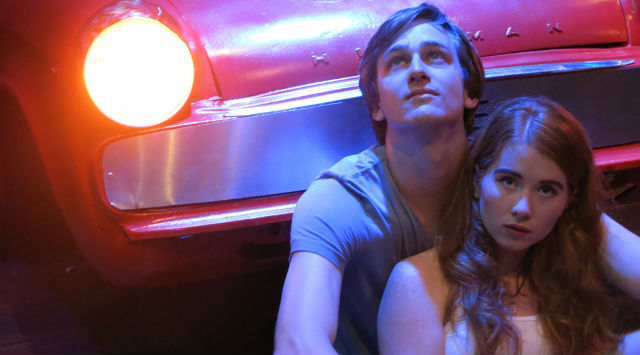
It is hard to care for the environment. Lives in developed countries have grown to depend on an exploitation of our planet that now requires much more than giving up aerosol cans and recycling newspapers to offer reparation. Paul Gilchrist and Daniela Giorgi’s Shut Up And Drive talks about our love/hate relationship and dependence on cars, examining the extent at which we have allowed the automobile to become indispensable. It looks at the way we blind ourselves to its negative impact, so that we may indulge in a sordid affair with the metal beast.

Gilchrist and Giorgi’s writing is about social and environmental responsibility, but it comes from a place of generosity that acknowledges human fallibility. It points out the things that we do wrong, but it is forgiving of our actions. It shows us how we can be better custodians of earth, but the choice is ours to make. Shut Up And Drive is often funny, and sometimes touching. Its intents are serious, and can sometimes fall into a didactic tone, but its short scenes and colourful characters ensure that the play always has a sense of intrigue and enjoyment. At every step, the plot provides something to think about, but is also consistently amusing.

Gilchrist does excellent work as director for the show’s many intimate scenes. He establishes strong chemistry between players, and brings a delightful variation in tone between moments to keep us attentive. Liam O’Keefe’s lights make a significant contribution in achieving those atmospheric transitions with great efficacy and minimal fuss.

Actors Tom Nauta and Eli Saad partner up for two memorable sequences that employ their individual and divergent comedic styles. Nauta’s ostentation and Saad’s wryness meet like hot oil and water for riveting and combustible results. Also very funny is Sam Glissan, a quirky individual with an idiosyncratic approach to performance that tickles all the funny bones. On the other end of the spectrum is Kit Bennett who leaves a remarkable impression with her sensitive portrayal of loss and regret. Her work is delicate and understated but disarmingly captivating, with an intense emotional power.

When we talk about environmentalism, conservation and sustainability, we are in fact talking about the future. Shut Up And Drive has a caring heart, and does its best to connect with our conscience. It makes us question how we feel about all this degradation, and presents a test of our selfishness. The car represents comfort, convenience and luxury, but it is also undoubtedly harmful on many levels. Life’s decisions are full of complications, but often, we actually do know right from wrong.

www.subtlenuance.com

5 Questions with Dion Bilios and James Maxfield

Dion Bilios

Dion Bilios

James Maxfield: So you play Thalia, the muse of comedy in Xanadu. Who would you say your comedy inspirations are?
Dion Bilios: I grew up watching Jim Carrey movies. Ace Ventura and The Mask were my favourites. But you can’t go wrong with Eddie Murphy or Will Ferrell.

Have you been mused or had a muse in your life before?
I like to think I’ve been a muse. Some people would say that I inspired the character “Donkey” from Shrek.

If you could have been born in an another era, what would that be?
Definitely the 70’s. I would have rocked a big afro. I can’t help myself when I hear a sexy disco bass line.

Your beautiful wife Danielle is also a performer. How do you two juggle your marriage, career and the on-and-off distance that so delightfully comes with working in this industry?
Yes, she is beautiful and extremely talented too! I’m very lucky to be married to someone who truly understands what being a performer entails. It’s not easy, I’ll tell you that! But setting goals and knowing that you have each other’s back no matter what is a huge part of it. Also, flying… lots of flying.

So you’re a bit of a foodie. What’s your favourite go-to places to eat in Sydney?
Oooooh I do love my food! Let’s see, I’m a big fan of A’Tavola in Darlinghurst (beautiful Italian). Also, if you feel like a treat with your significant other (or just yourself) spend 4 hours overlooking the harbour at Quay, it’s amazing.

James Maxfield

James Maxfield

Dion Bilios: Hey Jimmy, Xanadu is set in the 80’s. Some hated the era but I’m a fan. What are your thoughts about it?
James Maxfield: Massive fan! Who doesn’t love shoulder pads and power ballads, am I right?! Plus, nothing compares to the dance style of the 80’s. Stayin’ Alive, Flashdance, Footloose, Dirty Dancing. Classics!

So I know you’re an animal lover. Tell me about your pets.
I have two dogs. A pug named Bentley and a French bulldog named Tyson. I’m just a little obsessed with dogs that have squishy faces, breathing problems and a complete lack of gross motor skills.

We spent a lot of years dancing and performing together when we were younger. On a scale of 1 to I love you, how much would you say you love me?
Marry me! I mean, I would say you’re kinda up there in the “I Love You” league… I guess.

Now that you’re a Xanadu pro roller skater, what are your thoughts on competing in the world championships?
(Laces up roller skates, performs a perfect triple axle into arabesque., skates towards camera.) I’m a little rusty but I’ll give it a go *wink*

Any tips for young performers wanting to get into the industry?
Never stop learning! I’ve been doing this for 12 years now and there’s not a job I do where I’m not learning something new about my craft. The more boxes you tick, the more work there is out there for you. And just be nice. To everyone. It makes life so much easier.

Dion Bilios and James Maxfield can be seen in Xanadu the musical.
Dates: 12 May – 12 Jun, 2016
Venue: Hayes Theatre

Review: The Great Fire (Belvoir St Theatre)

belvoirVenue: Belvoir St Theatre (Surry Hills NSW), Apr 2 – May 8, 2016
Playwright: Kit Brookman
Director: Eamon Flack
Cast: Sarah Armanious, Peter Carroll, Lynette Curran, Eden Falk, Sandy Gore, Shelly Lauman, Marcus McKenzie, Geoff Morrell, Yalin Ozucelik, Genevieve Picot
Image by Brett Boardman

Theatre review
For many people, having children is considered natural and something that does not require questioning. In Kit Brookman’s The Great Fire, we see the complications that arise, not when toddlers are misbehaving, but when children become adults and their struggles can no longer be quelled by their parents. Judith and Patrick are affluent Australians of the baby boomer generation, with a strong marriage and three grown children. The couple is in their 60s and is beginning to contemplate their autumn years. Unlike their own parents, Judith and Patrick do not have the luxury of only considering their own needs. Their children might be adults, but they are not yet financially independent.

The Great Fire is about one family’s woes, but also an experience shared by many. For what seems to be the first time in human history, apron strings have become hard to sever. With the aggressive growth of capitalism occurring at the same time as baby boomers having children, much of the world has now evolved into a new economy where the chasm between the haves and have-nots is larger than ever. Judith and Patrick never foresaw that their offspring would find it hard to make a living, and certainly never expected their retirement plans to include their children’s well-being, but the current state of the world is no longer offering the same opportunities. The younger generation is brought up in the image of their parents, and they find themselves lost in this new social system, where no one is guaranteed an income, and where building careers is a privilege increasingly out of reach.

The story is not an easy one to articulate. We are perhaps too close and too new to its concepts, and unable to see the forest for the trees. Brookman’s script contains many ideas, observations and philosophies, all relevant to contemporary life, and even though it is admirable that the work feels uncompromised, it is not always focused enough for dramatics to work effectively. The plot is long and meandering, often with enjoyable moments but also overly complicated and overladen by details. Nevertheless, characters and their narratives are authentic, and we recognise their individual challenges easily and intimately. Direction by Eamon Flack brings attention to the wider social aspects of the family drama. We are not left indulging in bourgeois pettiness, but are asked to consider the play’s bigger contexts, which affect us all. The Great Fire takes its time to get to the point, but the poignancy at its end is deeply satisfying.

Production design is accomplished with quiet elegance, and Michael Hankin’s set is undeniably beautiful. Sound and lights are gently executed, making their presence felt without drawing undue attention. There is excellent chemistry in performances that makes us believe in the play’s complex family dynamics. Genevieve Picot brings a warm and organic instinct to her portrayal of Judith, while Peter Carroll and Yalin Ozucelik leave strong impressions in their powerful and prominent stage moments. It is not a simple piece to communicate, but the actors convince us of its core messages.

The characters in The Great Fire do not live in poverty, but their struggles are real. Like most of us, they have obligations that need to be met, but resources always seem to lag behind. We may have learned life lessons from our parents, but we do not always realise that the skills they had acquired for their lives may no longer be sufficient for dealing with ours. When we bring children into the world, optimism can overwhelm and blind us from the cold face of reality, and how much protection a parent can afford seems always to be a difficult question. The pursuit of prosperity is linked to what our planet can give. There is no end to how much we want, but the planet is finite, and we feel very close to that limit.

www.belvoir.com.au

Review: The Naked Truth (Act IV Theatre)

activVenue: Blood Moon Theatre (Potts Point NSW), Apr 6 – 16, 2016
Playwright: Dave Simpson
Director: Ruth Fingret
Cast: Melanie Araya, Kaitlin de Lacy, Hayley Flowers, Jeannie Gee, Melinda Ryan, Wendy Winkler

Theatre review
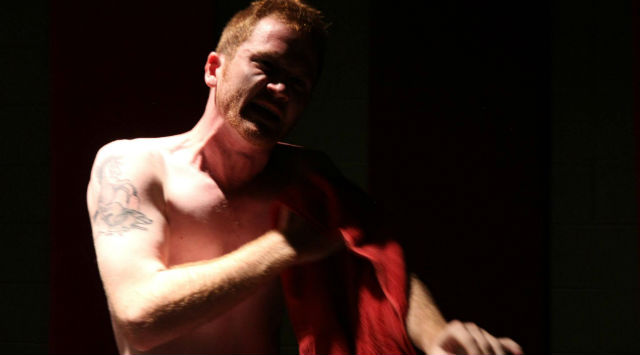
A small group of women in Northern England sign up for a pole dancing class. They learn little about the art form, but end up with deep knowledge about themselves. Dave Simpson’s The Naked Truth is a classic British comedy, featuring colourful people, naughty jokes, ordinary adversities and a very feel good ending. The play is predictable in many ways, but its formula is tried and tested, and we cannot help but get drawn into its sentimentalities, and become emotionally invested into its various narratives of human drama. The bawdy jokes give an occasional edge that helps prevent it from becoming too sappy, with its humour cleverly positioned within the plot to create enjoyable mood fluctuations.

The cast of six is clearly dedicated and invigorated, but they struggle to find a naturalistic tone that the writing requires. Although the production is awkwardly stagy, admirable effort is put into its comedy. Kaitlin de Lacy and Melinda Ryan especially, hit many of their punchlines effectively, delivering big laughs and delighting us with their enthusiastic portrayals of larger than life women. Jeannie Gee as Sarah gives the show a sense of authenticity, with sensitive moments that are truly touching, and Melania Araya’s gravity-defying skills on the pole are simply staggering.

The women in The Naked Truth hold each other up, in spite of all their differences. They each make their individual life choices, and have encountered dissimilar obstacles, but with the strength of their sisterhood, are able to find ways to provide support for one another. It is a poignant story about how people can live in love and harmony, without having to conform and assimilate. It encourages each person to embrace their own uniqueness, and shows us how to appreciate others for their idiosyncrasies; a lesson which is probably the most important thing to learn in these days of fracture and pervasive segregation.

www.activtheatreco.com

Review: The Big Bruise (Montague Basement)

montagueVenue: 107 Projects (Redfern NSW), Apr 5 – 16, 2016
Playwright: Saro Lusty-Cavallari
Director: Saro Lusty-Cavallari
Cast: Samuel Brewer
Image by Omnes Photography

Theatre review
A young man is contemplating suicide. At work, at play and at home, it is all that he thinks about. Saro Lusty-Cavallari’s meditation on the subject is neither emotional nor intellectual, but what he does present in The Big Bruise is an honest representation that many are able to recognise. It is a work about the lightness and indeed meaninglessness, that life can appear to possess. The character in the play is lost and aimless, with only the temptation of death offering him a true force of gravity. In comparison, everything else is inconsequential and impotent, so he hangs on to his obsession and the certainty it provides.

Performing that strange amalgamation of angst and frivolity is Samuel Brewer, an engaging actor whose confident presence is called upon to give solid grounding to the piece. Brewer is an energetic performer, whether playing brash or subdued, with an audacious power to his delivery that keeps us transfixed. The one-man show is beautifully placed on a raw stage, thoughtfully designed by Lusty-Cavallari to convey the calm but troubled state of being in which his creation resides. Improvements could be made for a more absorbing experience, but its visceral and surprisingly sensual qualities leave a strong impression.

The protagonist in The Big Bruise wants so much of life, but spends all his efforts at ending it. It is true that identifying one’s passions can be the biggest challenge a person can face, for what happens thereafter is simply to follow that calling. For some, that revelation never arrives, but for most, it is only a matter of time. We can wait for that divine moment in passivity or we can be constructive and find ways to speed up that process. If all else fails, one should simply stop the narcissistic act of perpetual introspection and look beyond the individual, for much of the world is in need of love and care, if only we could shift our fruitless vanity onto something altruistic and altogether more selfless.

www.montaguebasement.com

Review: Replay (Griffin Theatre Company)

griffinVenue: SBW Stables Theatre (Kings Cross NSW), Apr 2 – May 7, 2016
Playwright: Phillip Kavanagh
Director: Lee Lewis
Cast: Jack Finsterer, Alfie Gledhill, Anthony Gooley
Image by Brett Boardman

Theatre review
It is an experimental script that plays with the elasticity of characters. We expect a certain amount of consistency from personalities in plays, and indeed in life, but Phillip Kavanagh’s Replay uses the idea of regret as motivation, to allow people in his story to go back in time to make amends, thus altering histories that lead to the present being inevitably changed. The concept fascinates, but the unconventional plot disrupts any emotional arc that could take hold, and we are presented with the challenge of engaging with characters who never become familiar.

The production is elegantly formed, with only minimal amounts of embellishment indicating its supernatural qualities. Director Lee Lewis is intent on giving a sense of authenticity to every moment, which results in scenes that are individually captivating, but the unusual writing prevents a feeling of poignancy to translate even though the intensity on stage is unmistakeable.

Performances are lively, with actors tending to do a little more than is necessary, but their energy and cohesive chemistry make them an endearing group that sustains our interest throughout the piece. Jack Finsterer is particularly delightful. Even when adopting the show’s animated tone of performance, the actor is able to retain a psychological and emotional accuracy amidst the constantly shifting time and space in which we find ourselves. Alfie Gledhill and Anthony Gooley are expressive actors who bring logic and coherence to a narrative that can easily turn confusing, both with a spirited approach that provides solid entertainment.

We have all experienced regret, and many of us have pasts that hold on too tightly. In our fantasies, the rules of time can be broken, and we can make every wrong right, so that life becomes completely disencumbered. Life without any difficulty is however, akin to death. It is fundamental to humanity that we strive to make things better. Stillness is a privilege that everyone must be able to savour every so often, but the essence of life is in its movement; of forging ahead, and of growing up. Regression can be made to look real on stage, but it ultimately is of service to no one. Looking back is sometimes necessary, but care must be taken so that we do not remain shackled by histories. It is the great unknown of the future that requires our attention, and we must endeavour to make the most of it.

www.griffintheatre.com.au

Review: Georgy Girl (State Theatre)

georgygirlVenue: State Theatre (Sydney NSW), Apr 2 – May 15, 2016
Book: Patrick Edgeworth
Music & Lyrics: The Seekers and others
Director: Gary Young
Cast: Sophie Carter, Pippa Grandison, Phillip Lowe, Mike McLeish, Adam Murphy, Ian Stenlake, Glaston Toft, Stephen Wheat
Image by Jeff Busby

Theatre review
Over 50 years of The Seekers’ history is charted in Georgy Girl. Predictably, all their hits are included in the musical, but very unexpectedly, virtually no sentimental dramatisation of events is found. It is a quiet story about unassuming personalities who happen to have achieved greatness is their careers. There is little in terms of narrative to get excited about, and the show is almost completely devoid of dramatic tension, but for fans of the band’s music, nostalgia abounds.

An excellent cast plays the famous musicians, and although they engage in little acting, their interpretations of classics more than fit the bill. Pippa Grandison heads the group, and in the role of Judith Durham, she impresses with a rich and powerful voice, effortlessly recalling the glory days of the Australian icon. Playing Durham’s husband Ron Edgeworth is the charismatic and flamboyant Adam Murphy who single-handedly introduces a sense of theatricality to the show. His charm offensive is a highlight, and probably the only memorable element for an admittedly small number of audience members who are less familiar with The Seekers.

The production is polished and professional, but it appears that little of the budget is spent on set design. The very rudimentary and underwhelming stage is a clear let down for those who have grown accustom to highly complex and sophisticated stagecraft that is now par for the course in events of this genre. Georgy Girl is minimal, subdued, and plain, qualities to be loved in folk musicians but hardly the characteristics we expect of a Broadway style musical extravaganza.

www.georgygirlthemusical.com

Review: Savages (Darlinghurst Theatre Company)

darlotheatreVenue: Eternity Playhouse (Darlinghurst NSW), Apr 1 – May 1, 2016
Playwright: Patricia Cornelius
Director: Tim Roseman
Cast: Josef Ber, Thomas Campbell, Yure Covich, Troy Harrison
Image by Helen White

Theatre review
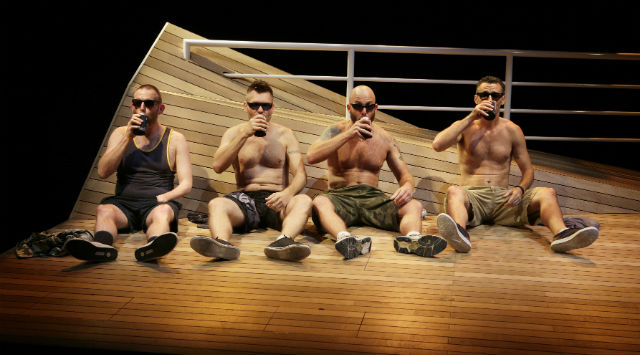
Not all men are arseholes, but the four blokes in Patricia Cornelius’ Savages are certainly frightful specimens of the species. They are close friends on a cruise holiday, intending to escape the daily grind but in fact, are in search of leaving behind civilisation altogether. Cornelius’ portrait of the middle-class Australian is one of privilege, ignorance and entitlement. The play does take care to explore her characters’ vulnerabilities as well, so that they become truthful and believable, but that honesty only serves to make them more repugnant, and their actions despicable. We recognise the challenges they face, for they are in fact commonplace, but cannot forgive their inability to find elevation and become better persons. Machismo is not at all an unusual dramatic subject, but when penned by male authors, bad behaviour is often accompanied by a warped sense of heroism, or at least some magnanimous sense of humour. Even though Cornelius does not create scenes of horror as Chuck Palahniuk, Martin Scorsese or Quentin Tarantino are want to do, her brutality lies in the merciless depiction of our average Joes as the very scum of our earth.

Director Tim Roseman’s approach is a surprisingly tender one. He brings balance to the bawdy goings on by indulging in the men’s private worlds, through earnest and deep portrayals of their suffering. We see that they are in some ways victims of a society that demands too much, but also realise their natural and unquestioned tendencies for mindless conformity. Roseman does excellent work in creating distinct segments out of what could easily be a singular poetic murmur, by providing a captivating plot manufactured with a great variety of tones, moods and emotions. Design elements are intricately dynamic, with Nate Edmondson’s very exhaustive and complex work on sound design playing an integral role in conveying subtexts and psychological undercurrents, and Sian James-Holland’s lights keeping visuals amusing with constant shifts in colour and movement. Also notable is Jeremy Allen’s evocative set design, which provides an intense intimacy to the small cast, and shapes the space in a way that allows acoustics to be perfectly established for every word of dialogue to ring with crystal clarity.

It is a cohesive production, with a very unified and charismatic cast. Their work is completely engrossing, with an outstanding sensitivity to rhythm, not only in speech, but also with their physicality. Each character is specific, but together, they tell an unambiguous and bold story. Yure Covich plays an effective alpha male, vibrant, brash and animalistic and effortlessly magnetic. His work as Craze is authentic to the degree that we are unable to identify the seam that separates actor from character, which in this case, is quite unnerving. In the role of Runt is Thomas Campbell, who brings both melancholy and comedy to what is essentially a context of severe grimness. Campbell plays the underdog with a beautiful sensitivity, but also wisely prevents the audience from placing undue sympathy for Runt’s culpabilities.

The end of Savages arrives abruptly. It is true that we have learned all there is to the four men, but we are deprived of their subsequent punishment. We wish for the lights to return, so that we may witness the atonement that must follow, but we are left to wonder if just desserts had indeed been served. The production is put together with impressive proficiency from all participants, and their talents are to be seen everywhere, but there is no escaping the sensation of overwhelming disgust that follows. Although it provides little pleasure or delight, the show raises important issues that affects us all. We are urged to think about how we practice gender, how we conduct friendships, and most of all, how we raise our children. If we believe that all babies are born innocent, then we must accept that a monster can only be created by the village that raises it.

www.darlinghursttheatre.com