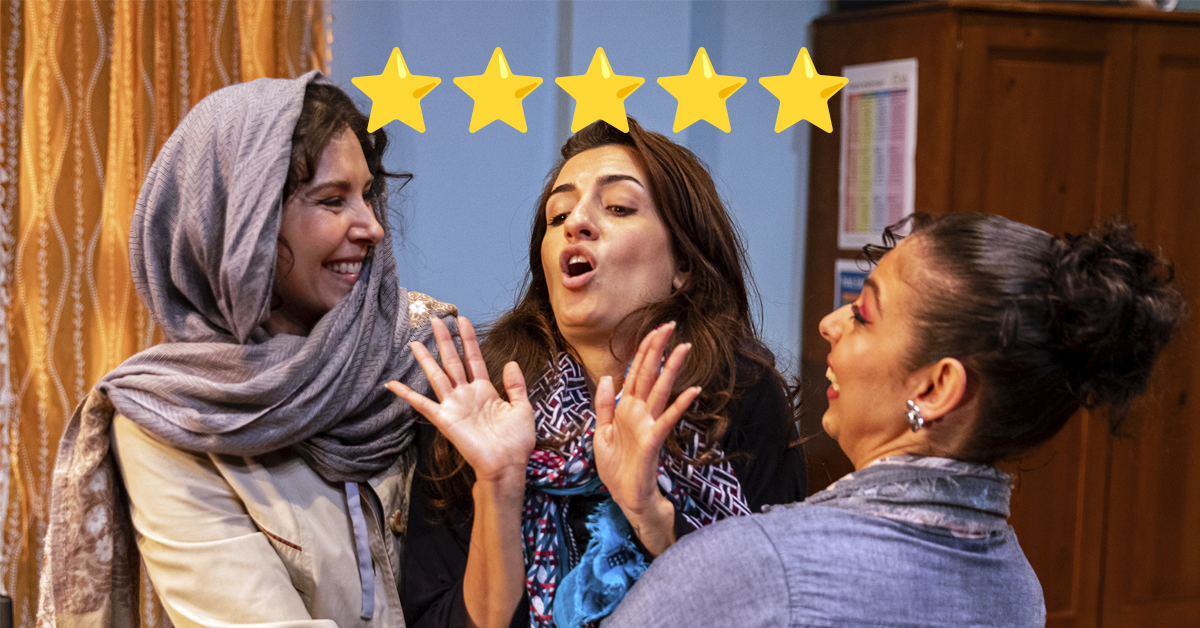
Venue: Seymour Centre (Chippendale NSW), Apr 9 – May 2, 2026
Playwright: Sanaz Toossi
Director: Craig Baldwin
Cast: Pedram Biazar, Nicole Chamoun, Neveen Hanna, Minerva Khodabande, Setareh Naghoni
Images by Richard Farland
Theatre review
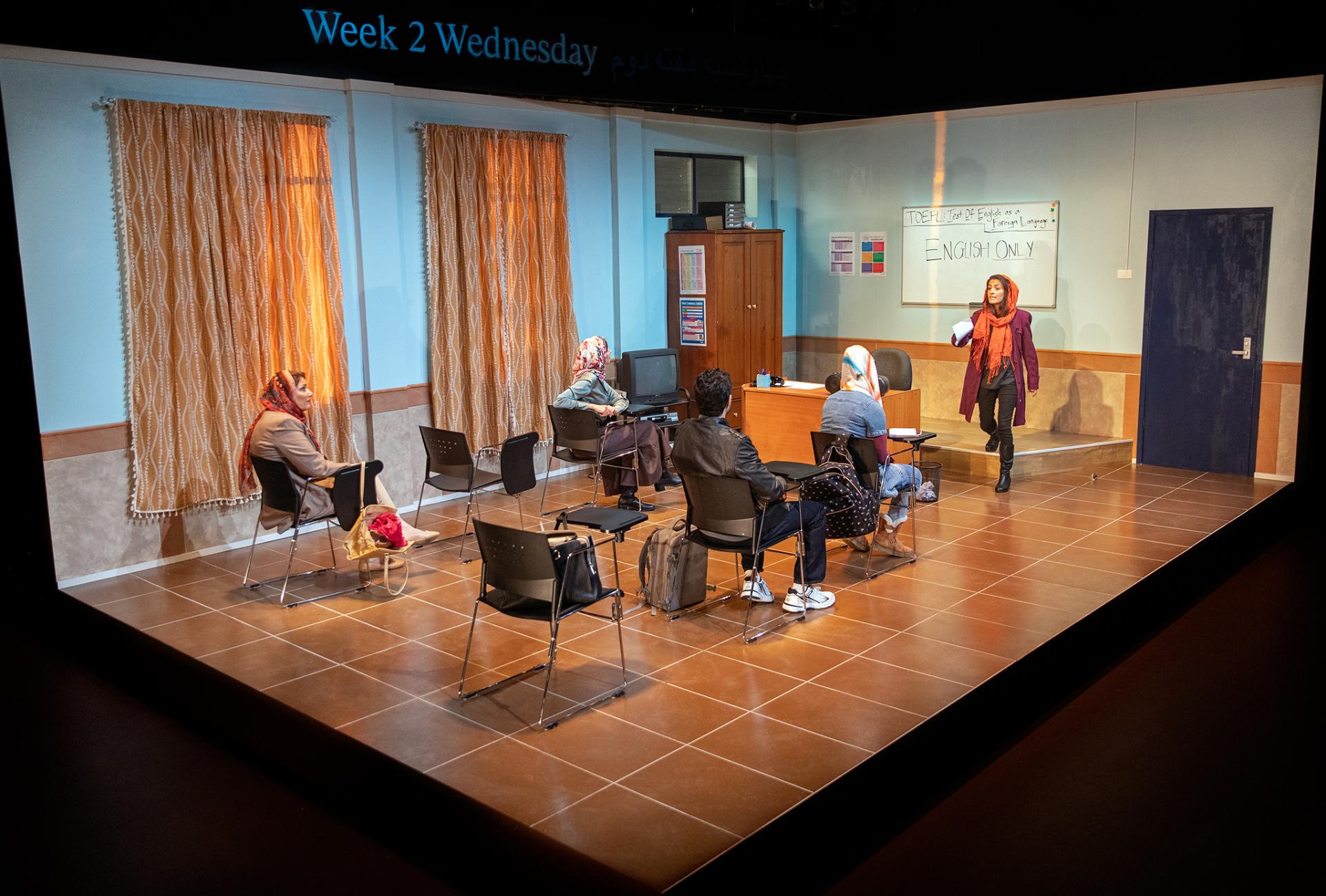
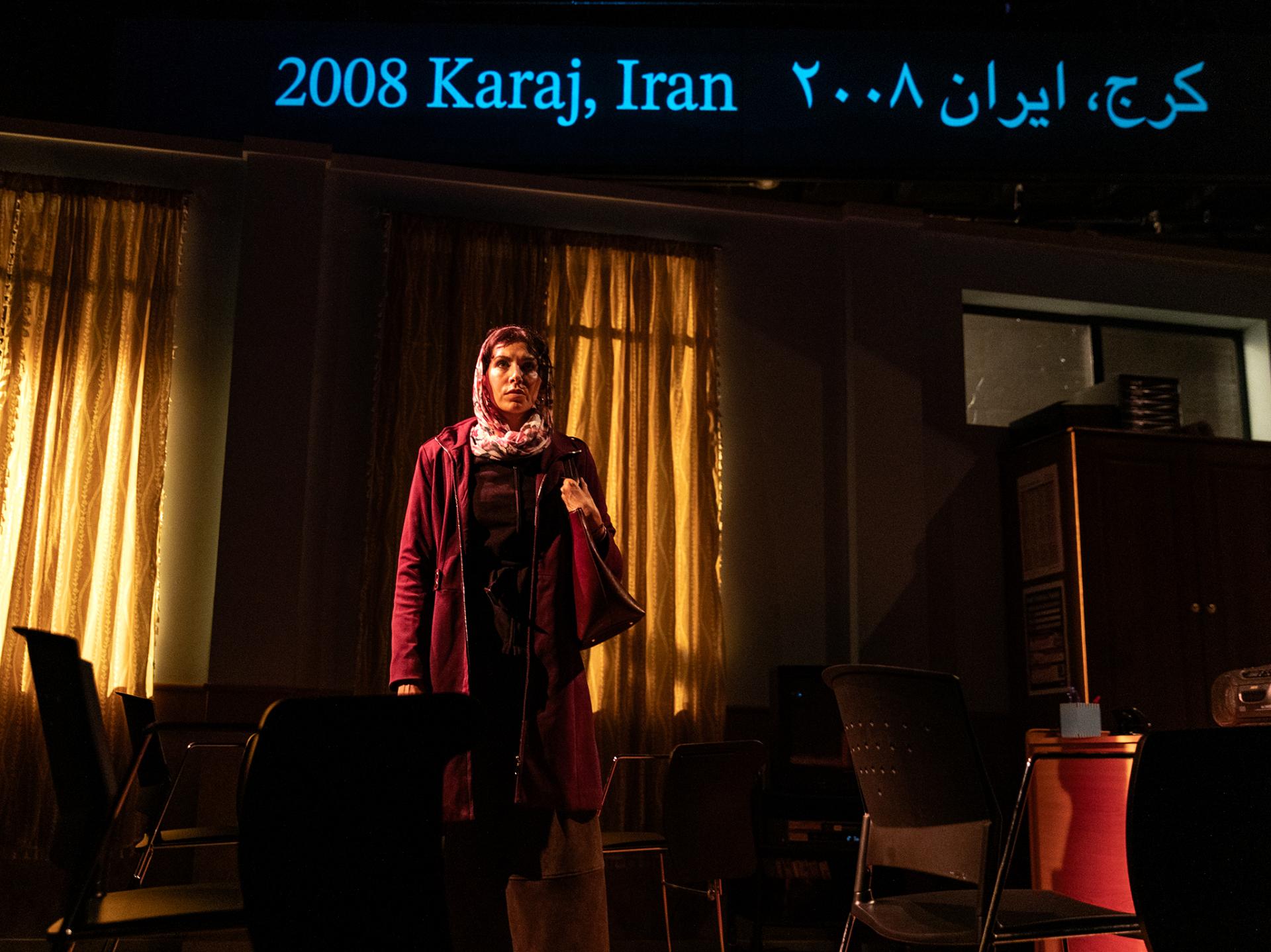
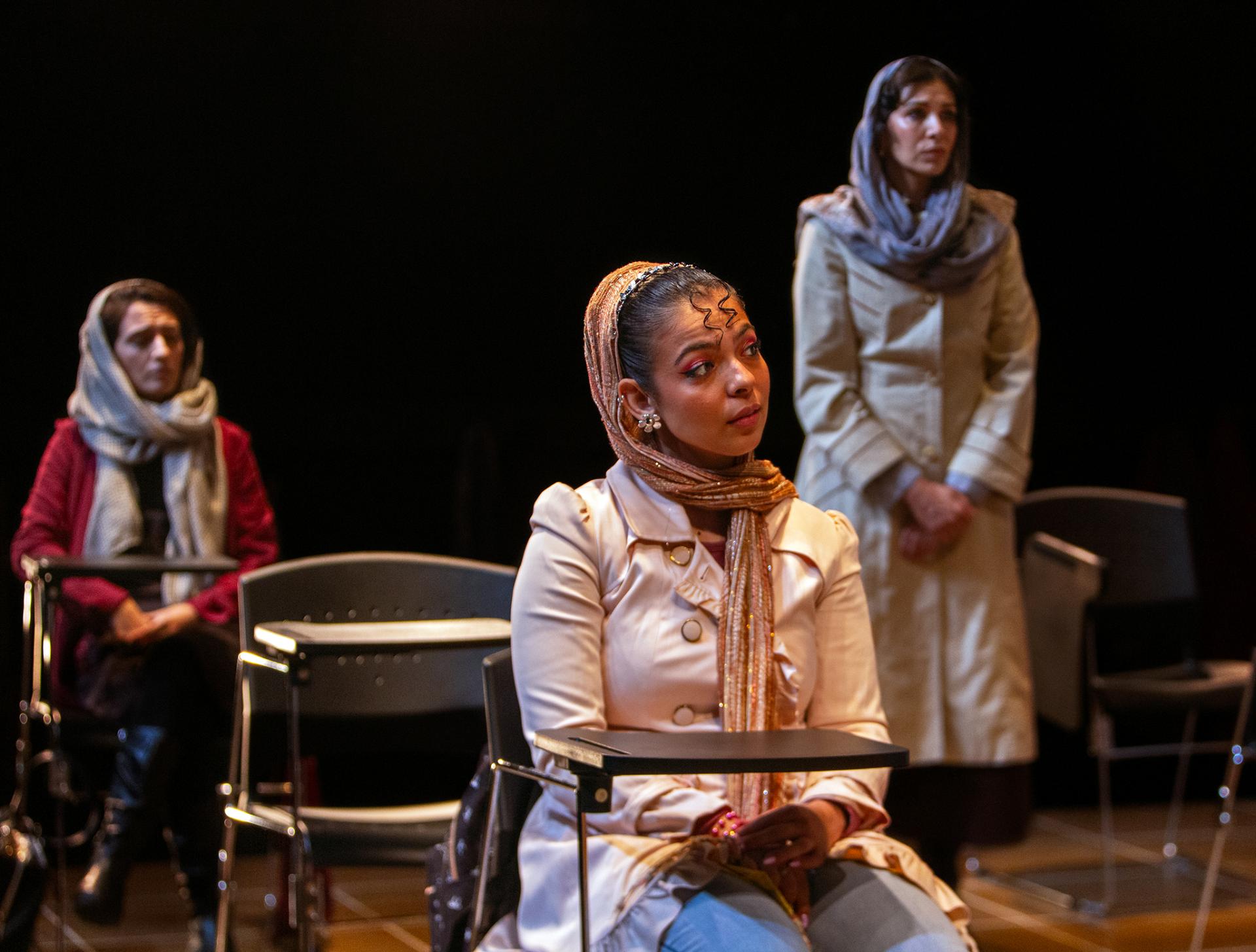
In a modest classroom in Karaj, 2008, where the air itself seems thick with unspoken anxiety, Marjan presides over a small cohort of Iranians preparing for the TOEFL (Test of English as a Foreign Language) examination. They arrive bearing different destinies but share a common condition: displacement. Sanaz Toossi’s English excavates the immigrant experience with surgical precision, revealing how language acquisition becomes both lifeline and loss, a means of escape that simultaneously erases.
Toossi’s work operates in the confluence of colonized trauma and pragmatic survival; it deftly weaves exploration of love for a homeland and the quiet grief of witnessing it unravel. The play captures the immigrant experience with astonishing complexity, yet articulates with remarkable clarity the intricate and often agonizing challenges of forging a sense of home in foreign, unfamiliar terrain. Under Craig Baldwin’s direction, the production holds the audience spellbound from start to finish—devastating in its most searing dramatic moments, yet threaded throughout with sharp, scintillating wit. It achieves the rare feat of being both thoroughly entertaining and profoundly resonant, offering the kind of theatre that feels deeply, viscerally satisfying. For those with personal ties to the themes Toossi explores, English becomes nothing less than cathartic.
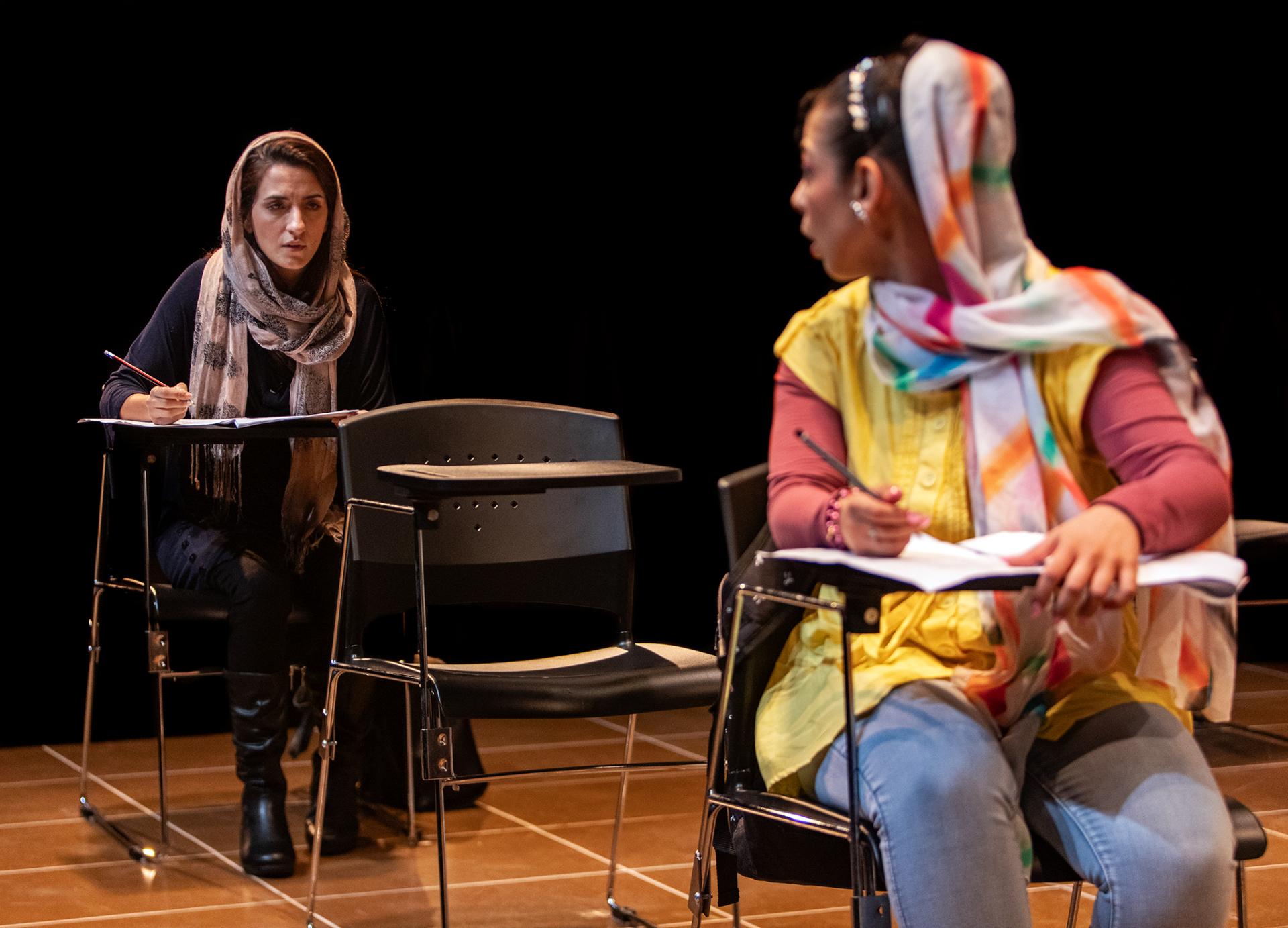
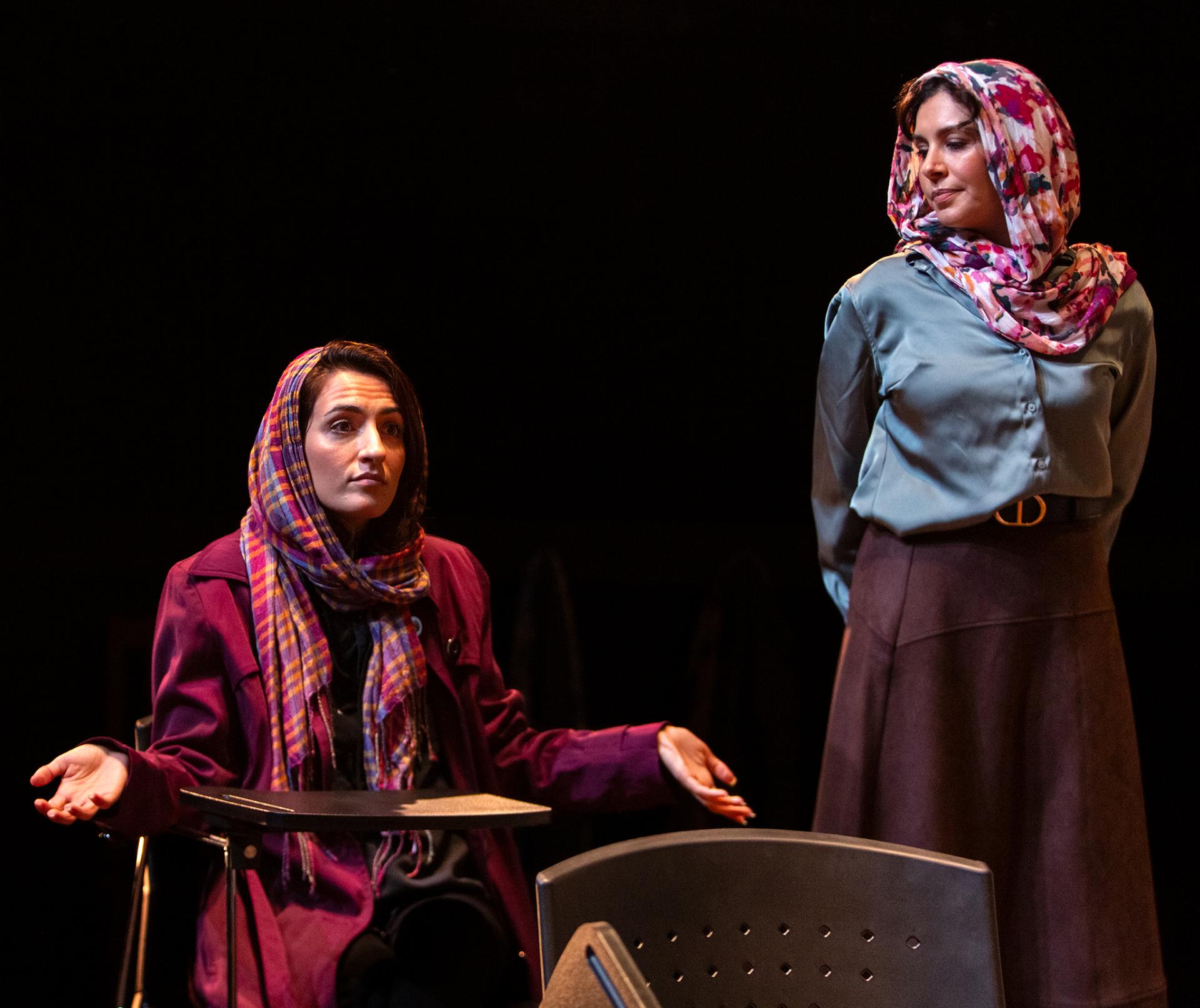
The ensemble executes this vision with extraordinary nuance. As Marjan, the eminently watchable Nicole Chamoun navigates the character’s post-colonial consciousness through restraint rather than histrionics—her trauma articulated in the tightening of a jaw, the careful modulation of vowels that betray her own complicated relationship with the English she peddles. Setareh Naghoni’s Elham embodies the paradox of the proud exile: armoured with abrasive humour yet perpetually vulnerable, her hard-headedness serving as both defence mechanism and prison.
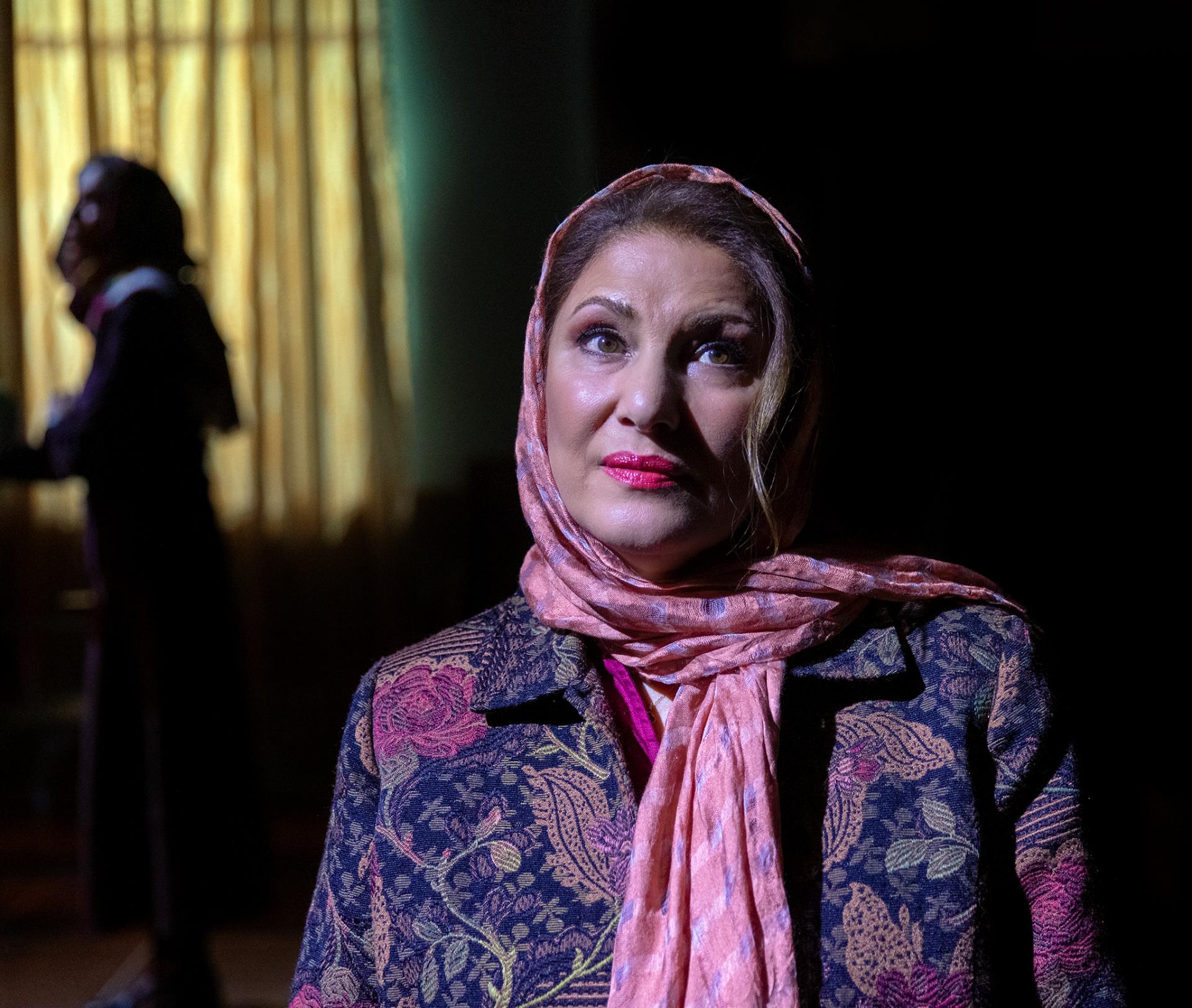
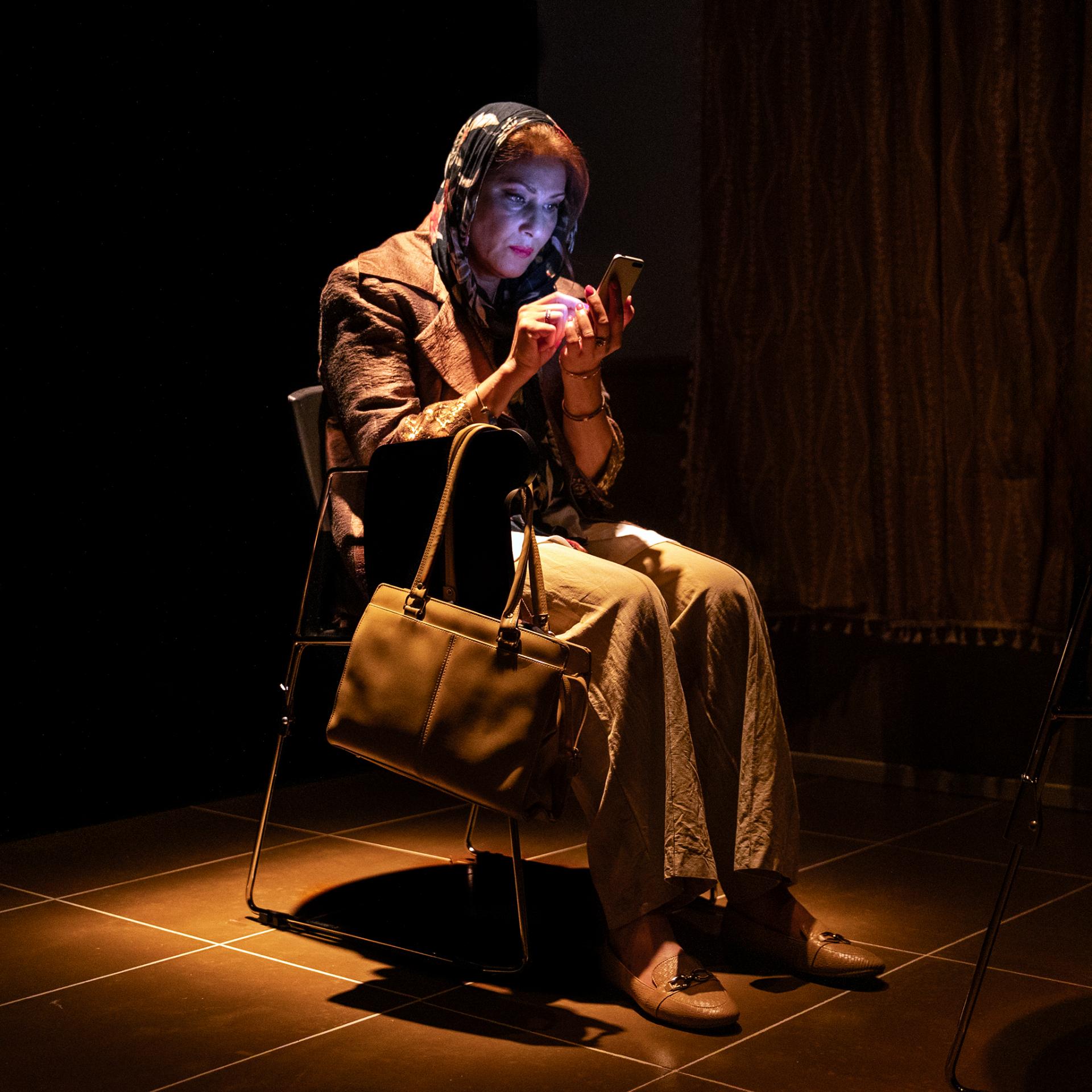
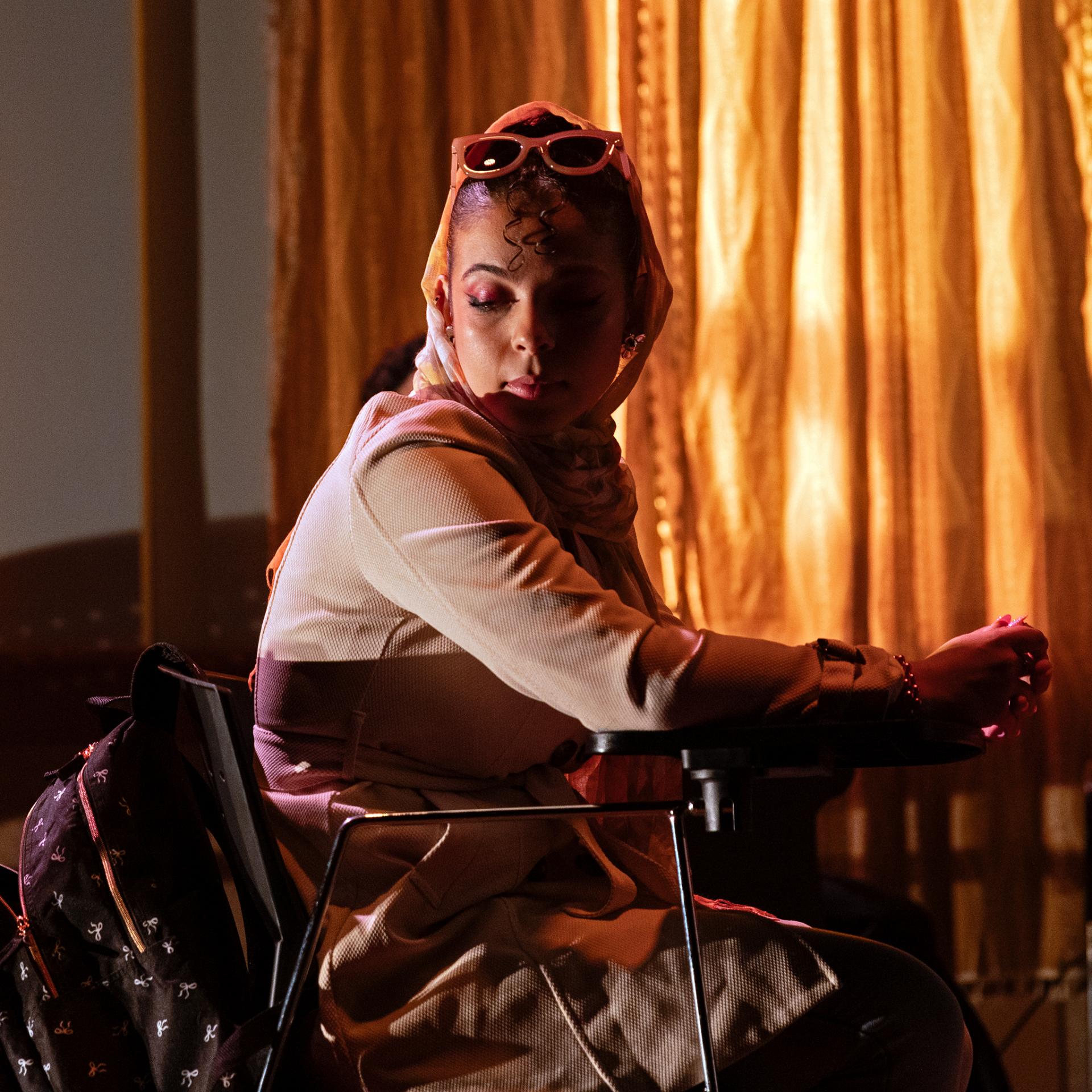
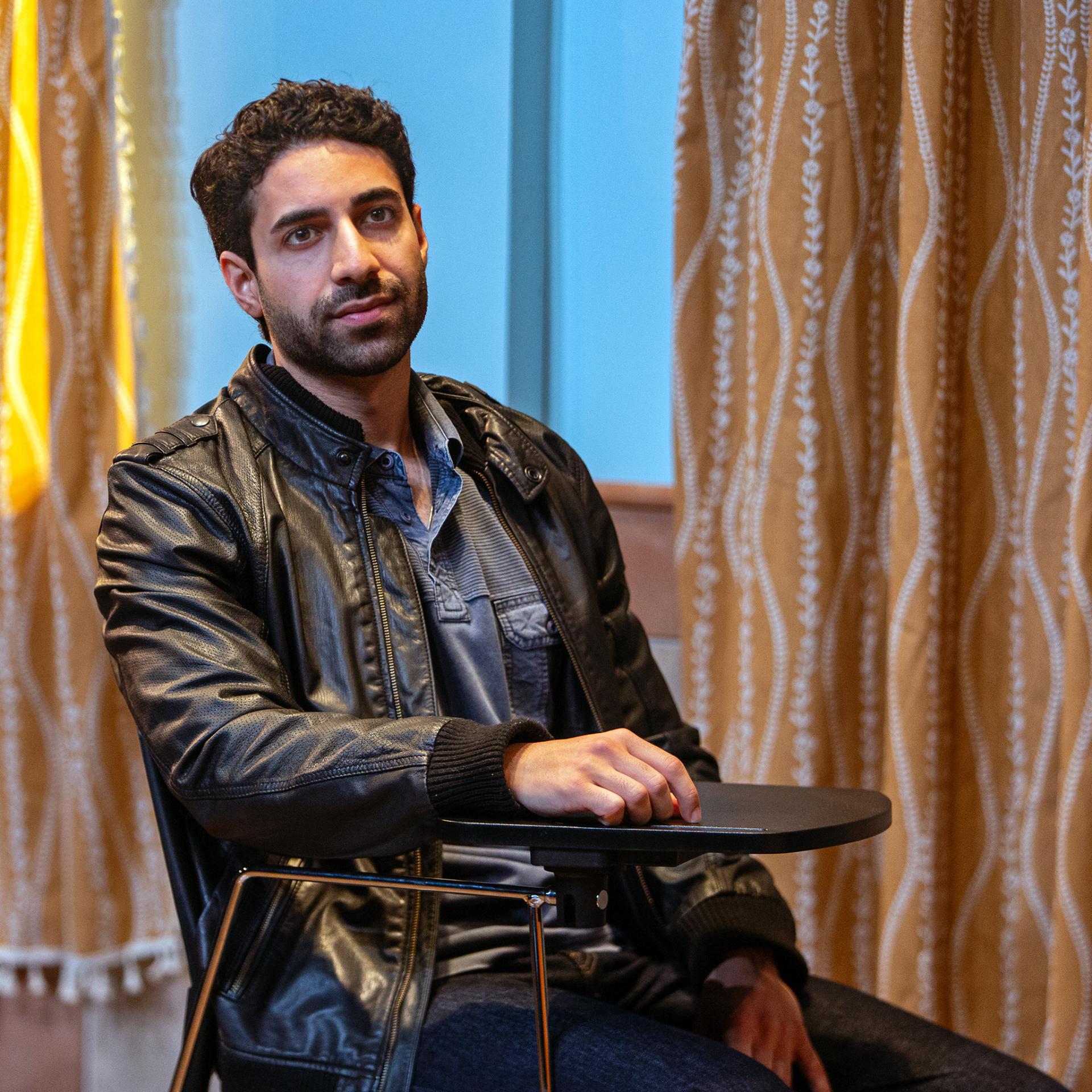
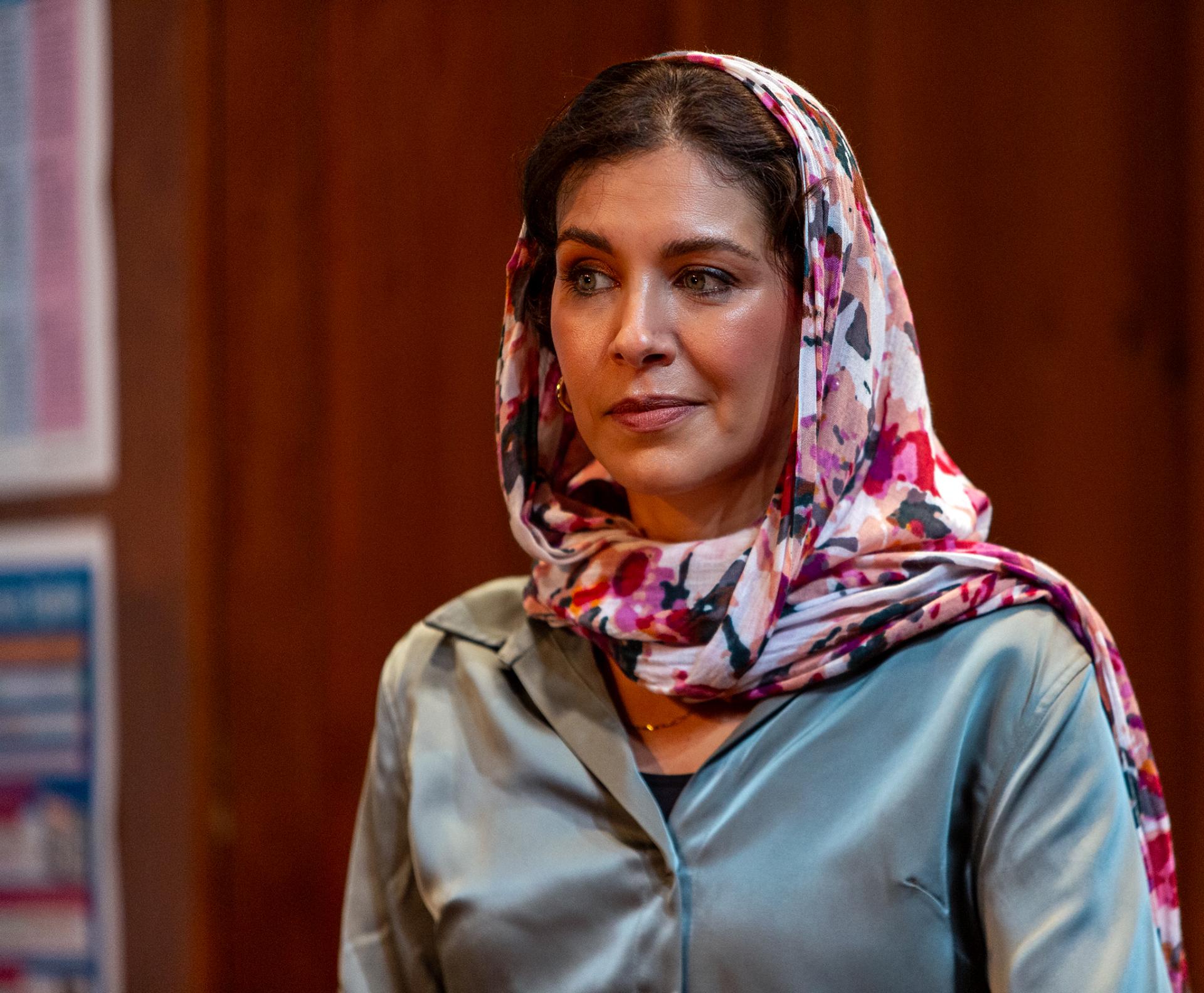
Minerva Khodabande’s effortless charm as Goli provides necessary luminosity, her youthful exuberance offering fleeting respite from the production’s heavier thematic weight, while the elegant Pedram Biazar’s turn as Omid maintains a dichotomy of warmth and opacity that complicates the narrative’s moral architecture, suggesting that escape always exacts its own particular tariffs. Most shattering is Neveen Hanna’s Roya, whose separation from her Canadian grandchildren becomes a meditation on intergenerational rupture. Hanna navigates the character’s desperation with such authenticity that her moments of comic relief—delivered with impeccable timing—land with twice the force, reminding us that grief and laughter often share the same respiratory system.
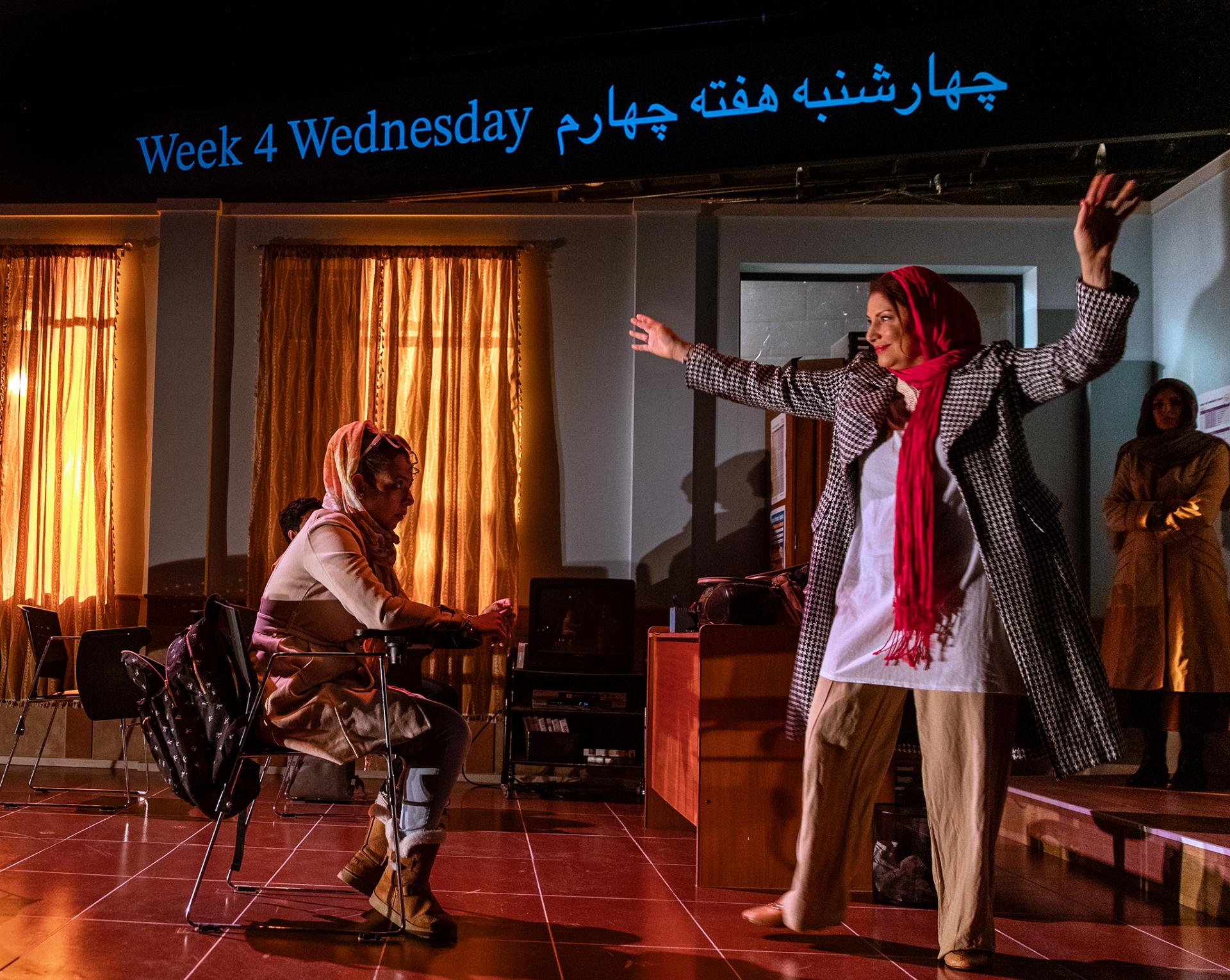
The technical elements eschew spectacle in favour of psychological acuity. Spencer Herd’s lighting design maintains a quotidian warmth during instructional scenes, then shifts during transitions to more expressionistic palettes that externalize the characters’ interiority. Ahmed Sadeghi’s compositions function as aural set changes, traversing genres to evoke Iran’s cultural landscape while underscoring the disorientation in the very act of relocation. Soham Apte’s set and Rita Naidu’s costumes embrace a deliberate anti-theatricality; their unvarnished naturalism strips away distraction, forcing our attention onto the micro-gestures and linguistic stumbles that constitute the drama’s true intentions.
For many migrants, the journey begins long before their own lifetime. Where we find ourselves today is shaped not only by our individual choices and circumstances but also by the movement of ancestors who, generations earlier, sought better tomorrows for their children and their children’s children. Yet in the very act of building better lives, we often lose the language—or the permission—to speak of the hardships and ruptures that come with being pushed away from one’s homeland. English, however, refuses that silence, turning a searching gaze toward both the pain and the hope that bind so many of us together.
www.seymourcentre.com | www.outhousetheatre.org
 Suzy Goes See