Venue: New Theatre (Newtown NSW), Mar 18 – Apr 11, 2026
Playwright: Sarah Ruhl
Director: Alice Livingstone
Cast: Emma Delle-Vedove, Nicola Denton, Victoria Fowler, Lynden Jones, Nicholas Papademetriou, Frank Shanahan, Jason Spindlow
Images by Bob Seary
Theatre review
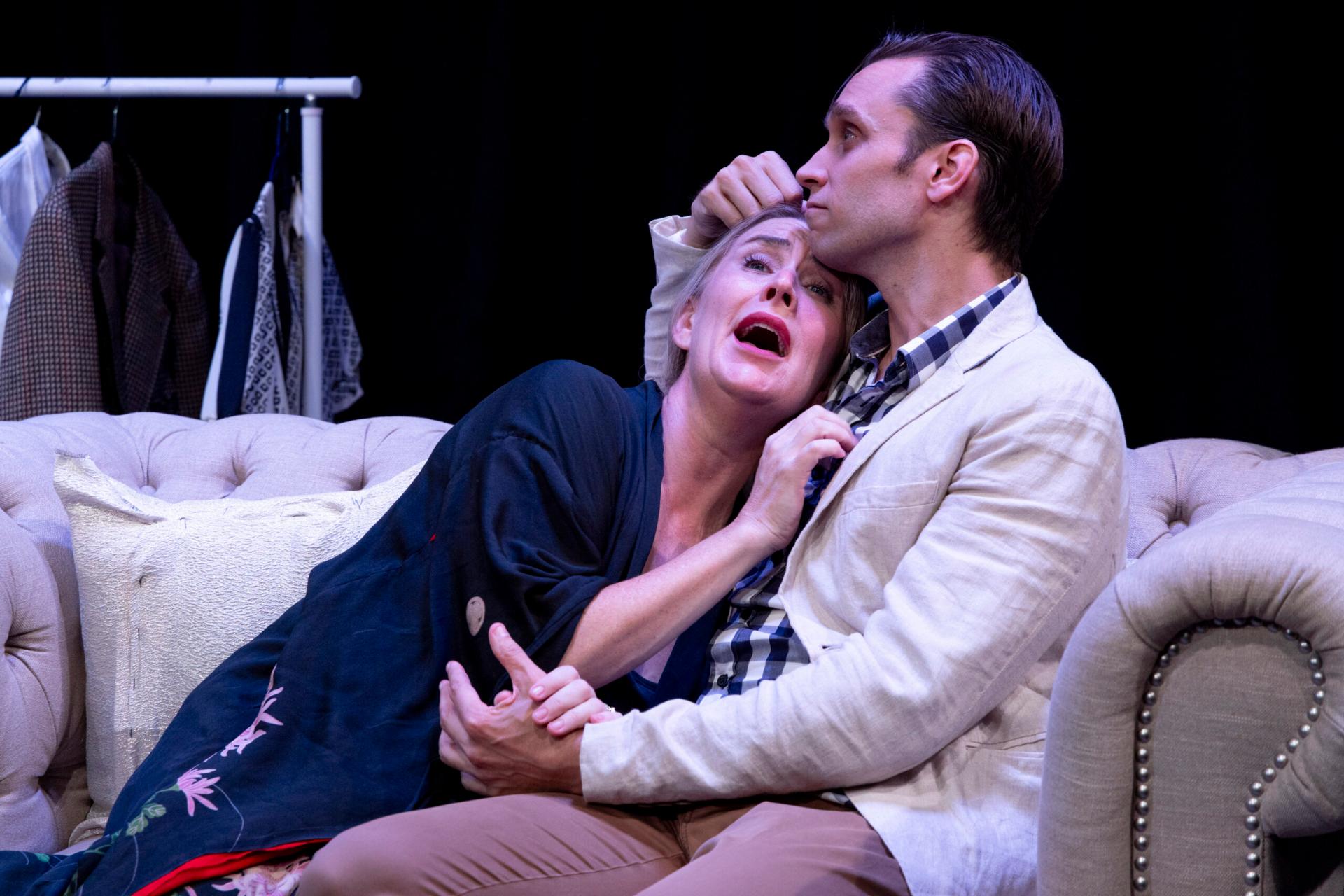
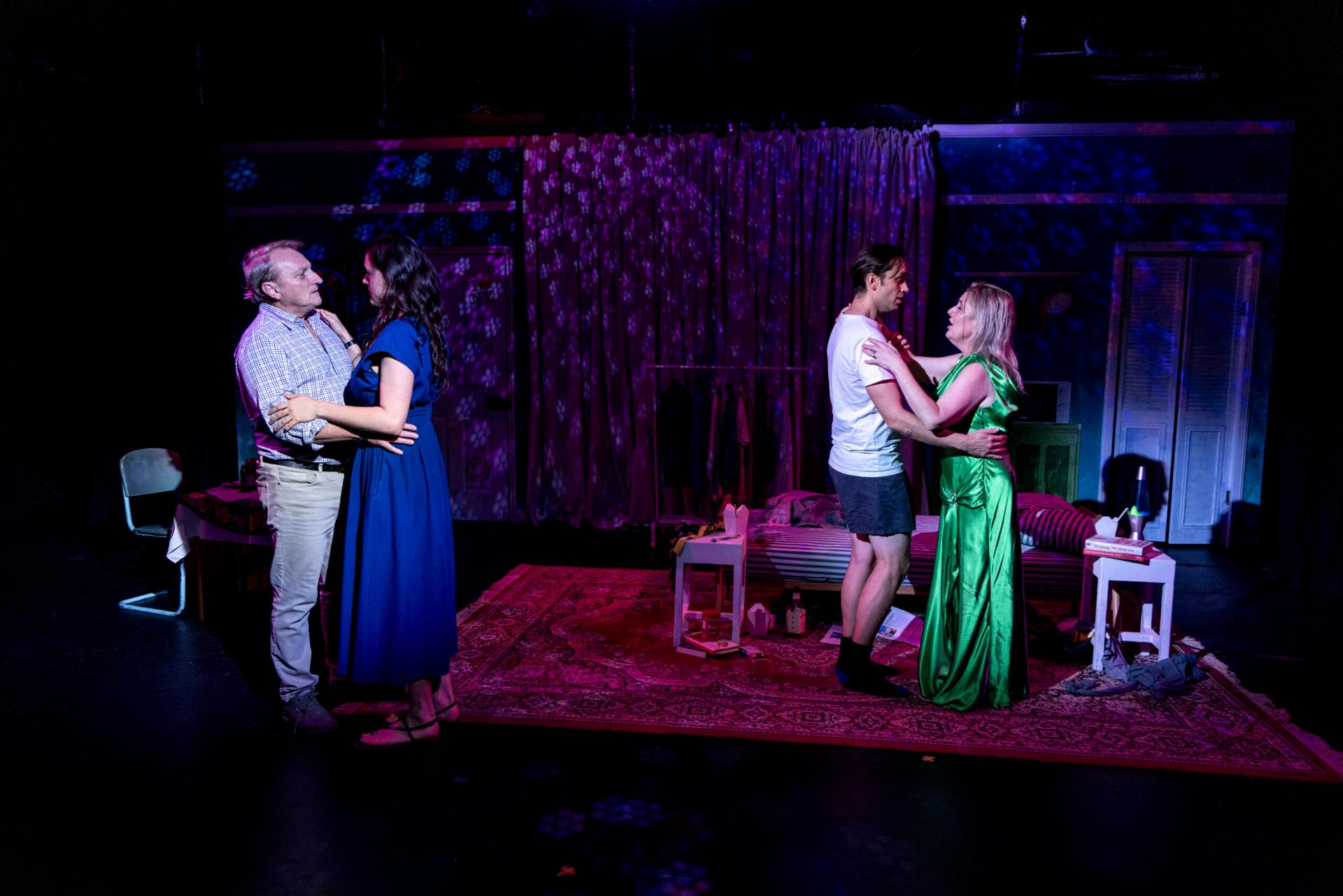
In Sarah Ruhl’s comedy Stage Kiss, an actress, cast opposite the very man with whom she once had a bitter falling out, finds herself helplessly ensnared in a backstage romance. Though her husband and daughter look on with dismay, she surrenders to the peculiar intimacy of the stage, where simulated passion gives way to genuine longing. The play’s central conceit—that the body cannot tell a feigned kiss from a real one—becomes a sly meditation on how art blurs the line between imagination and truth.
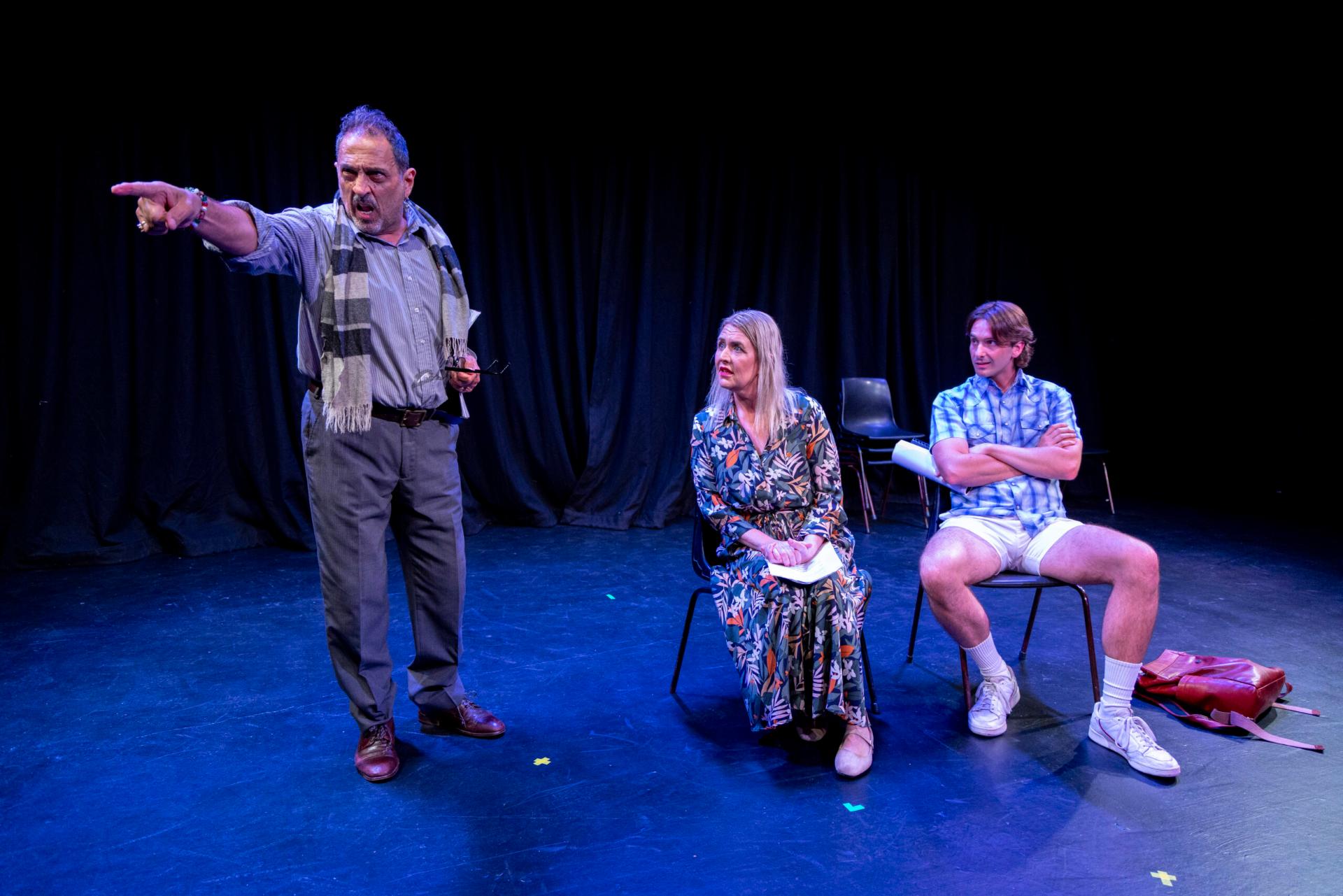
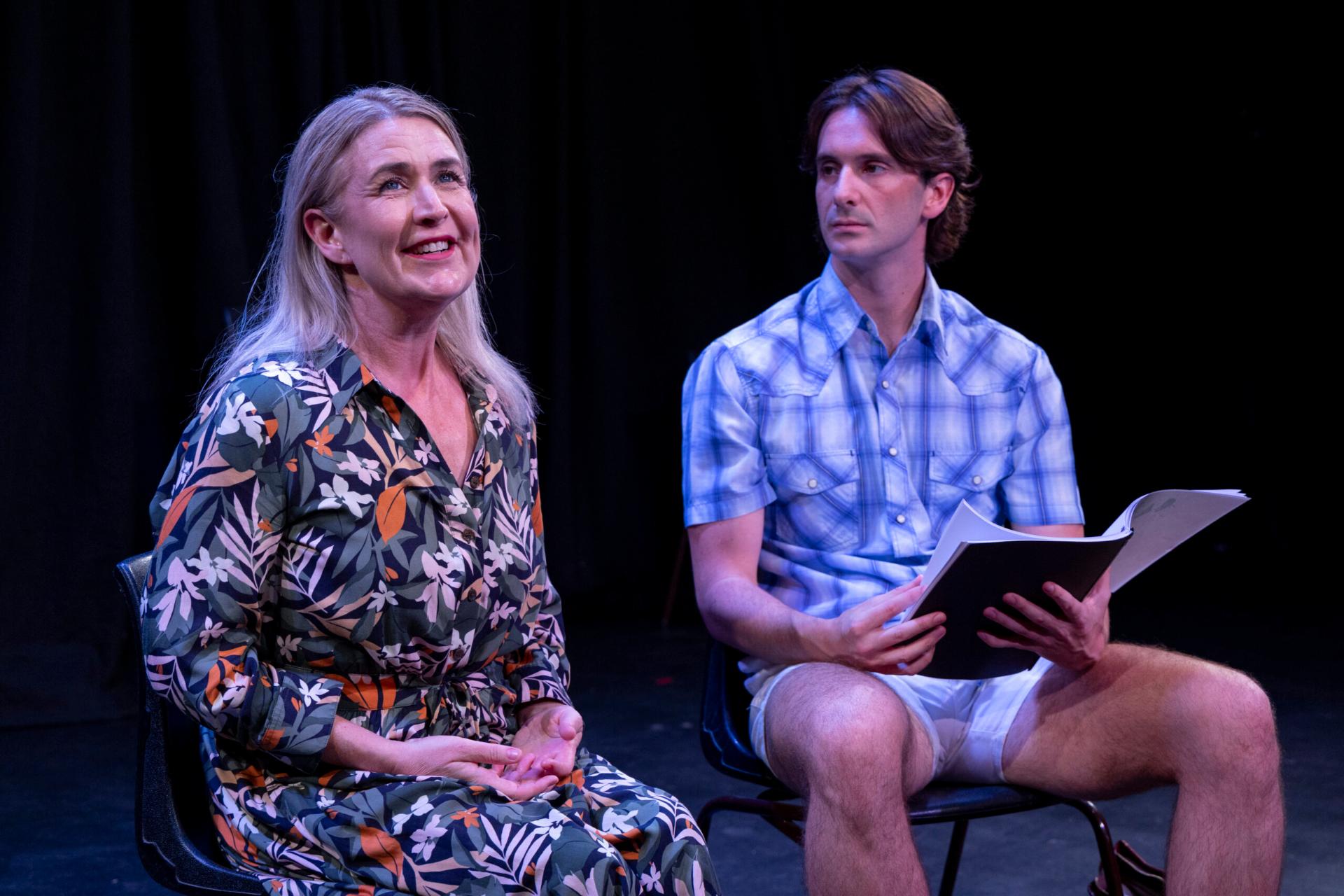
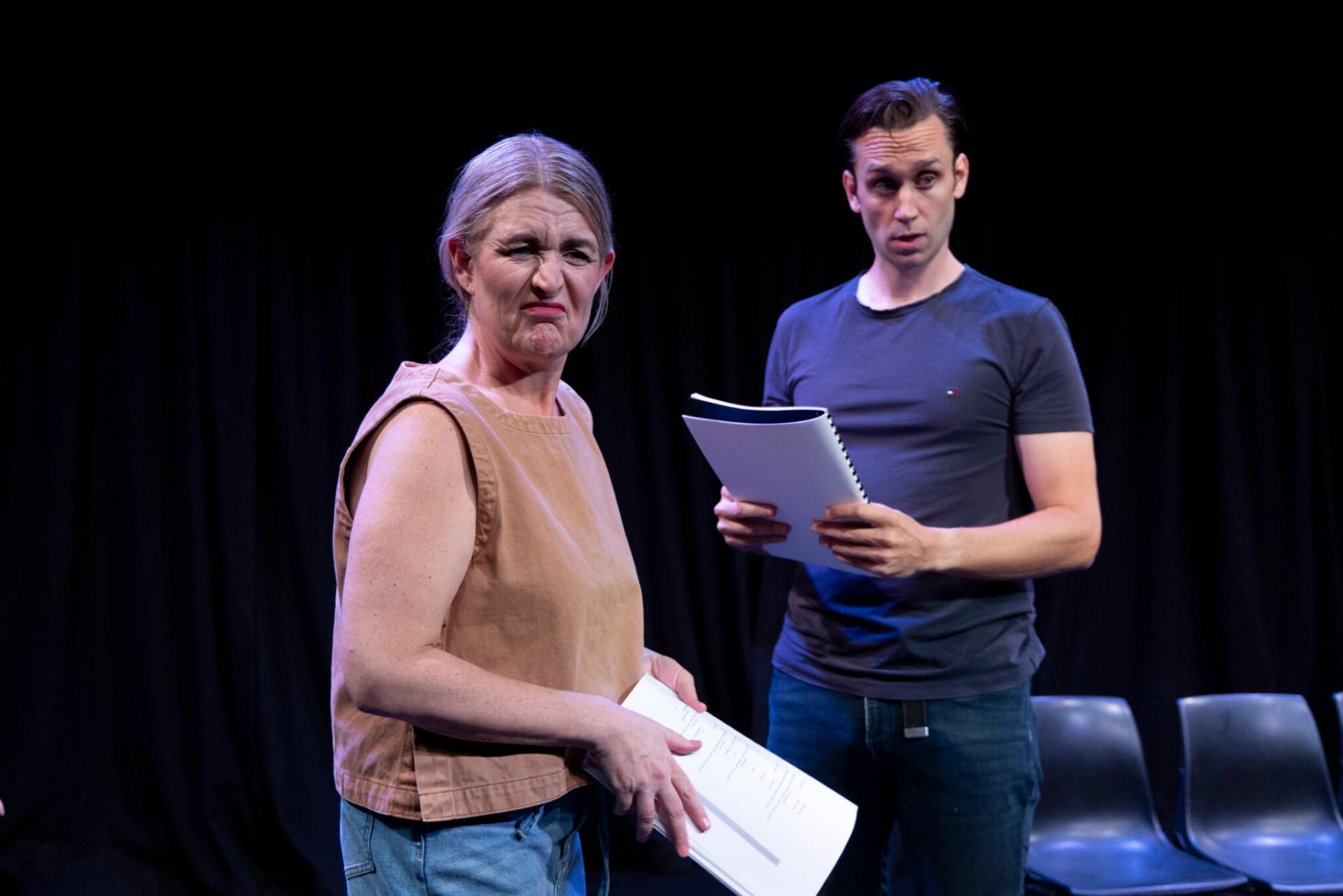
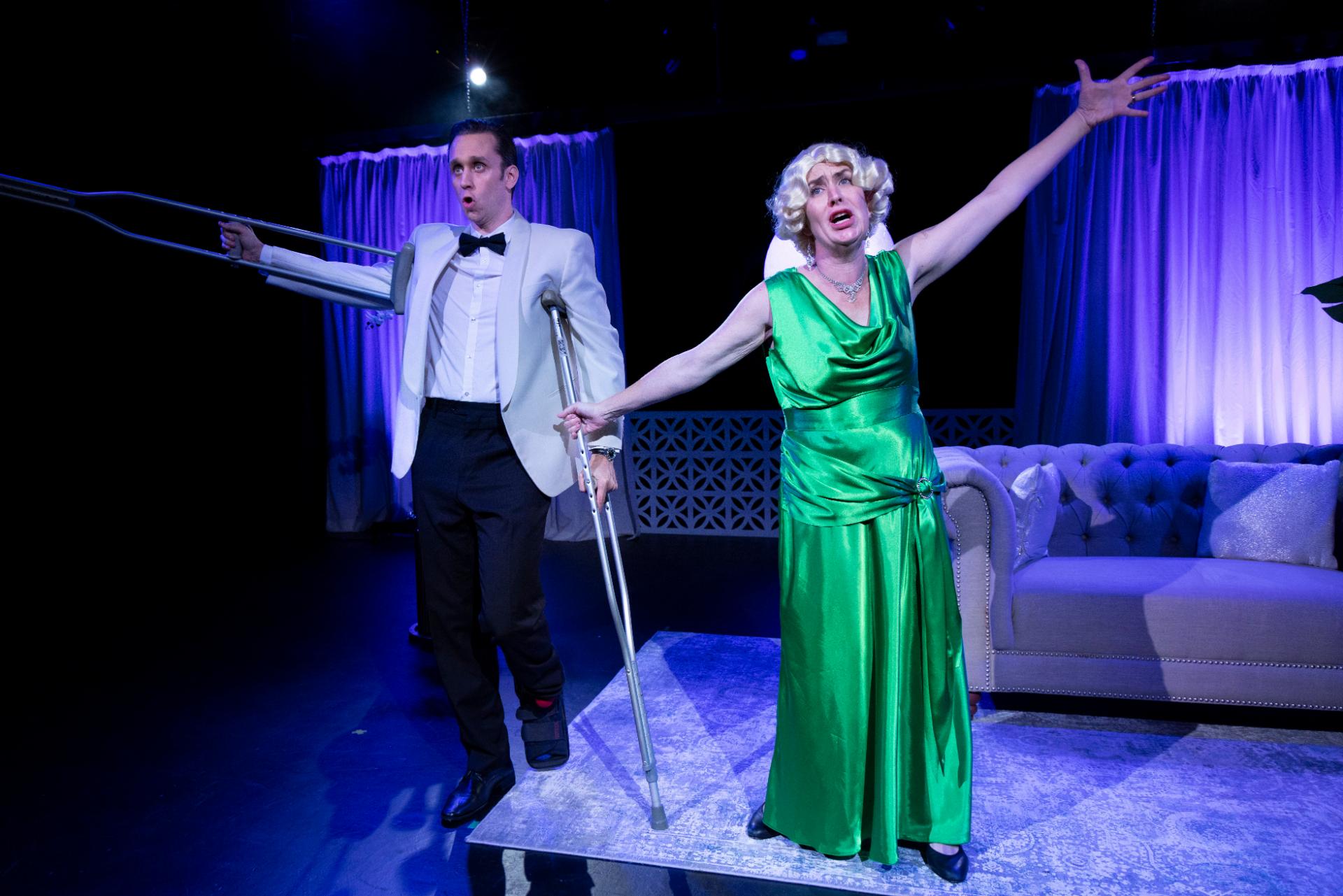
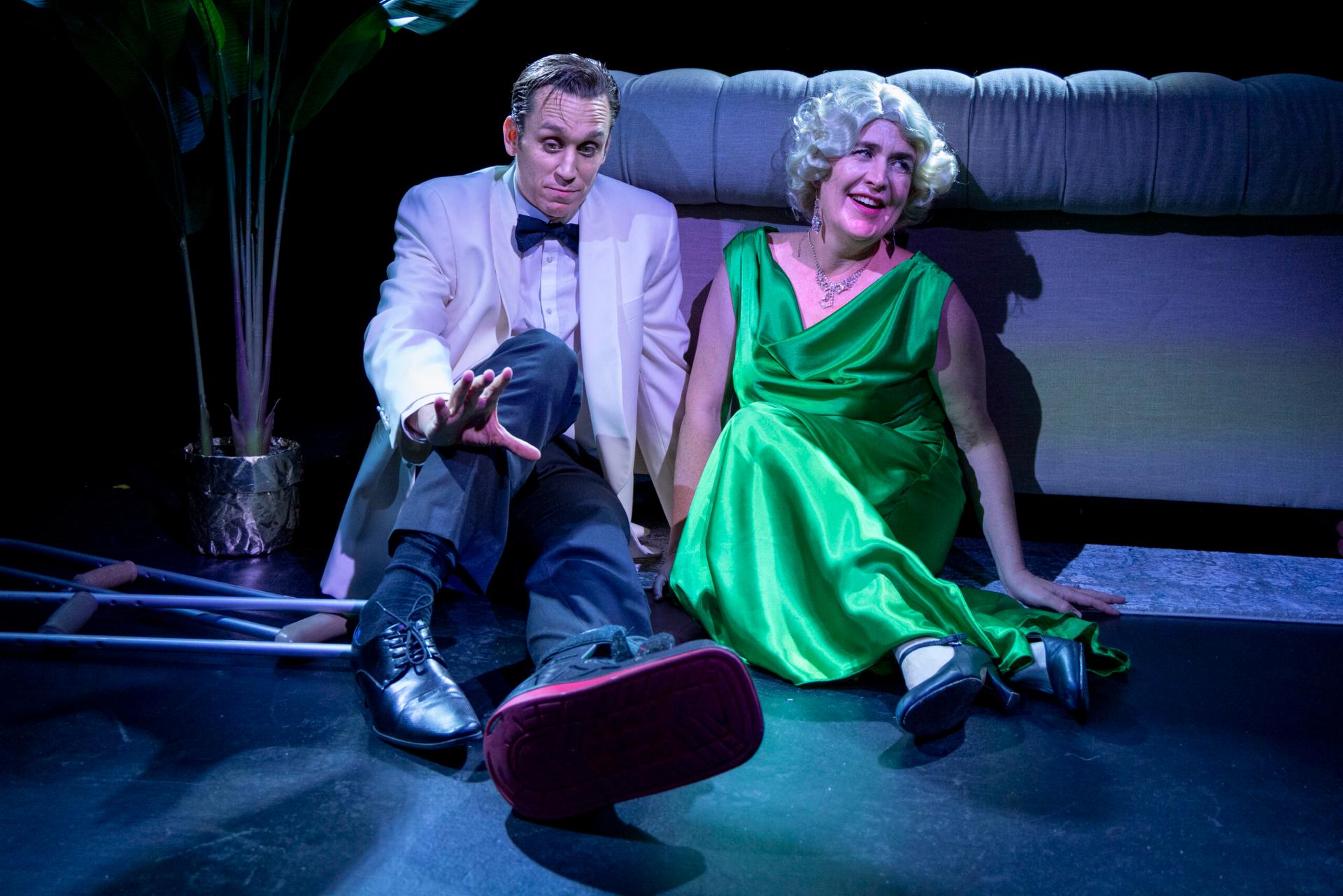
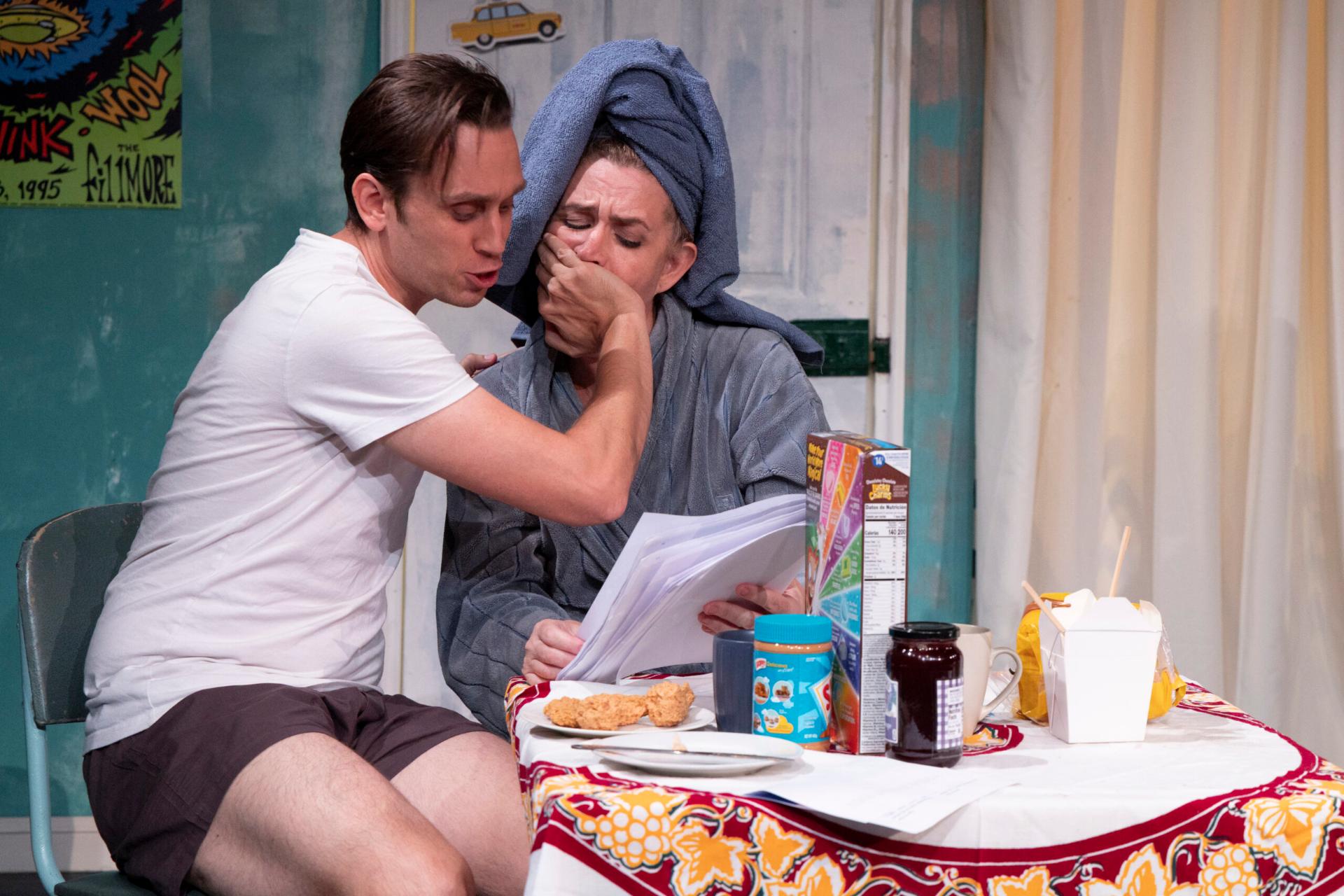
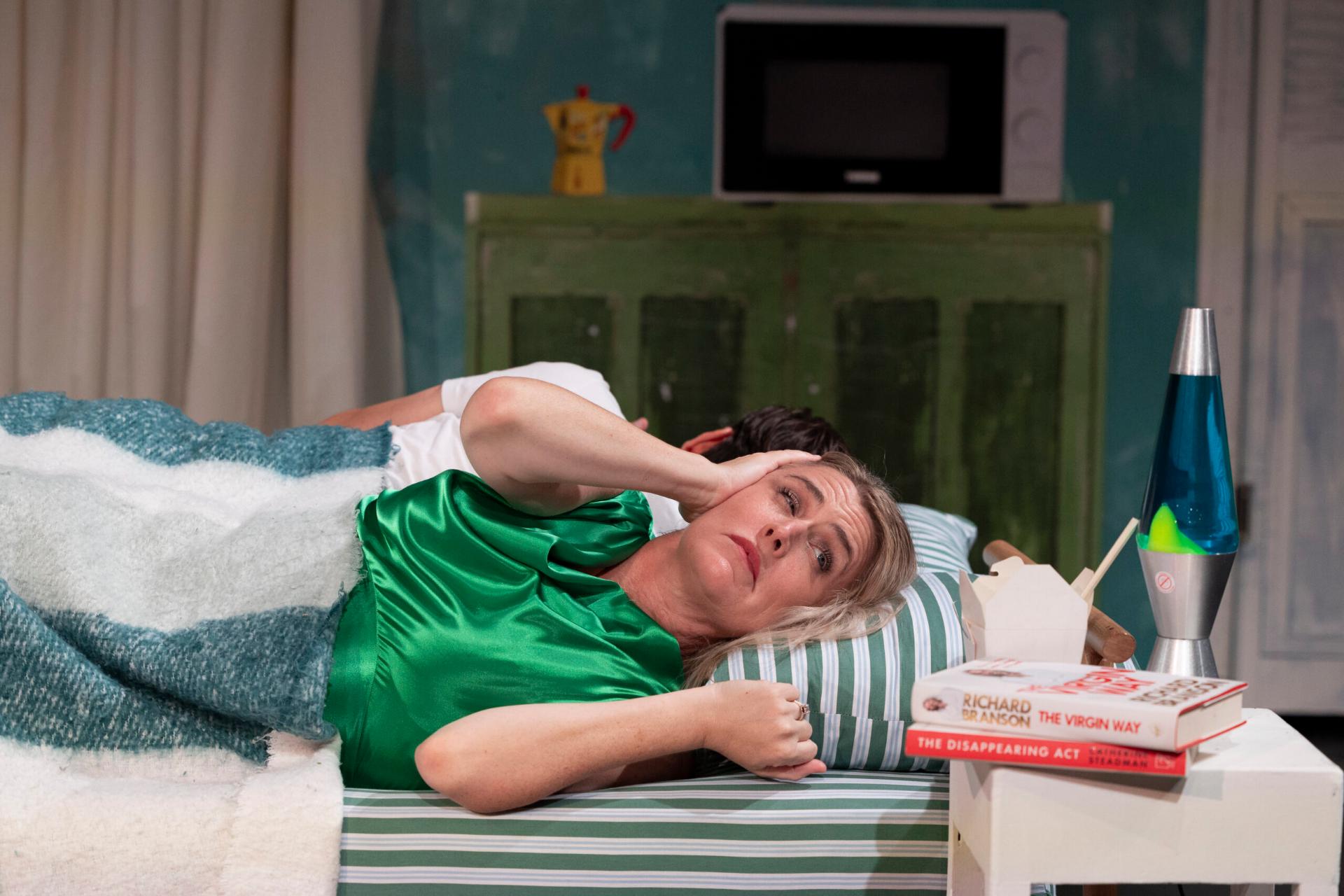
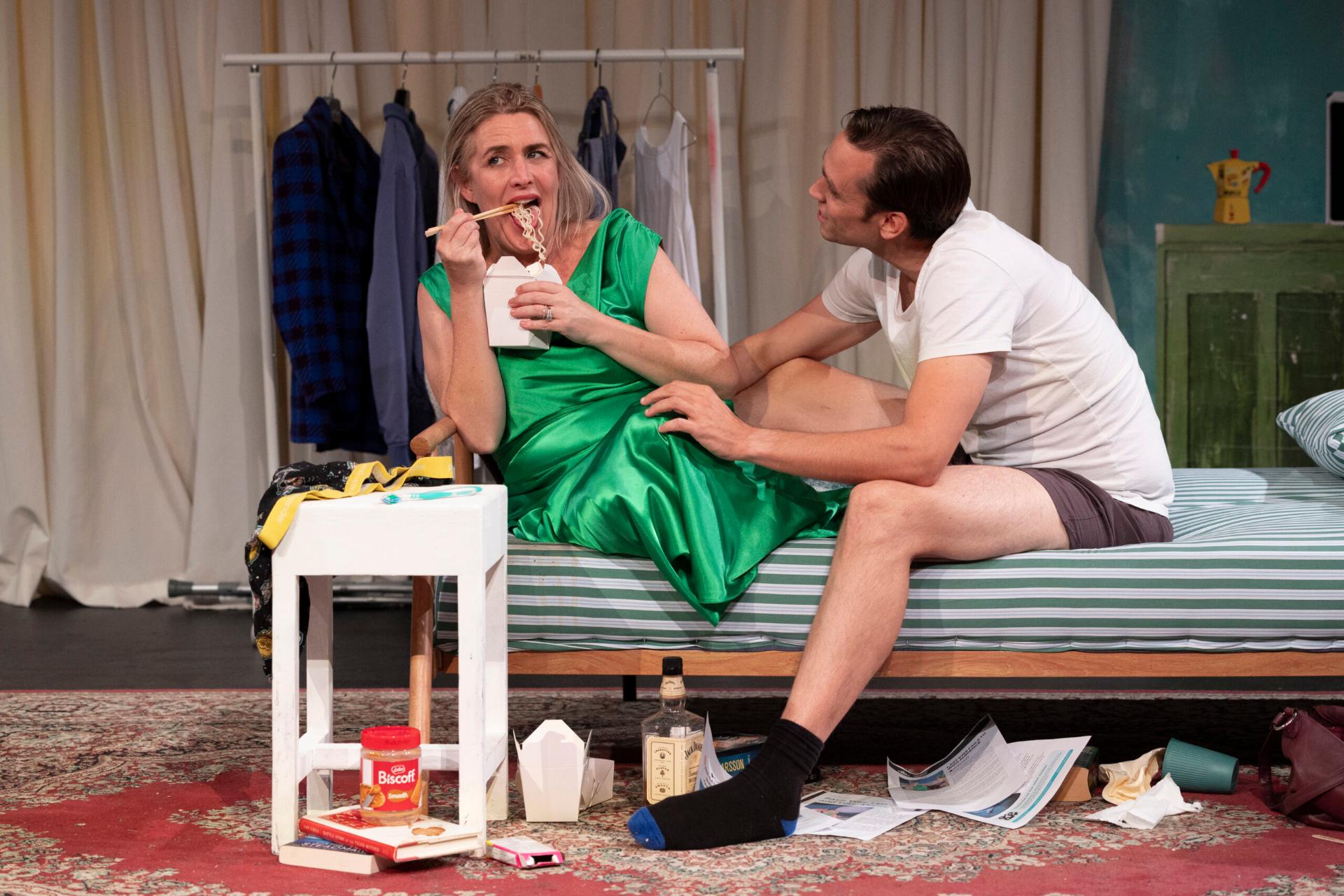
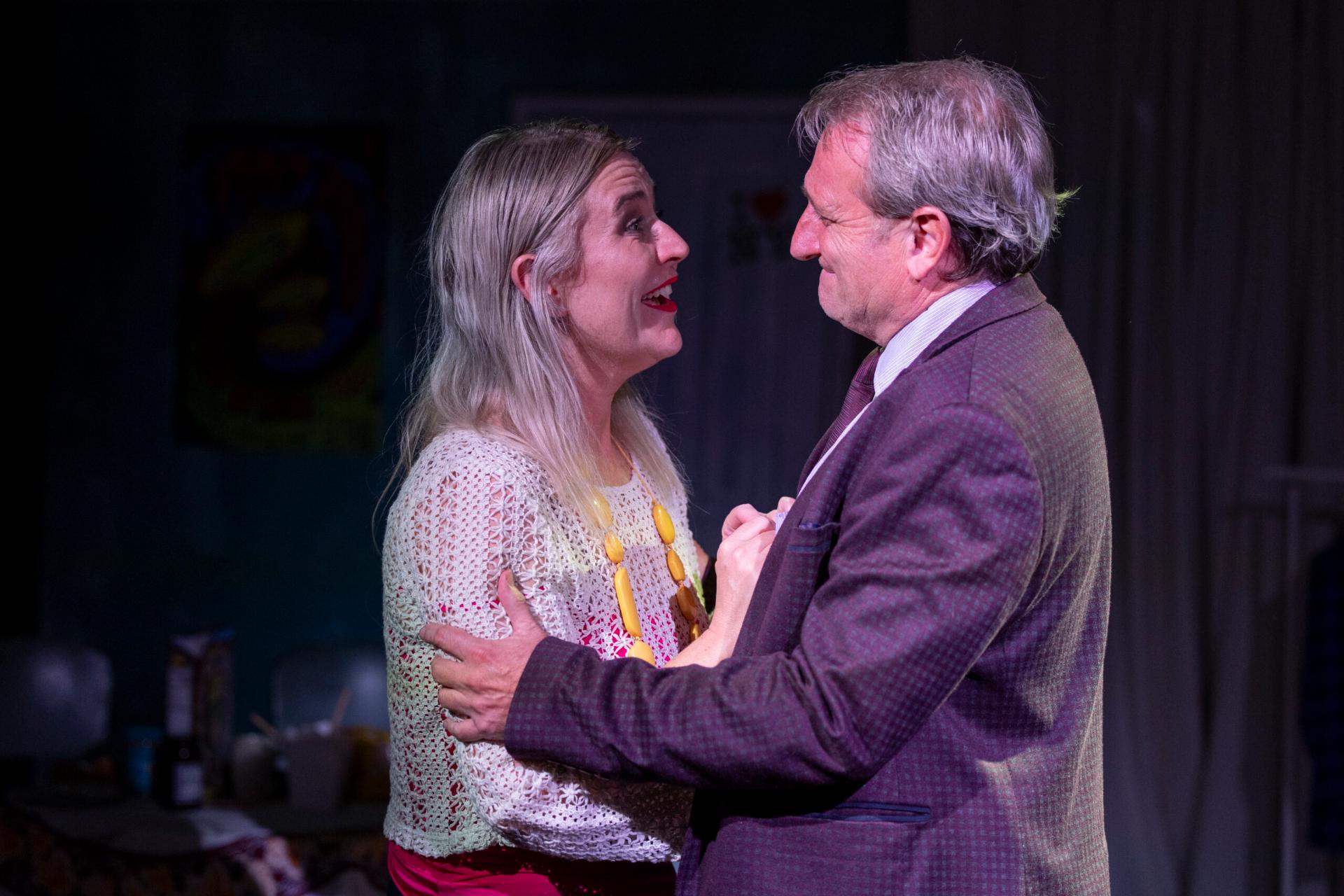
Alice Livingstone’s direction mines every vein of comedy in the text, yielding a production of genuine charm. As the central figure, Emma Delle-Vedove is wholly convincing, imbuing her performance with a satisfying depth that lends the storytelling real substance. Opposite her, Jason Spindlow matches her stride for stride, his timing and comic sensibility proving an ideal complement. The supporting ranks are enlivened by Nicholas Papademetriou and Frank Shanahan, both of whom generate uproarious laughs through their intrepid, delightfully unguarded performances.
The production’s visual language is shaped by Merle Leuschner’s set, which capably navigates the play’s spatial requirements, and Bianca De Nicola’s costumes, which neatly delineate character. Together, the two elements inadvertently echo the resourceful aesthetic of regional theatre, conferring a certain lived-in verisimilitude. Holly Nesbitt’s lighting contributes welcome nuance, its selective details lending the stage visual depth. The sound design, however, proves a notable shortcoming—its lack of energy frequently undermines the production’s momentum, leaving it feeling less dynamic than the material demands.
To observe that a woman possesses the right to shape her own life is perhaps to state the obvious, yet the sentiment bears repeating. In Stage Kiss, we encounter a woman who does precisely that—choosing to be artist, mother, wife, and lover, often in uneasy succession. Where conventional parlance would accuse her of trying to “have it all,” the play instead presents her simply sampling what is on offer, fumbling through each decision, and making mistakes with disarming regularity. In a culture saturated with glossy, unattainable ideals of achievement, watching her flawed navigation proves a far more honest—and surprisingly inspiring—spectacle.
 Suzy Goes See