Venue: KXT on Broadway (Ultimo NSW), Feb 18 – 28, 2026
Playwright: Gemma Burwell
Director: Saša Ljubović
Cast: Meg Hyeronimus, Deborah Jones
Images by Abraham de Souza
Theatre review
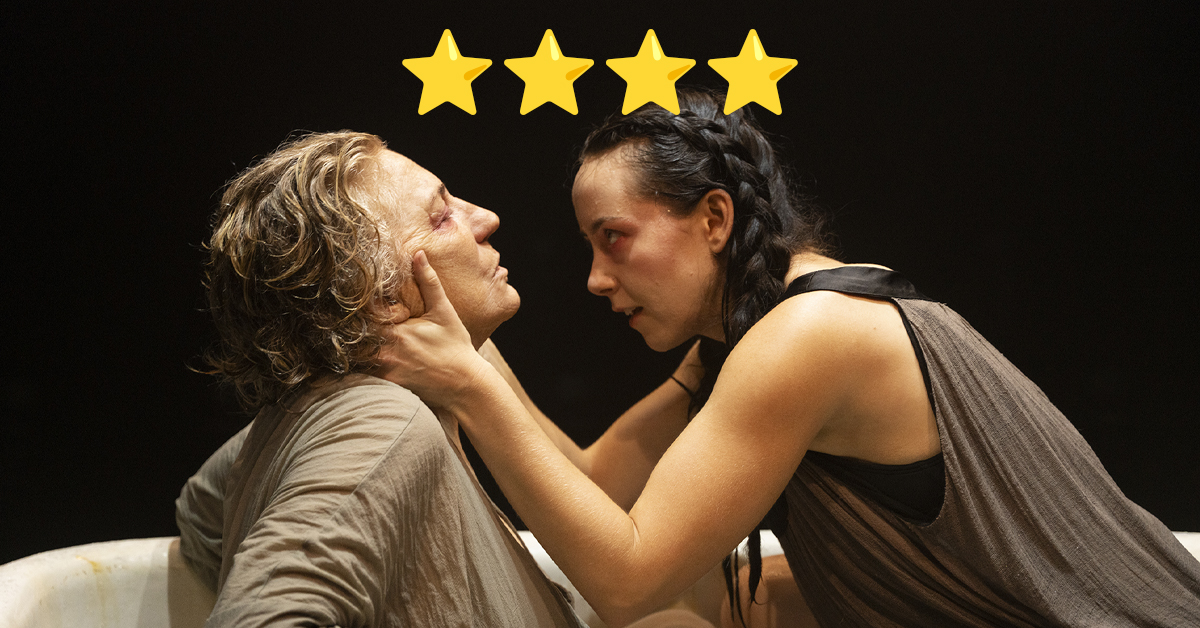
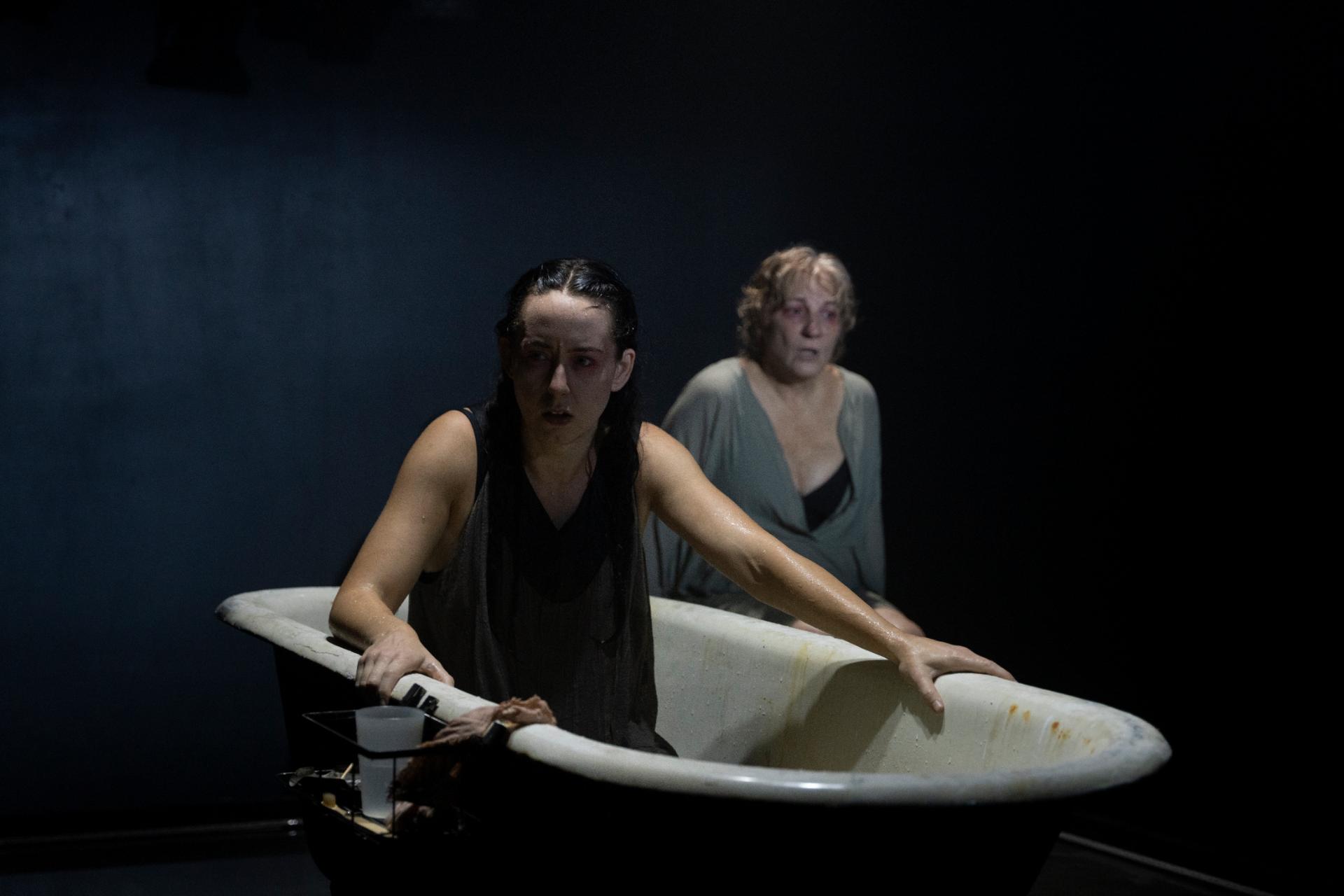
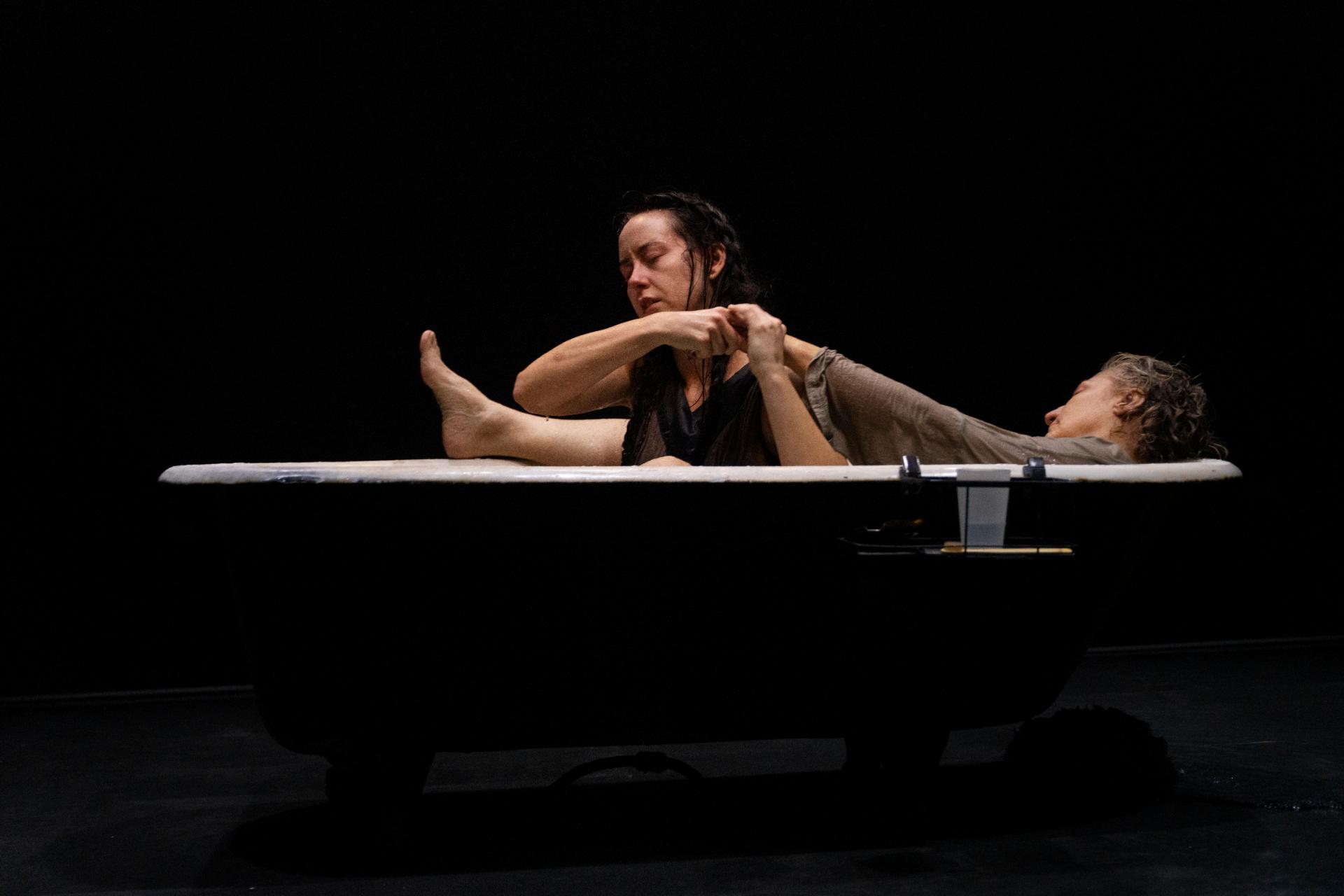
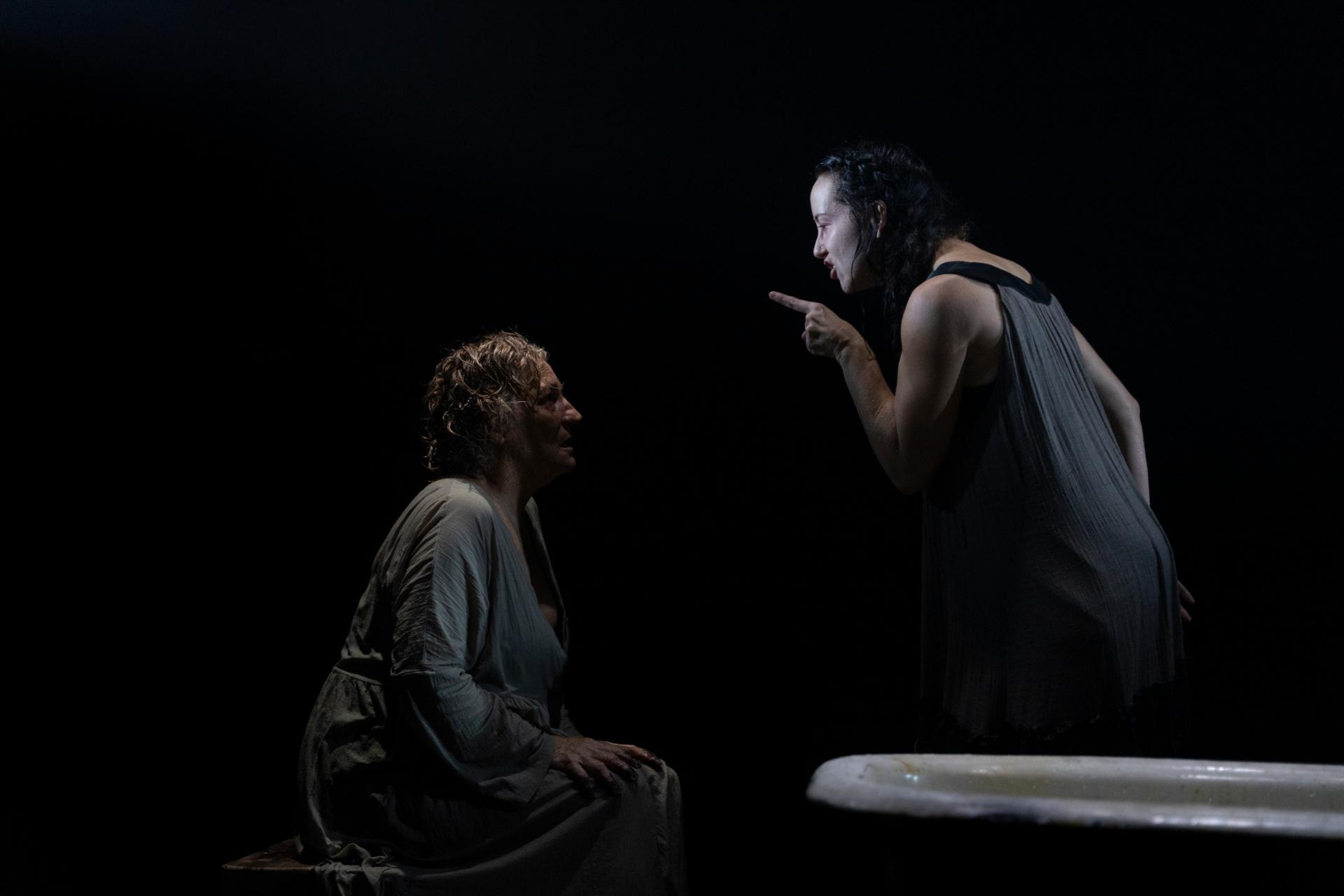
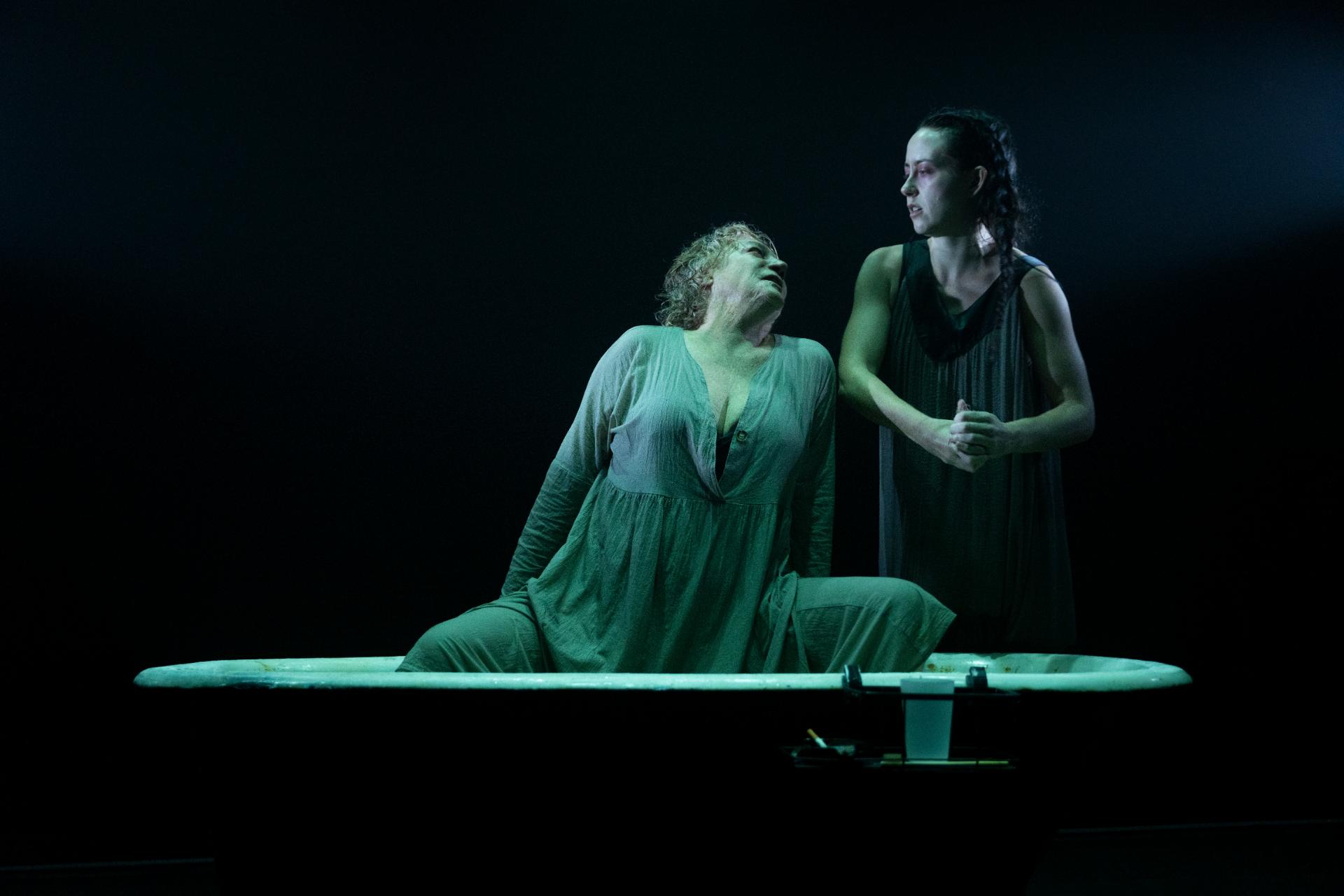
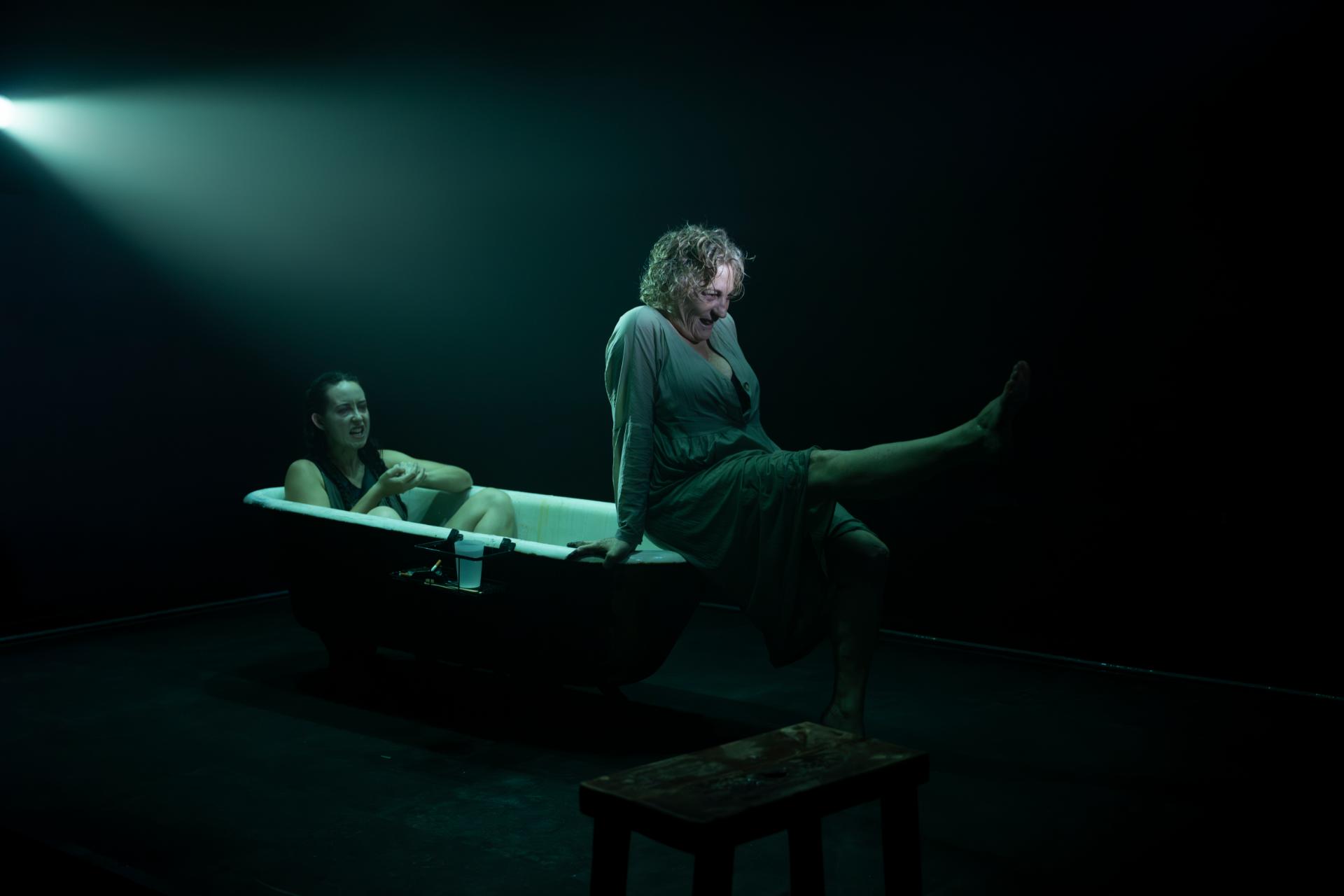
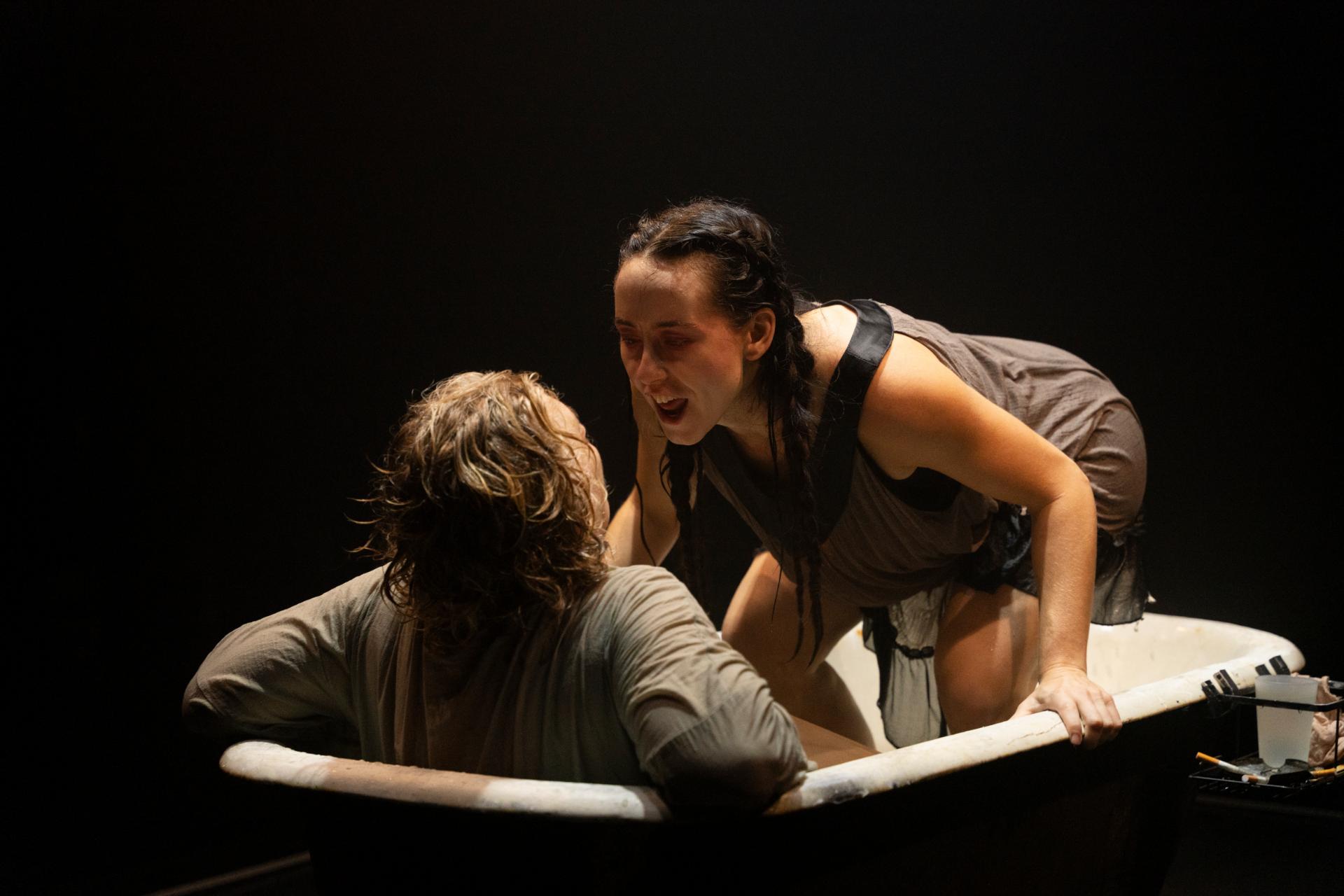
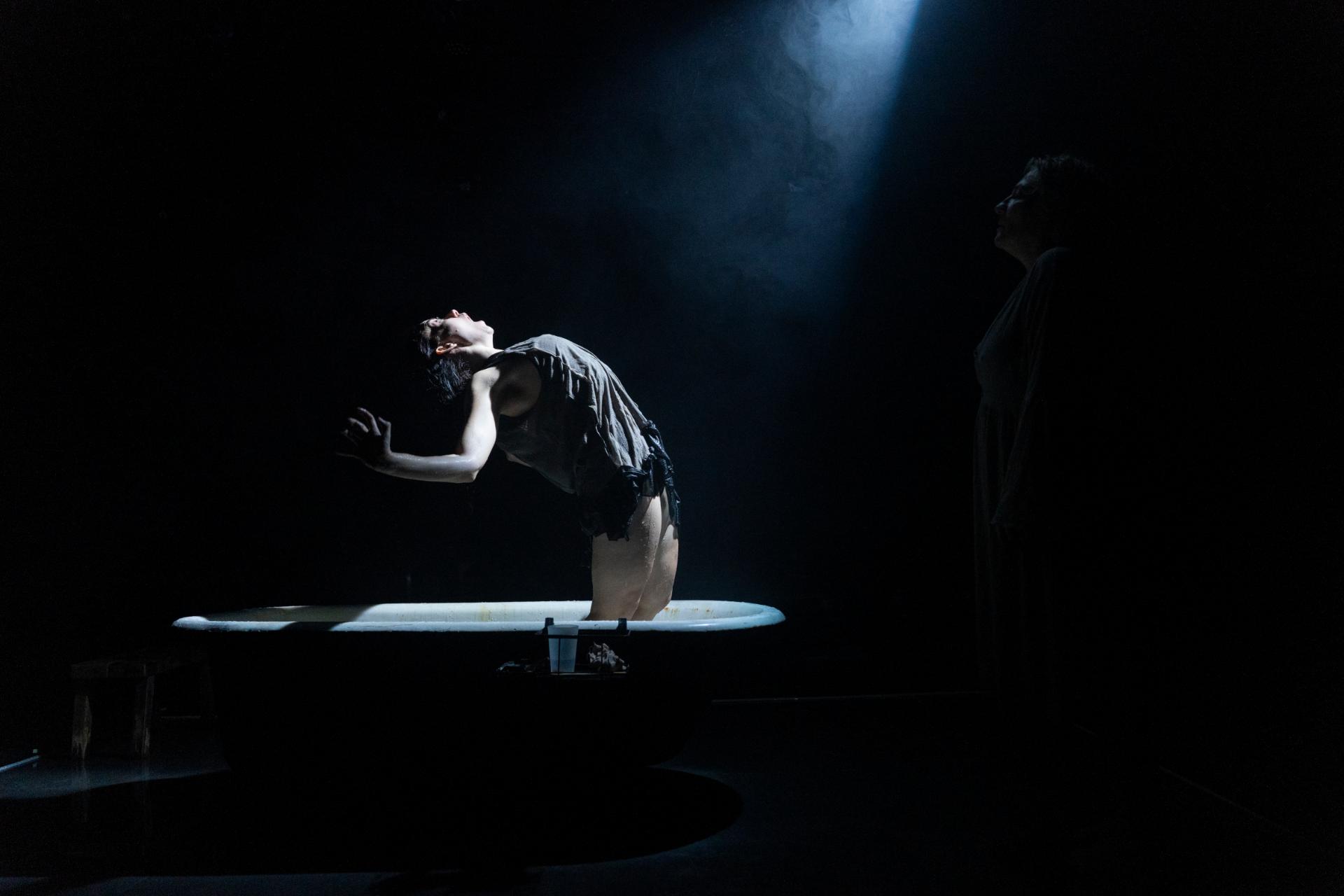
Confined within the oppressive intimacy of close quarters, mother and daughter find themselves separated by little more than the porcelain curve of a bathtub. It is within this suffocating proximity that their shared claustrophobia becomes the crucible for an outpouring of anguish, regret, and disillusionment—at once accusatory and raw with frustration. Gemma Burwell’s Gravy eschews narrative transparency for formal abstraction; yet the emotional architecture it constructs is undeniably vast, audacious, and hypnotic. Burwell’s dramaturgy serves as a potent reminder that theatre must transcend mere intellectual provocation—that it bears equal obligation to the unruly territories of heart and soul.
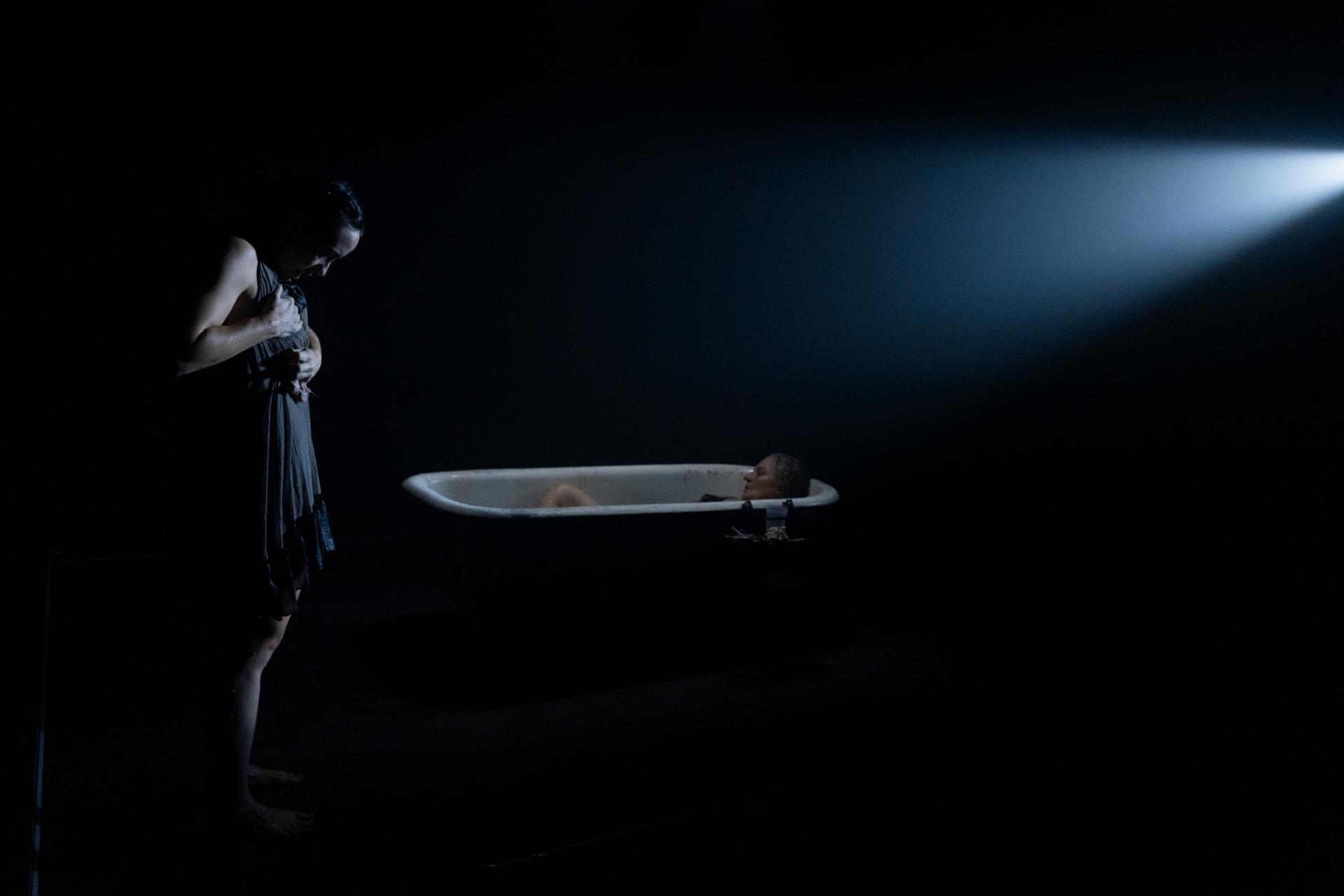
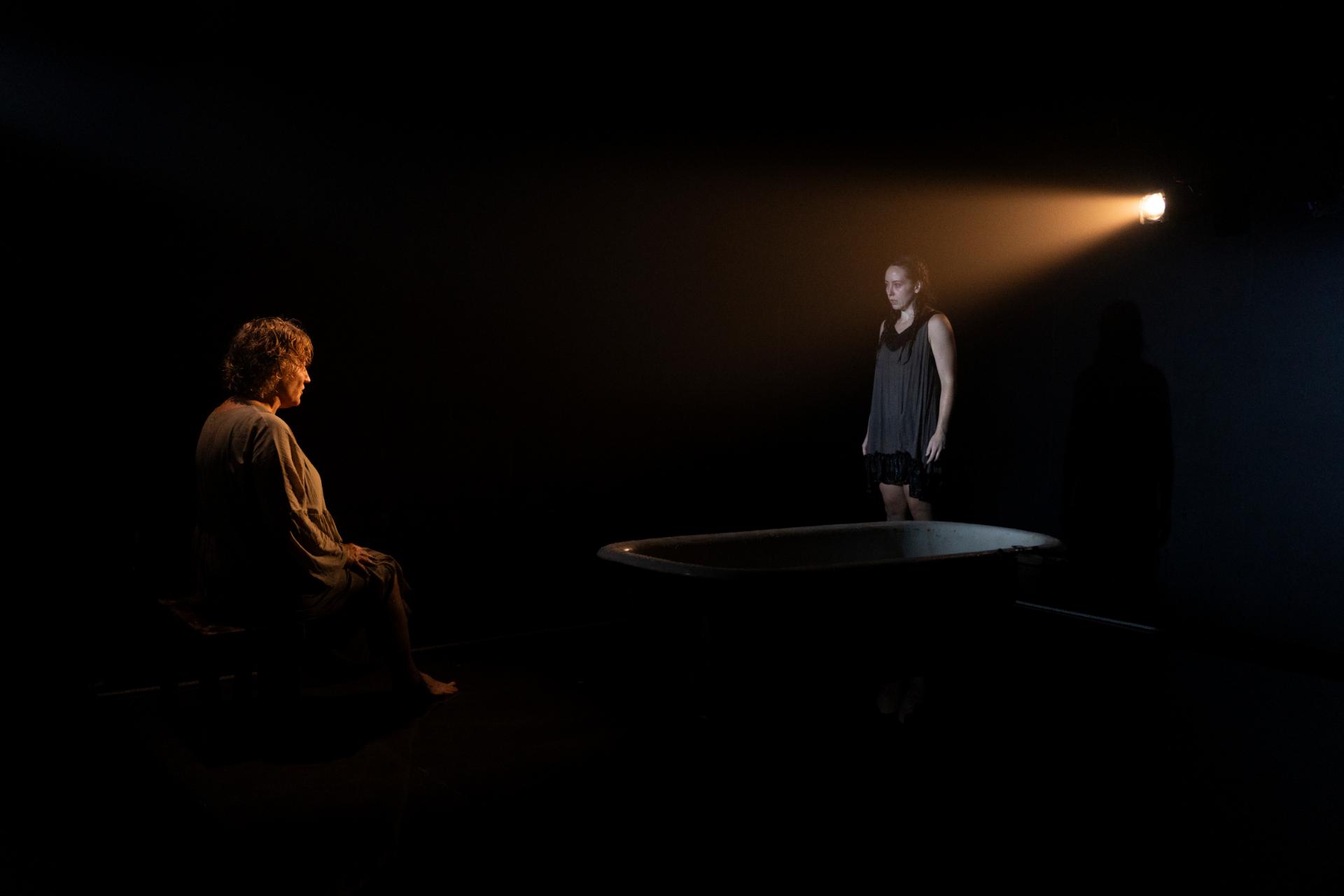
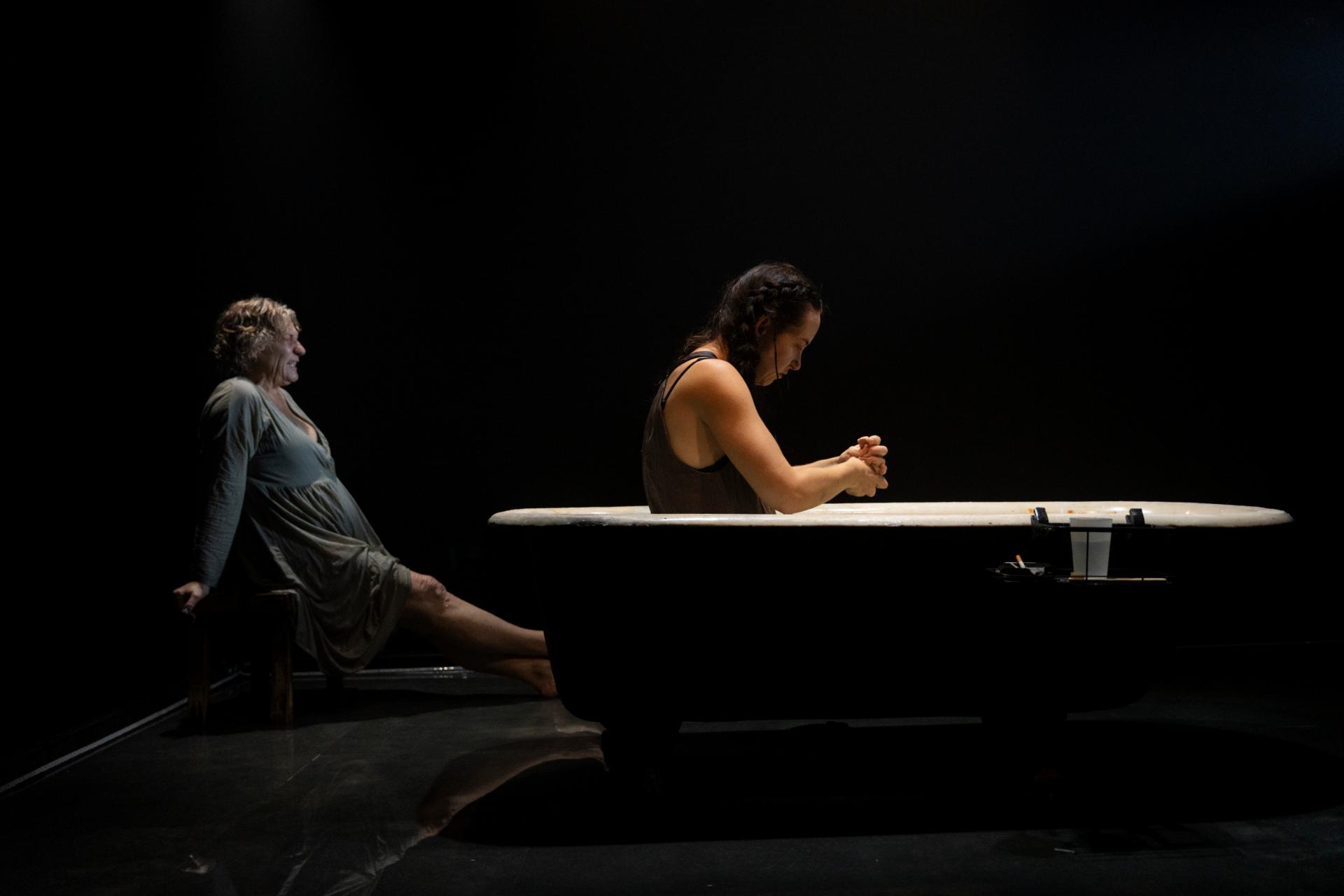
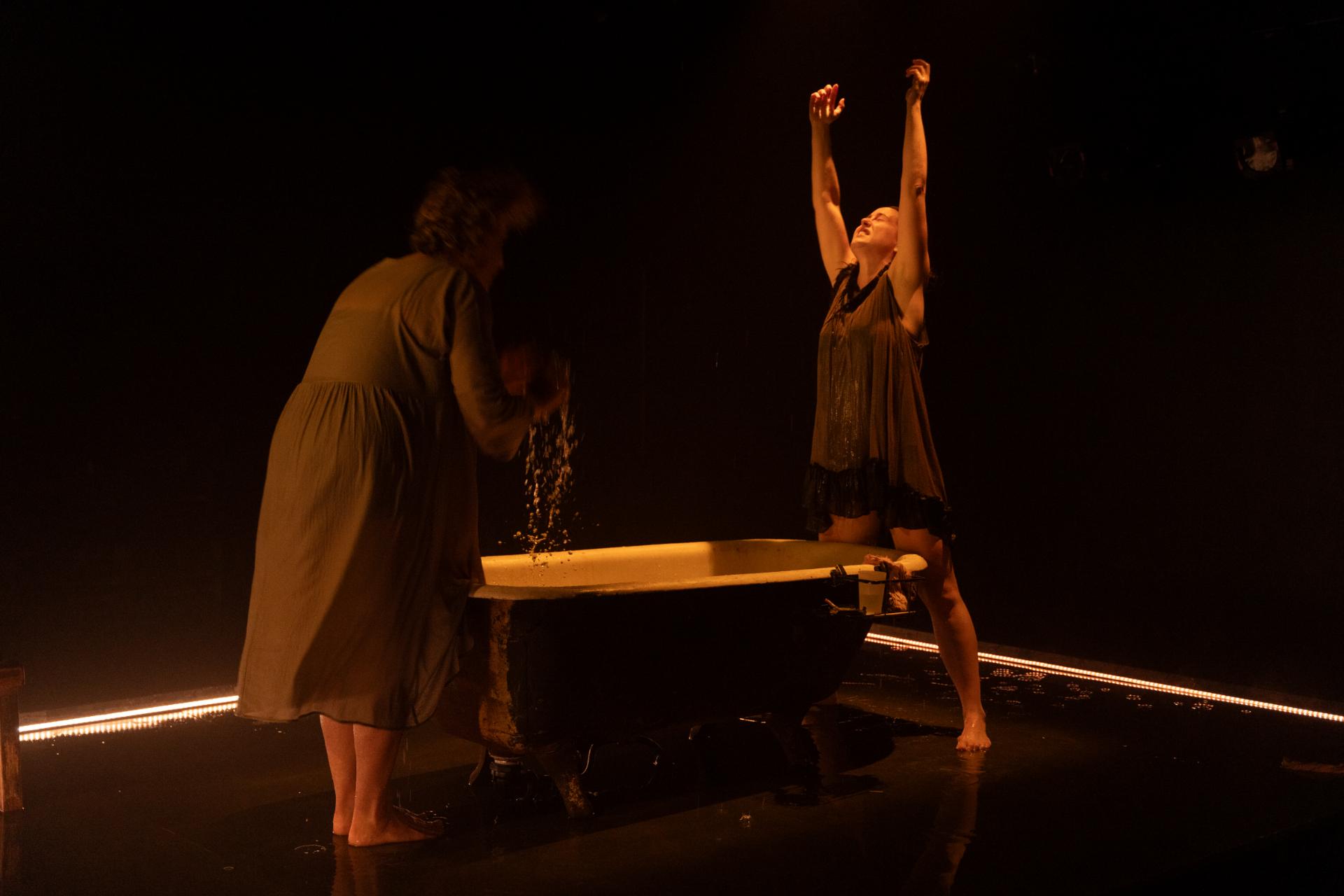
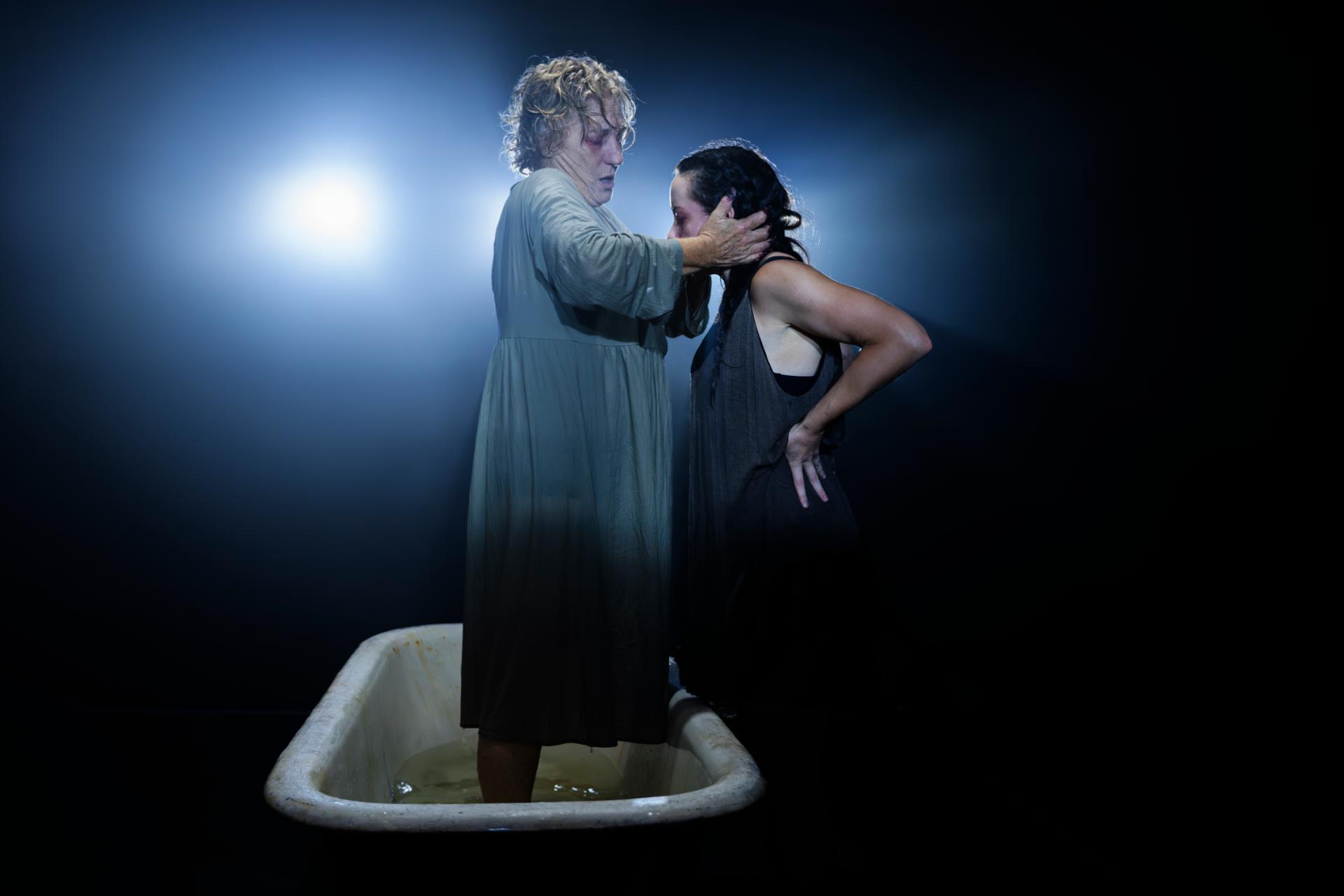
Under the direction of Saša Ljubović, the production seizes upon the surreality latent in Burwell’s text and takes flight—soaring into a theatrical realm at once mesmerising and palpably risky. Coherence is deliberately destabilised; we are never quite certain what is unfolding, as the possibilities for interpretation remain deliberately, thrillingly multiple. Yet paradoxically, we sense that the action coheres, if chiefly in ways that bypass the rational mind and speak directly to the viscera. That the stage appears perpetually inundated—water surging, defying containment—renders the proceedings irreducibly unpredictable, importing nature’s own recalcitrance into the theatrical equation. Here, theatre claims a latitude of freedom all too absent from Western dramaturgical convention. James Smithers’s set design accomplishes this not merely with efficacy, but with consummate sophistication and polish.
Indeed, this production foregrounds aesthetics as a primary vehicle for meaning-making and a site of value in itself. Gravy is incontrovertibly macabre, yet equally evocative, inspiriting, and possessed of a terrible beauty. Frankie Clarke’s lighting design oscillates between the dreamlike and the nightmarish, determined to never settle into the merely pedestrian; it is a study in luminous instability. Meanwhile, sound design by Milo McLaughlin and Zsa Zsa proves thrilling in its capacity to conjure atmospheres at once enigmatic and menacing. What impresses most, however, is the intricacy and precision with which the sonic landscape intertwines with the physicality unfolding in live motion—each gesture met, mirrored, or subverted by an aural counterpart, resulting in a synthesis that feels both elemental and meticulously wrought.
Performers Meg Hyeronimus and Deborah Jones inhabit their roles with remarkable concentration and an intimate fluency in the play’s internal logic. Their interpretations abound in imaginative daring and a studied carefreeness that invites—indeed compels—each spectator to forge perspectives irreducibly singular. Their bodies repudiate realism, with physical vocabularies that unfold as a kind of choreographed dialogue: a dance that speaks with potent ambiguity, shifting between brutality and sensitivity. In their hands, archetypal relationships and perennial emotional conflicts are rendered with a freshness that feels wonderfully modern.
The parent-offspring dyad constitutes an inexhaustible wellspring of narrative, yet it is through art that such perennial tales are rendered strange, defamiliarised, and thus perpetually renewed—yielding uncharted resonances for as long as art endures.
 Suzy Goes See