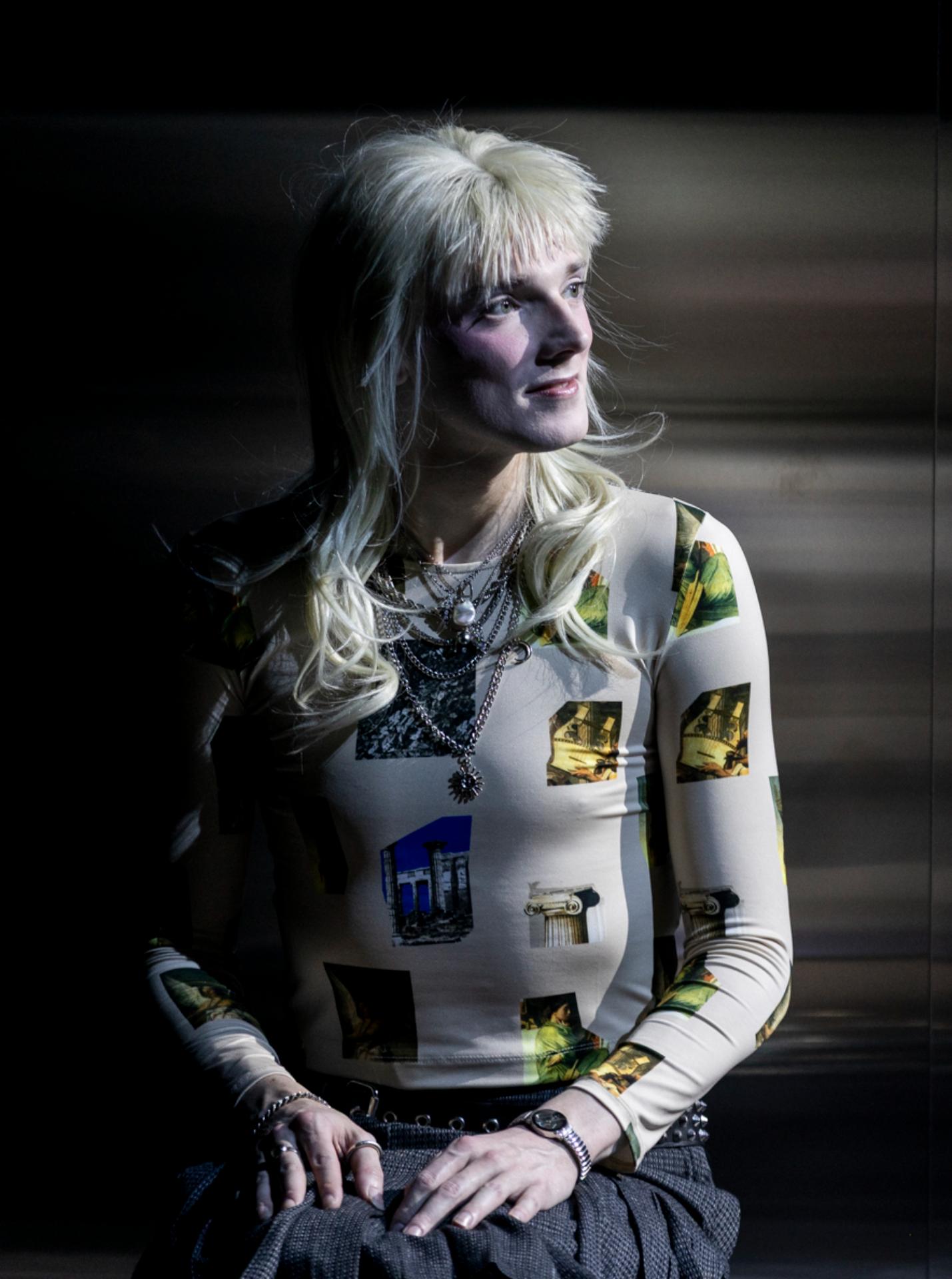
Venue: Belvoir St Theatre (Surry Hills NSW), Sep 6 – 28, 2025
Playwrights: Carissa Licciardello, Elsie Yager (from the novel by Virginia Woolf)
Director: Carissa Licciardello
Cast: Janet Anderson, Nyx Calder, Emily Havea, Amber McMahon, Nic Prior, Shannen Alyce Quan, Zarif
Images by Brett Boardman
Theatre review
At a pivotal moment in the production, Lord Orlando becomes Lady Orlando, and with this transformation, questions of gender and identity are revealed as the very axis of Carissa Licciardello and Elsie Yager’s adaptation of Virginia Woolf’s 1928 novel Orlando: A Biography. Shortened simply to Orlando, the work preserves the fantastical spirit and poetic sweep of Woolf’s novel, though some of its intellectual density seems to have dissipated in translation to the stage.
Its inquiries into sexism, while sincere, often feel suspended in the past, unable to reproduce the startling contemporaneity of Woolf’s text. At times, gender is rendered too simplistically in Licciardello’s direction. Yet the injustices faced by Lady Orlando—most notably the loss of property and wealth on account of her sex—remain a compelling anchor, ensuring the adaptation retains a measure of significance.
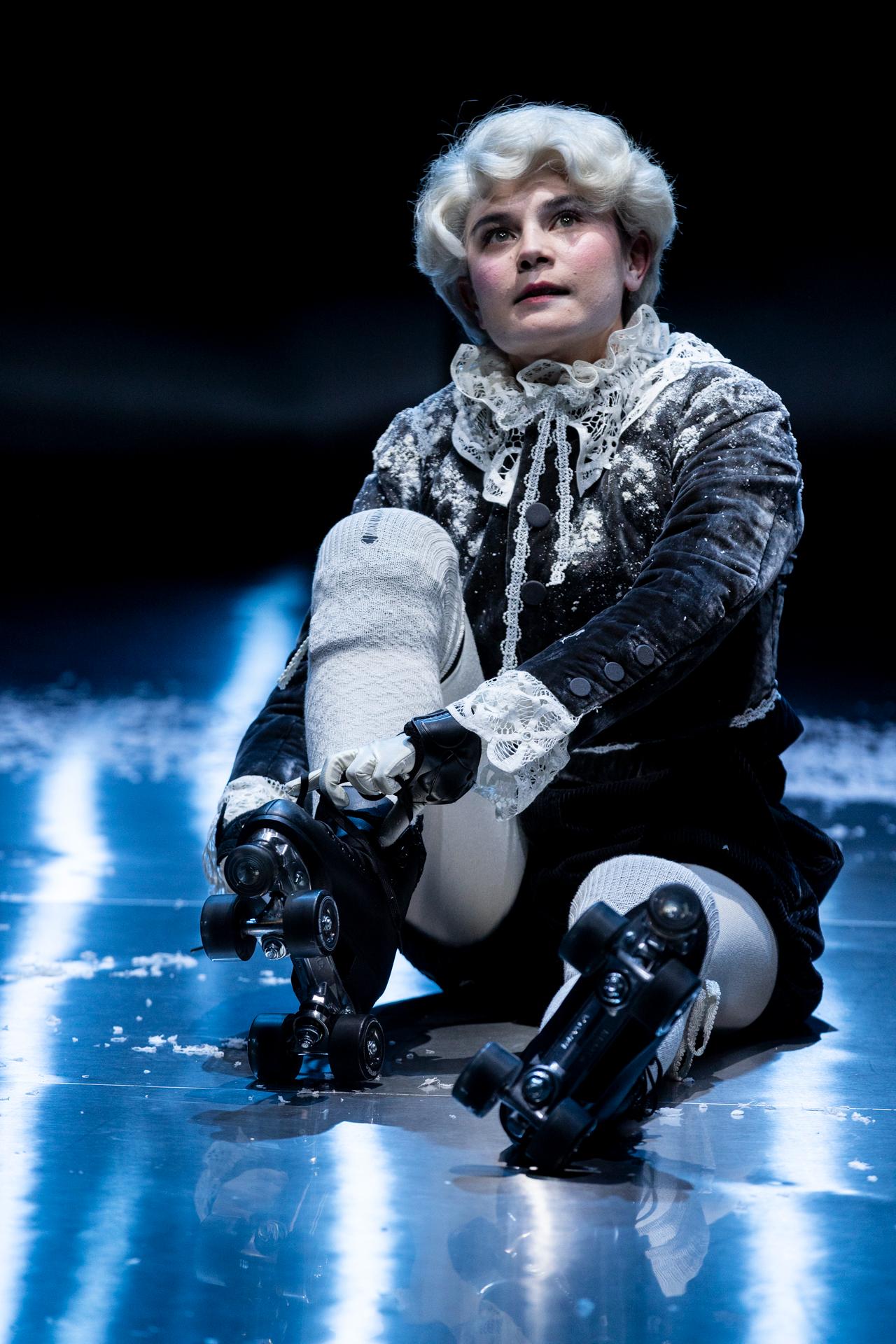
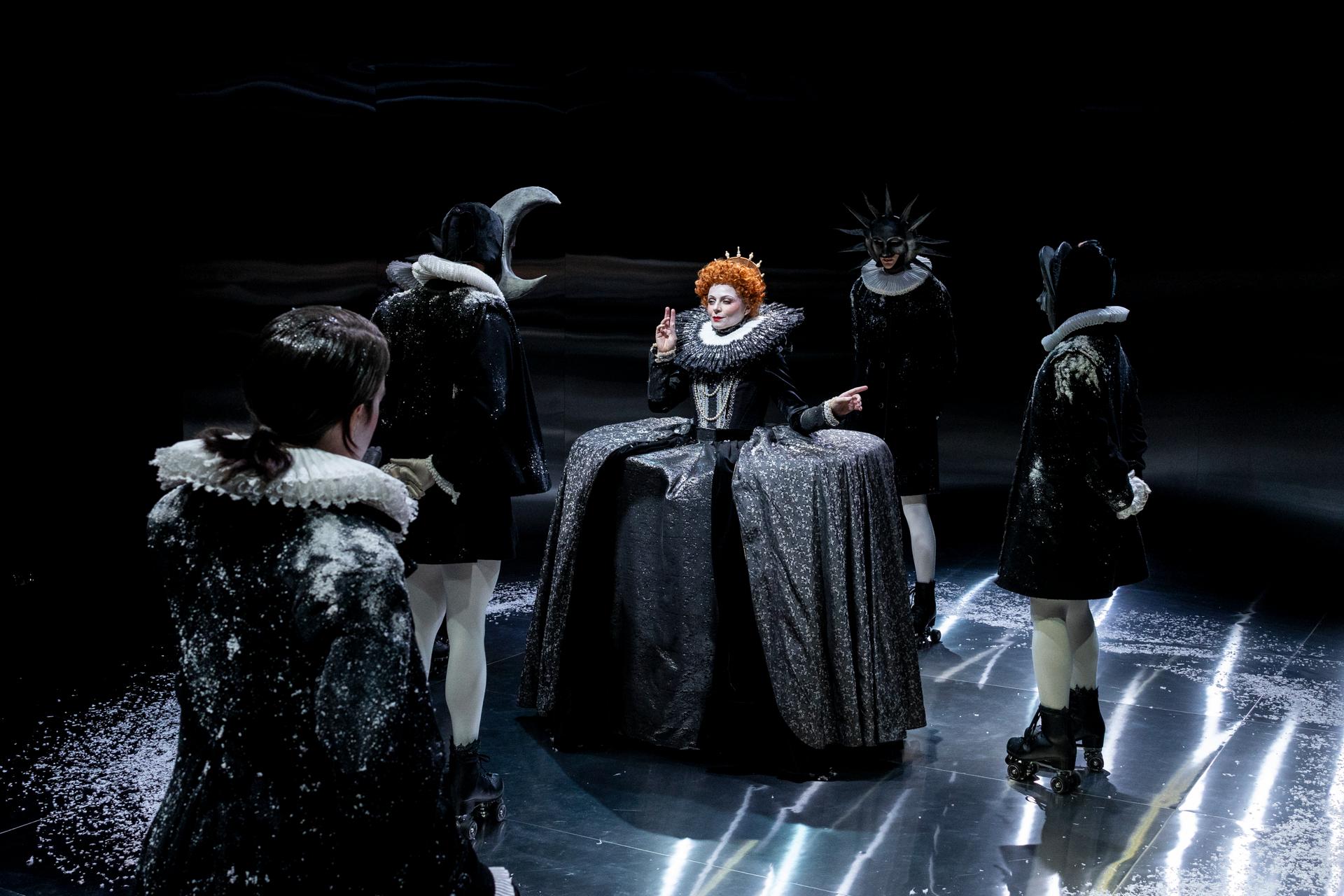
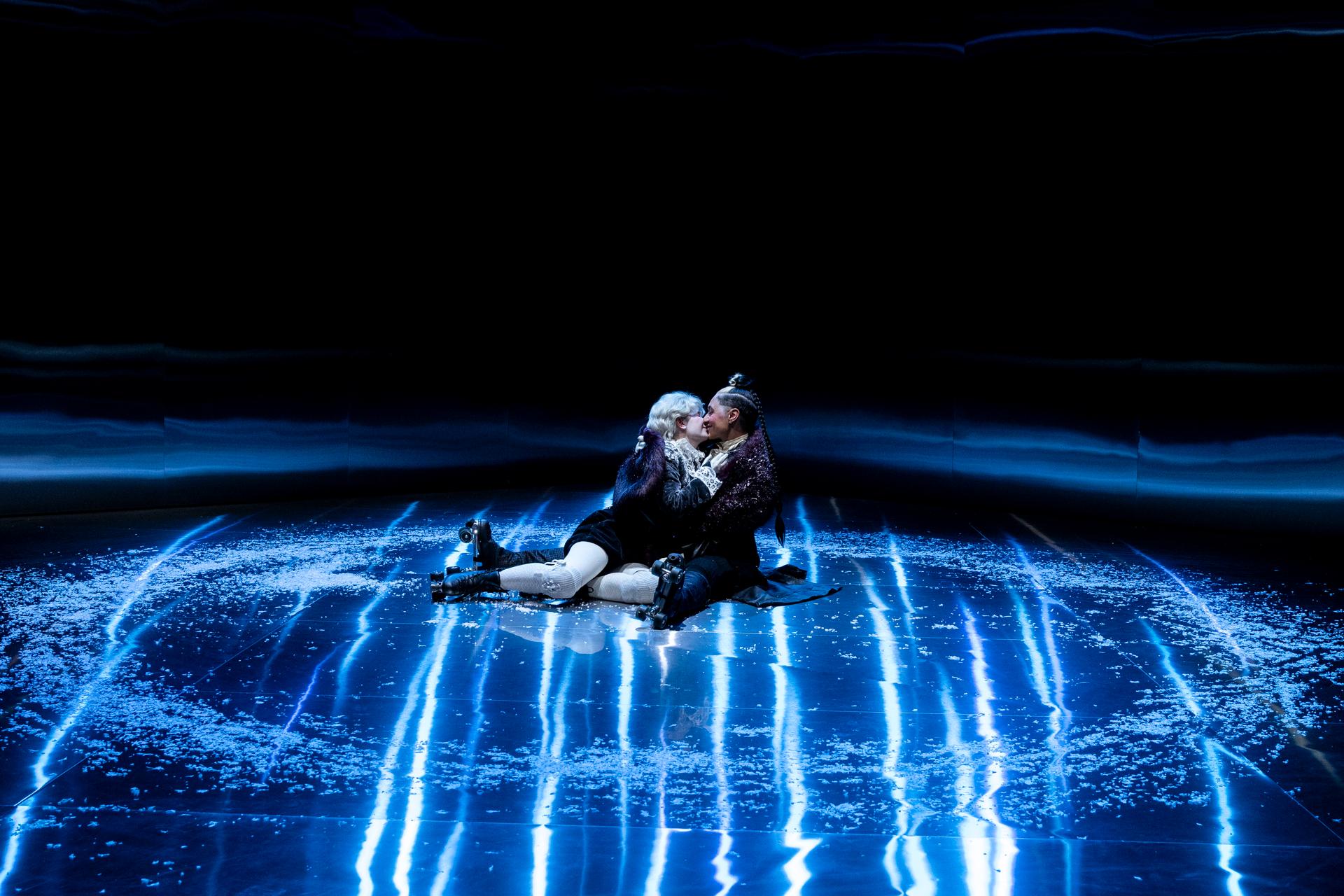
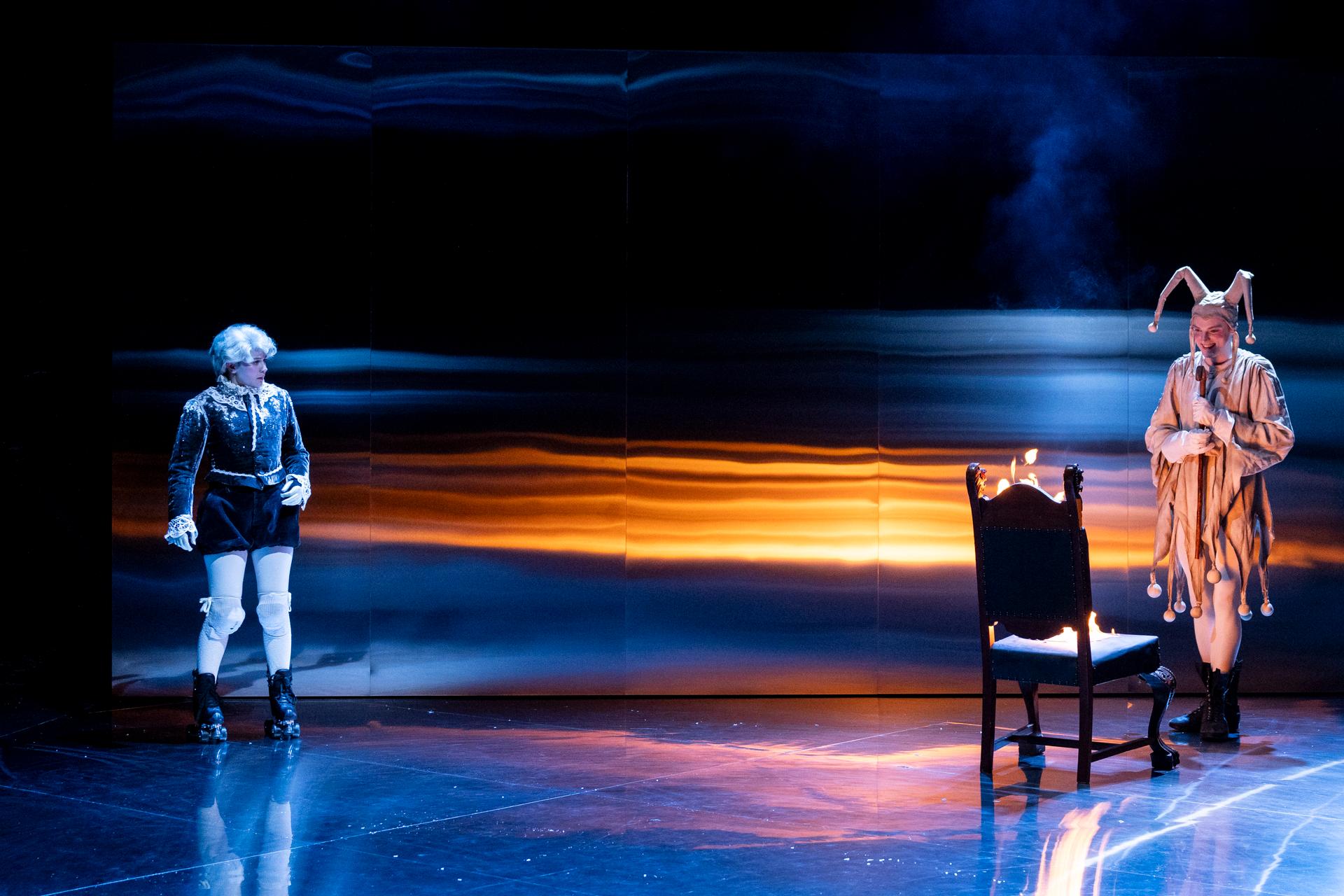
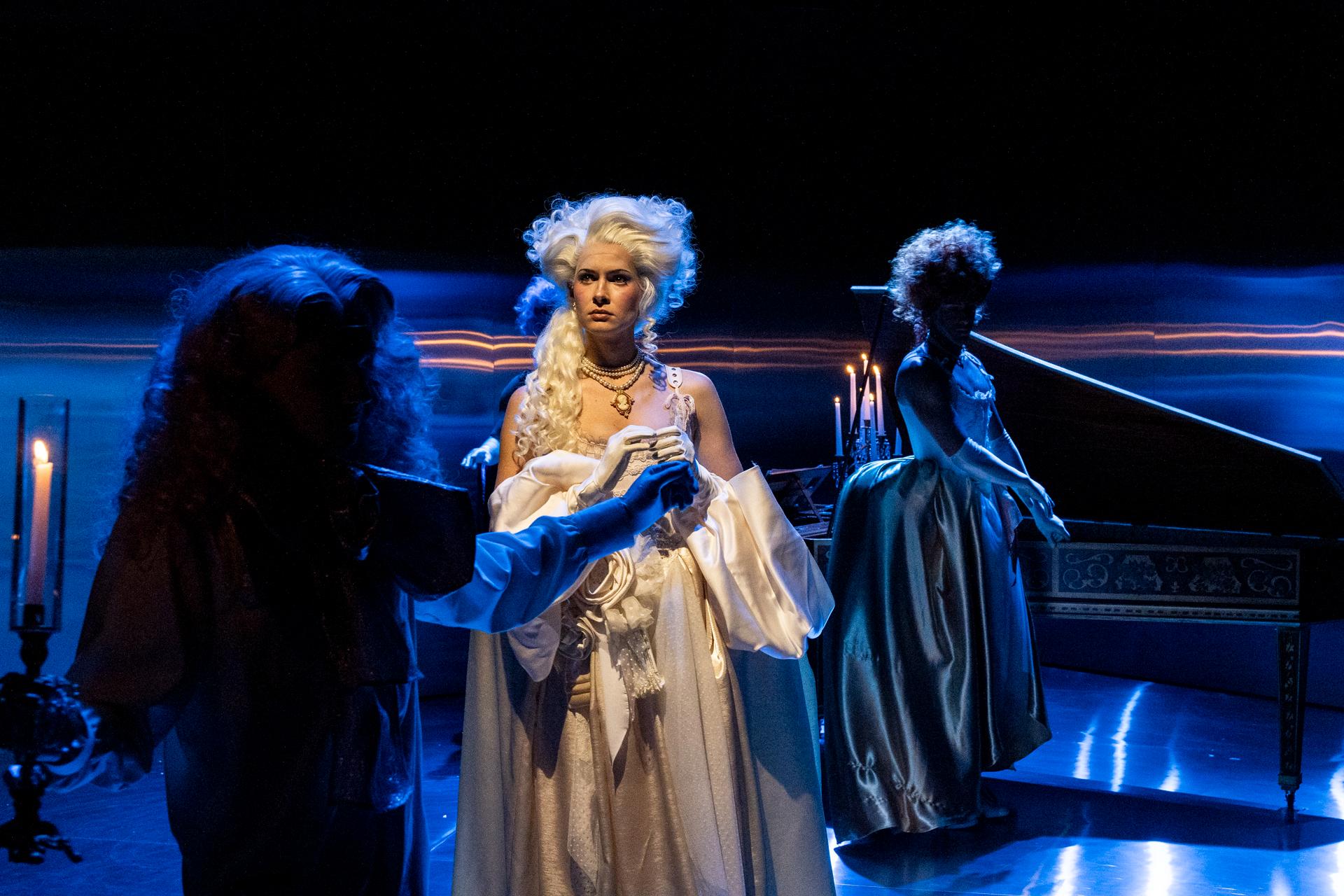
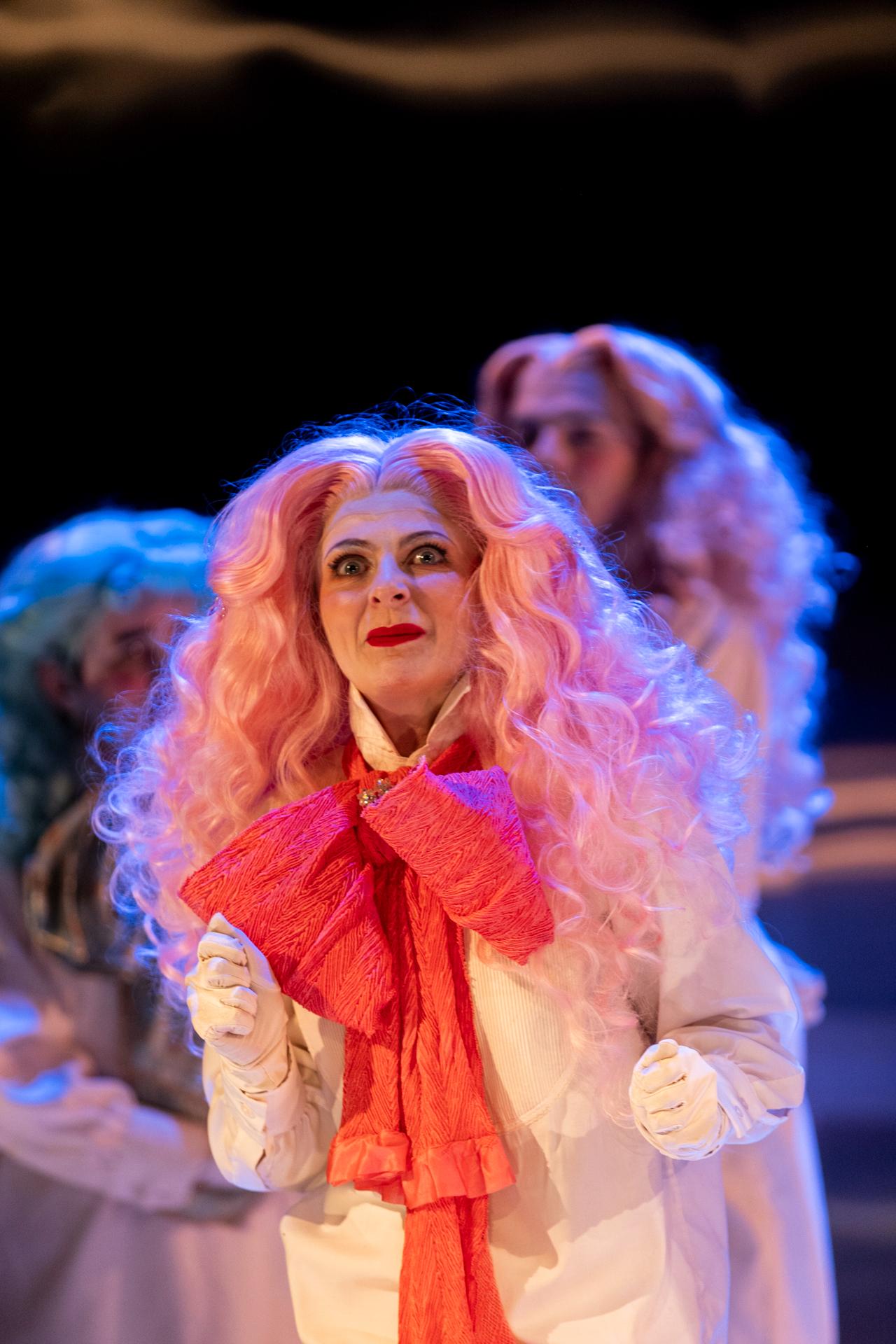
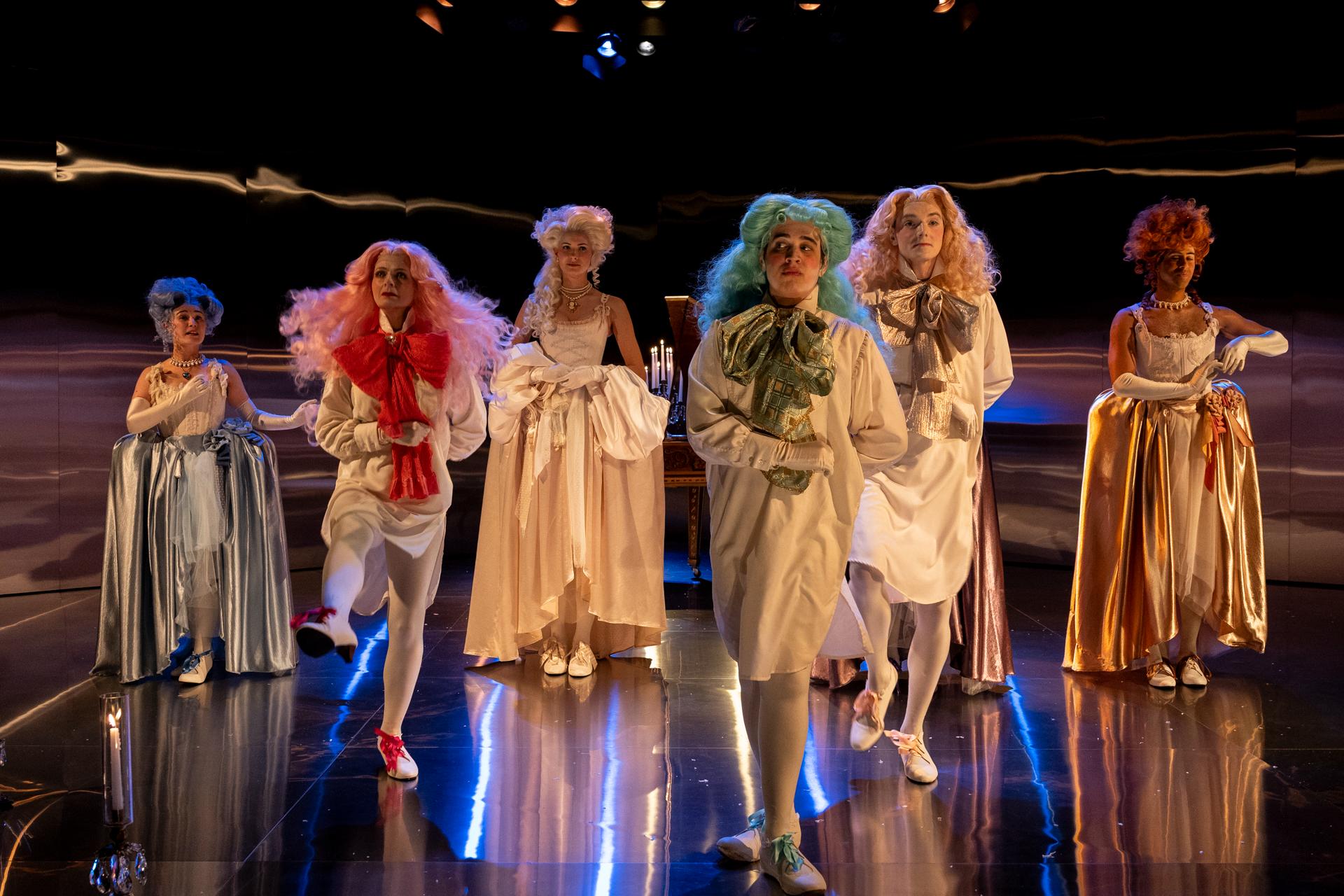
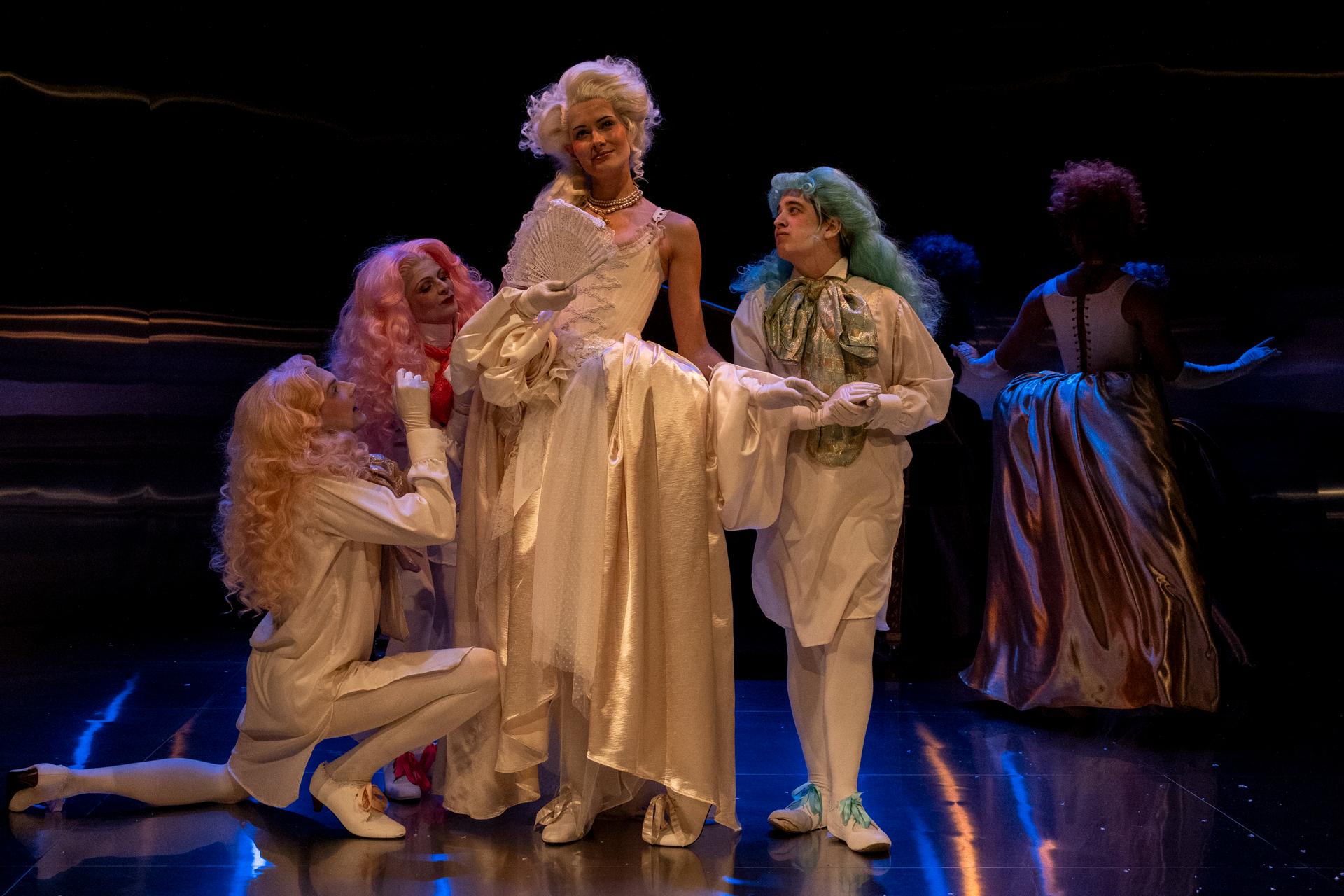
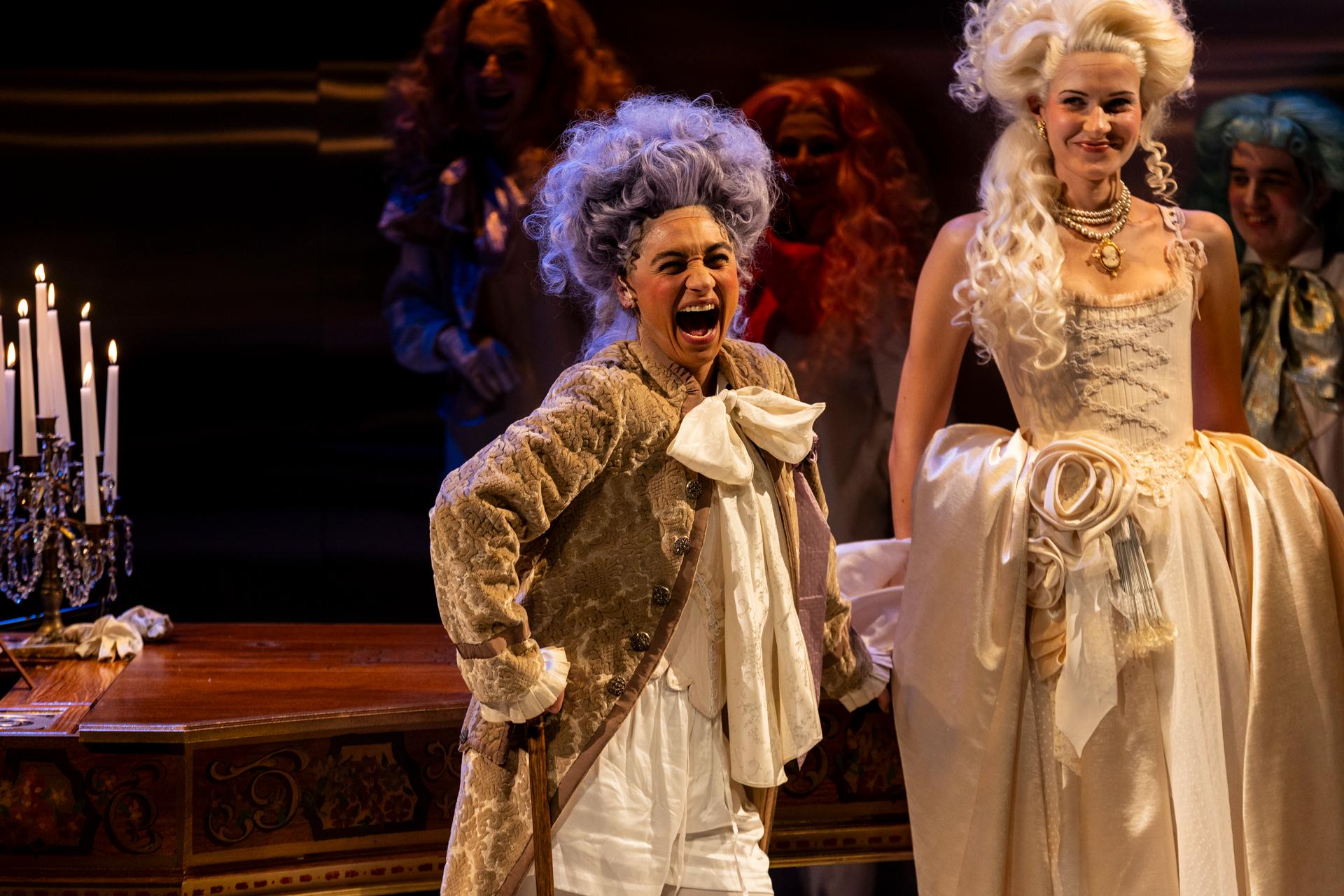
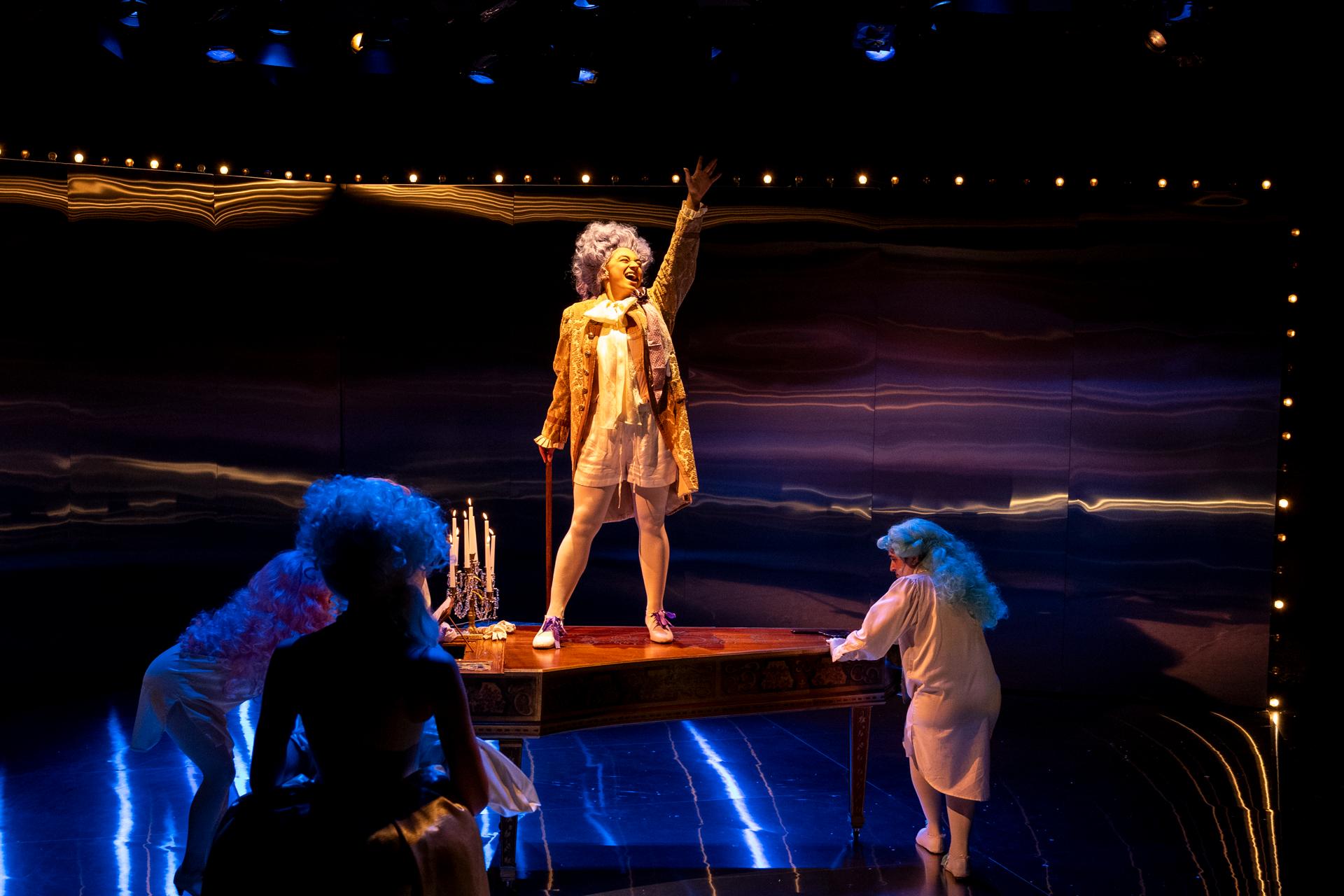
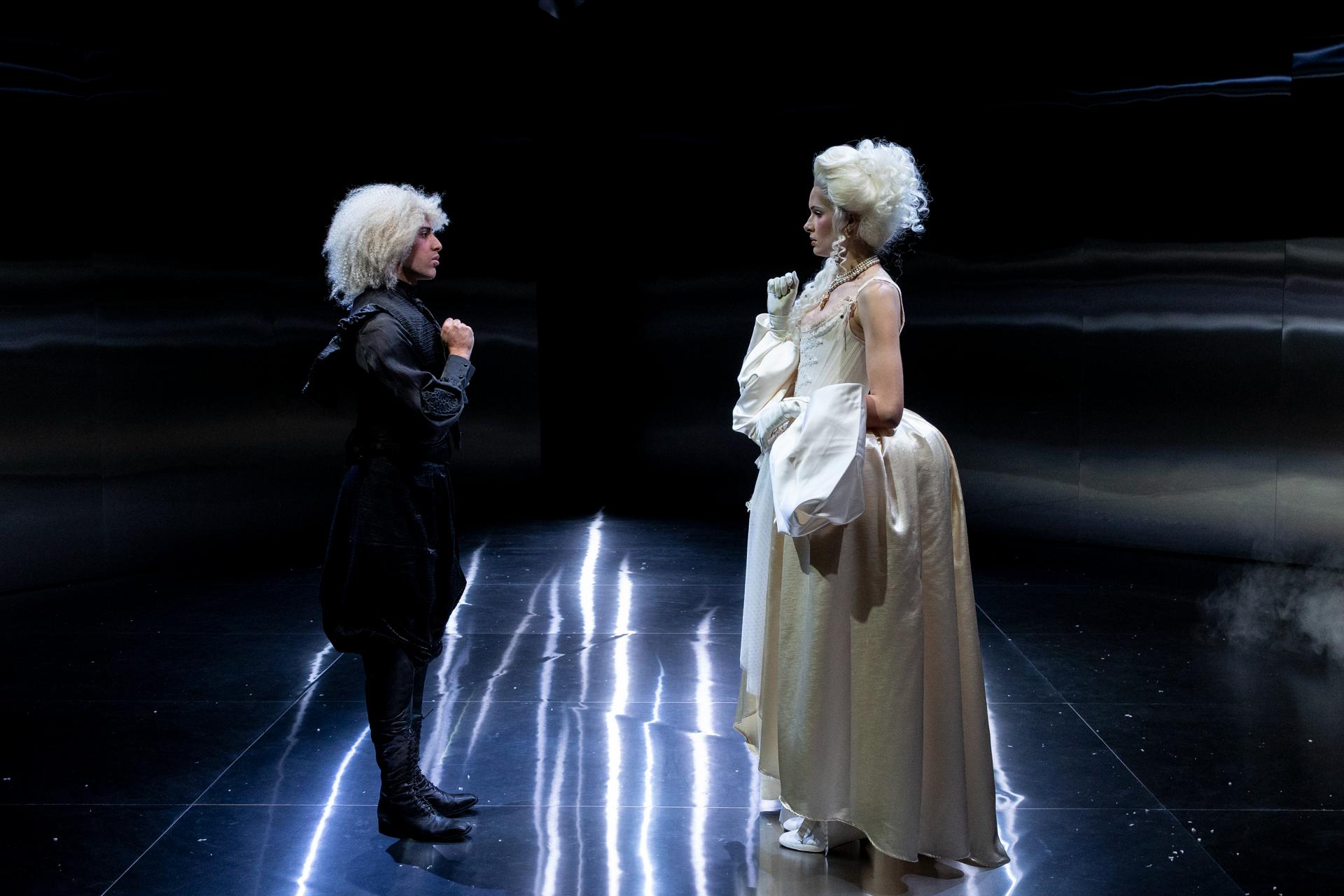
Given the scale of wealth under examination, the staging never quite achieves the level of opulence one might anticipate. David Fleischer’s set design is restrained yet elegant, while Nick Schlieper’s lighting adds welcome layers of drama. It is Ella Butler’s costumes, however, that most vividly conjure the dreamlike luxury of Orlando’s world, complete with outrageous wigs that deliver a sense of theatrical extravagance.
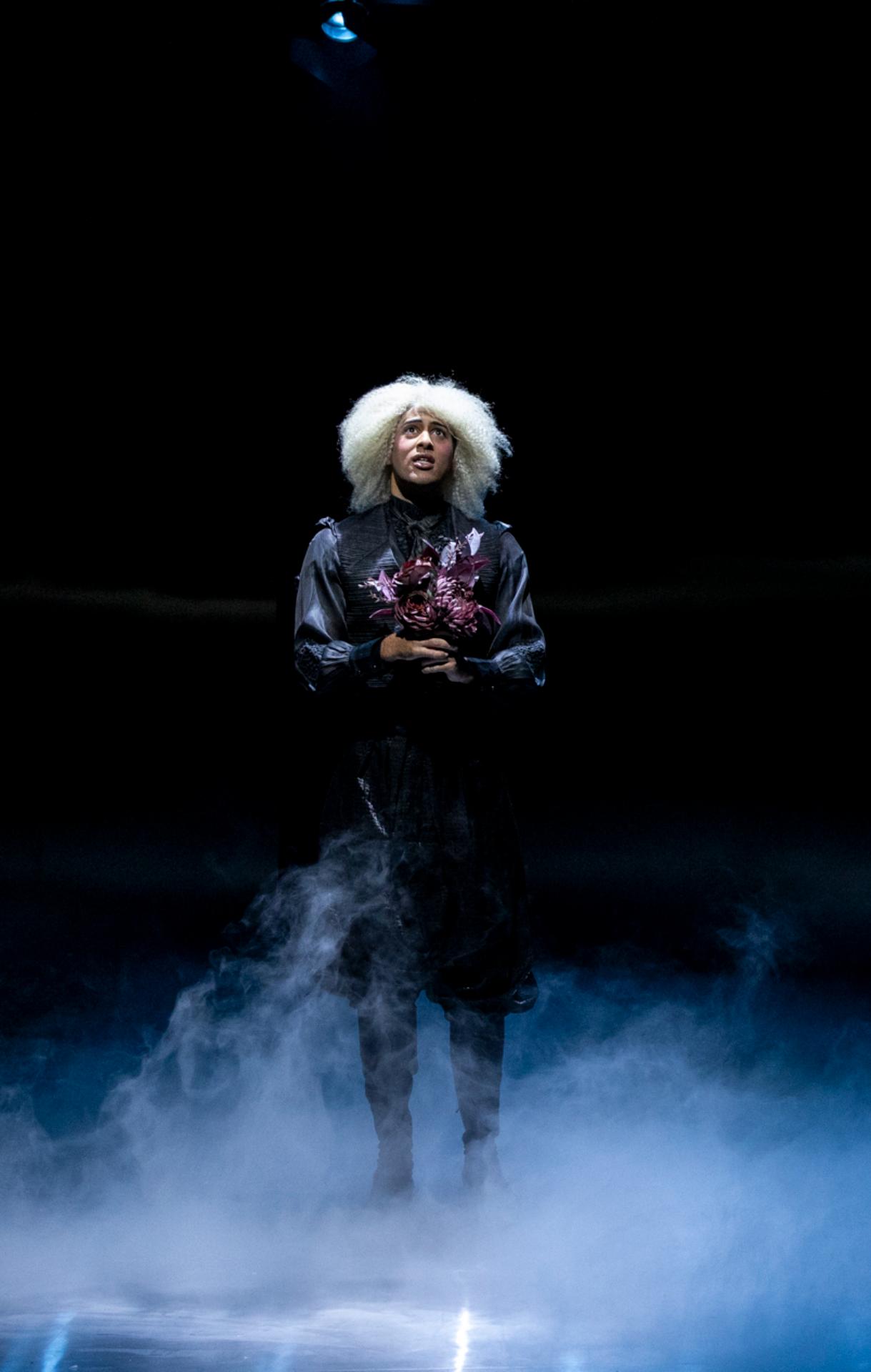
A delightful ensemble of seven performers leads us through this centuries-spanning odyssey. Remarkably, four different actors step into the role of Orlando at various stages of the story. Shannen Alyce Quan lends the character a quiet intensity, infusing Woolf’s poetic language with luminous clarity. Janet Anderson brings striking beauty to Orlando’s first feminine incarnation, and later proves irresistibly funny in a string of smaller roles. Equally memorable is Amber McMahon, regal and commanding as Queen Elizabeth, then deliciously camp as a seventeenth-century suitor.
The impermanence of identity underscores the endlessly shifting nature of what we call reality. This is not to say that categories like gender and sex lack meaning—on the contrary, they are among the most powerful forces shaping how we move through the world. Their paradox is that they remain fluid and insubstantial, yet exert a power that orders our very existence. It is precisely this tension, between mutability and determinism, that compels us to always return to them in endless questioning.
 Suzy Goes See