

Venue: KXT on Broadway (Ultimo NSW), Aug 29 – Sep 13, 2025
Playwrights: Sunny Grace, Clare Hennessy, Richie Black
Director: Lucinda Gleeson
Cast: Zoe Carides, Clare Hennessy, Saro Lepejian, Andrea Magpulong, Brendan Miles. Matt Abotomey
Images by Ravyna Jassani
Theatre review
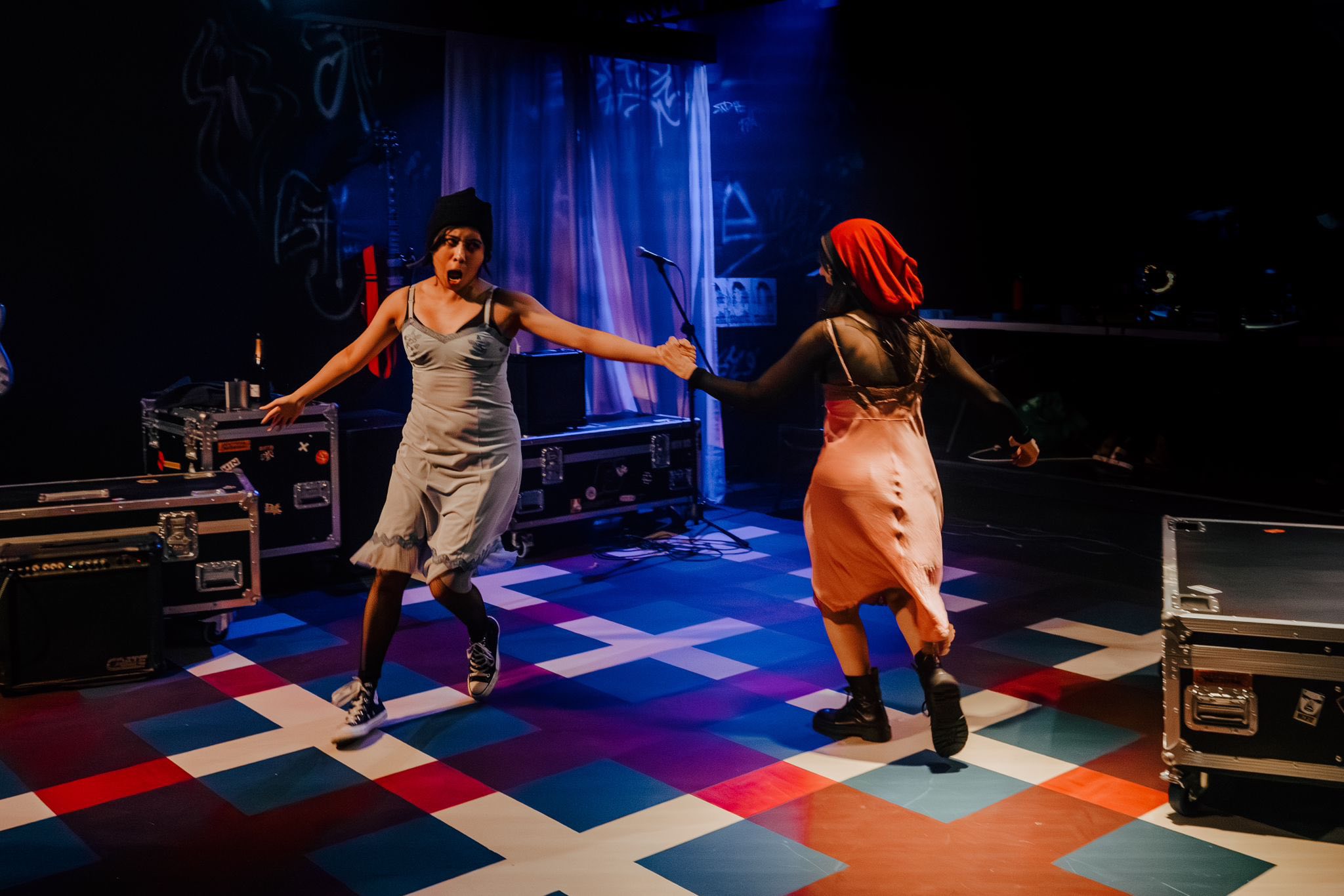
Amber was a fleeting rock sensation of the early ’90s, her career abruptly derailed by the ruthless grip of patriarchy. Decades later, when Alyssa goes viral on TikTok with a cover of one of Amber’s long-forgotten songs, the forgotten musician emerges—not to celebrate the revival, but to chastise the influencer, mirroring the very silencing forces that once destroyed her own career.
With The Bridge, writers Sunny Grace, Clare Hennessy and Richie Black set out with admirable intentions, crafting a work that seeks to highlight how women can unite across generations to resist the enduring forces of subjugation. The play’s ambition is clear, but its execution falters: the structure is clumsy, the nuance underdeveloped, and the characters too often collapse into flat archetypes rather than fully realised figures.
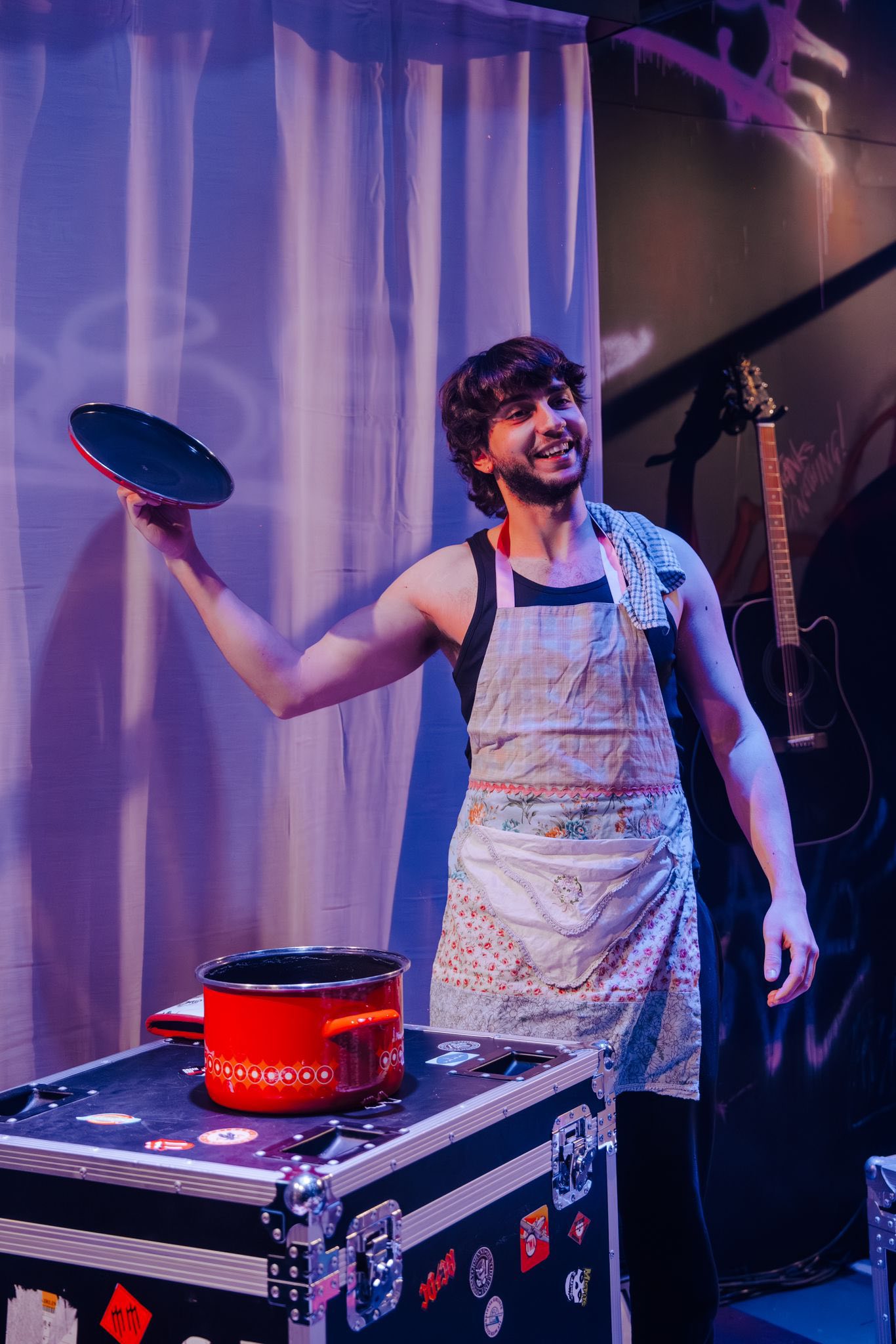
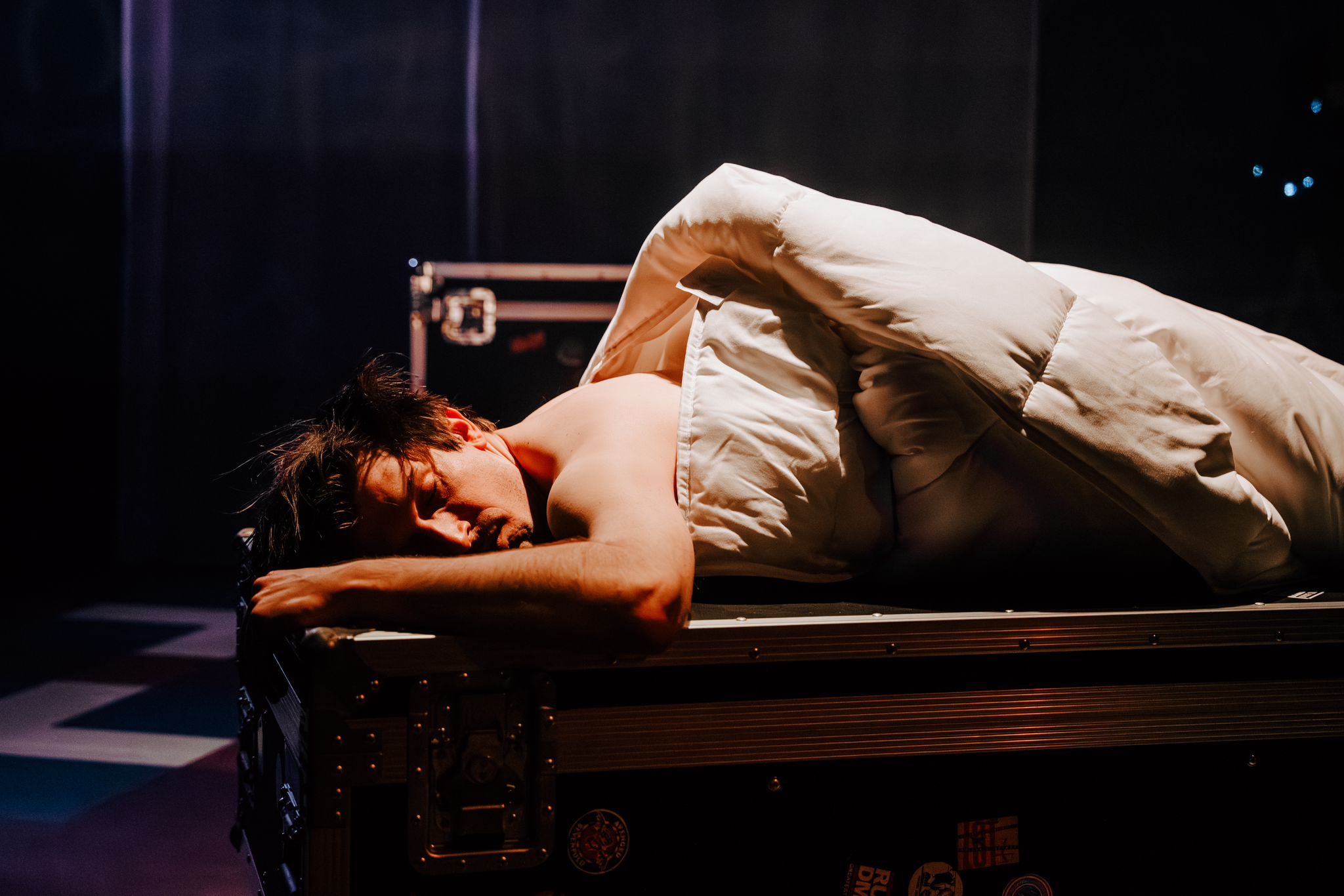
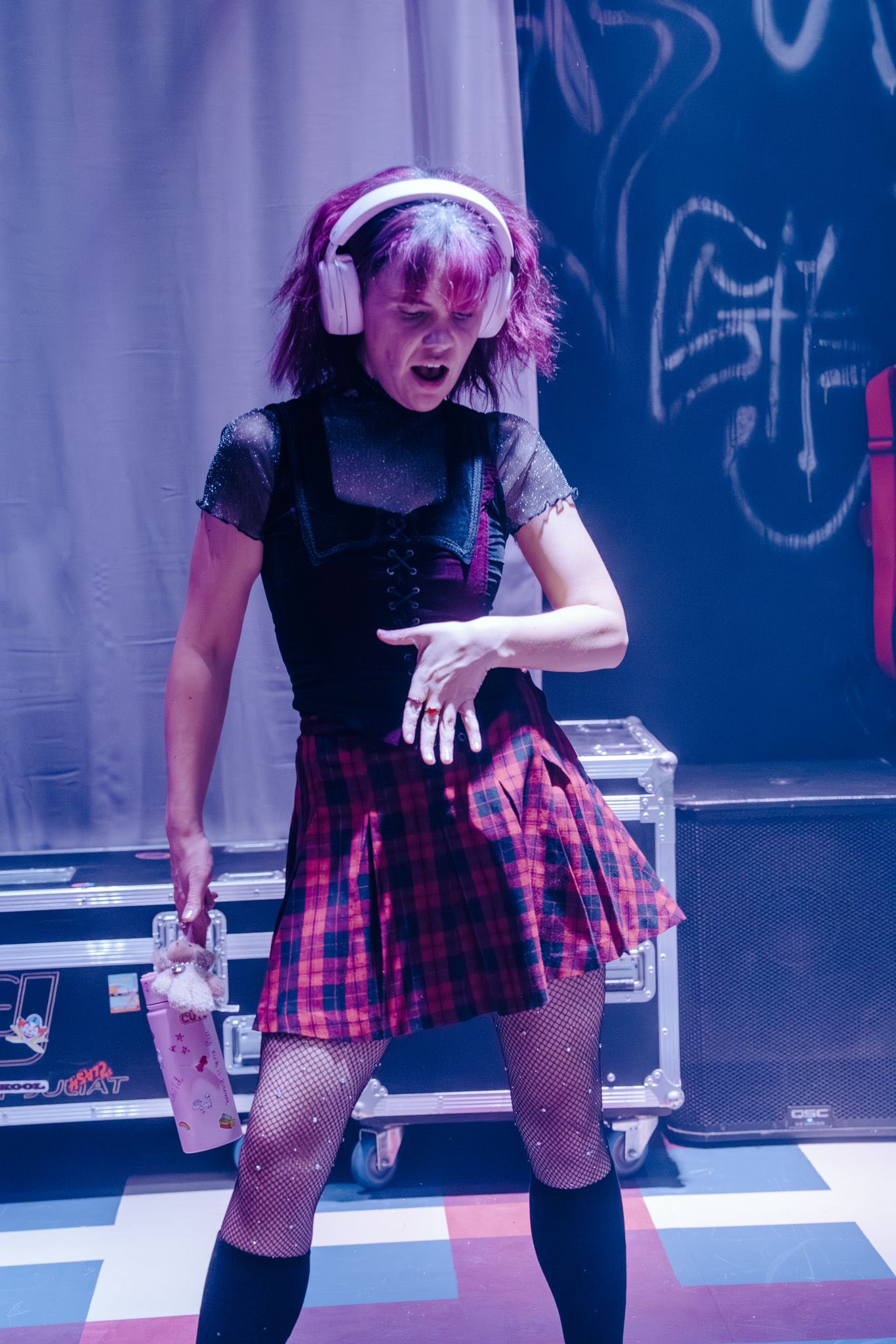
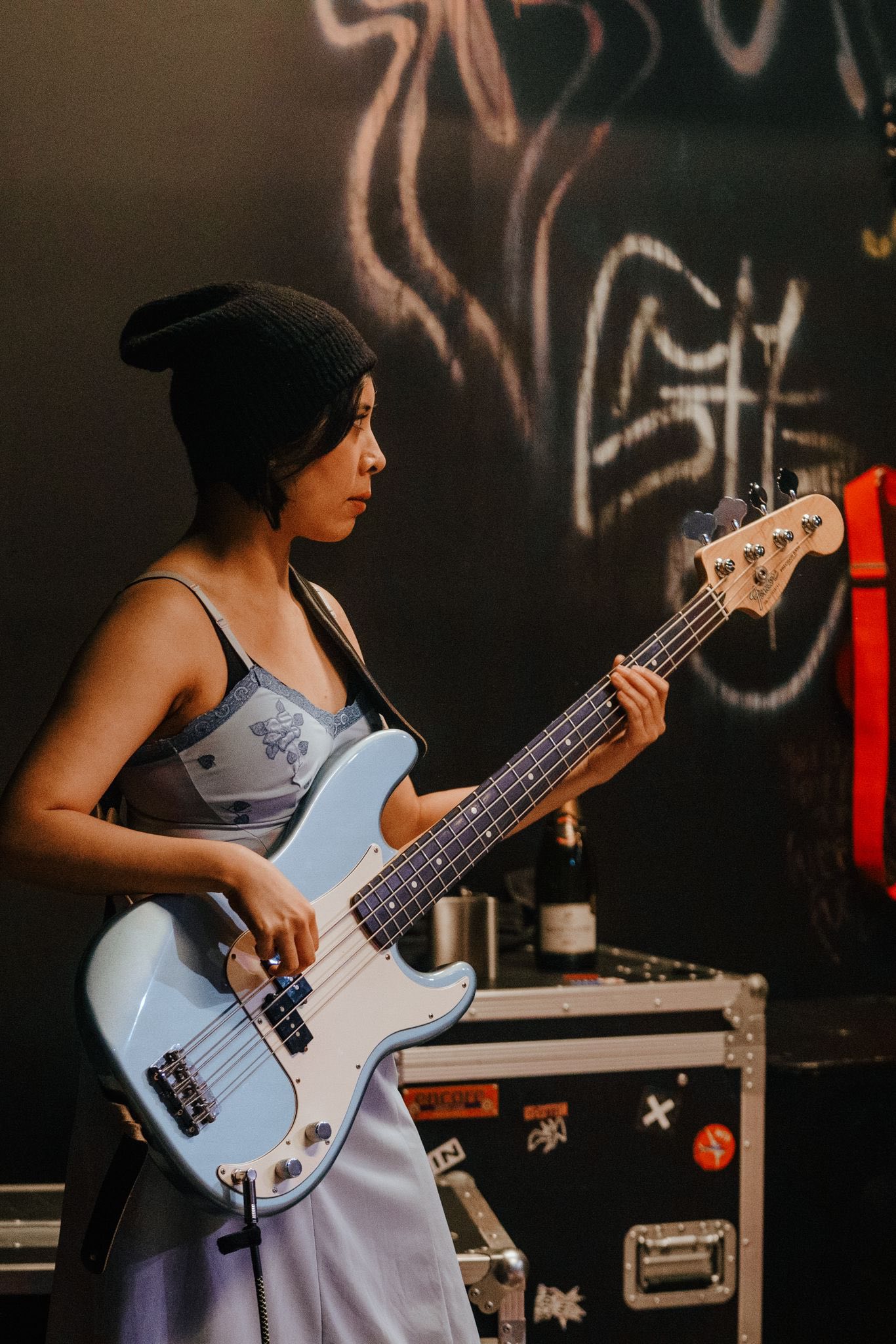
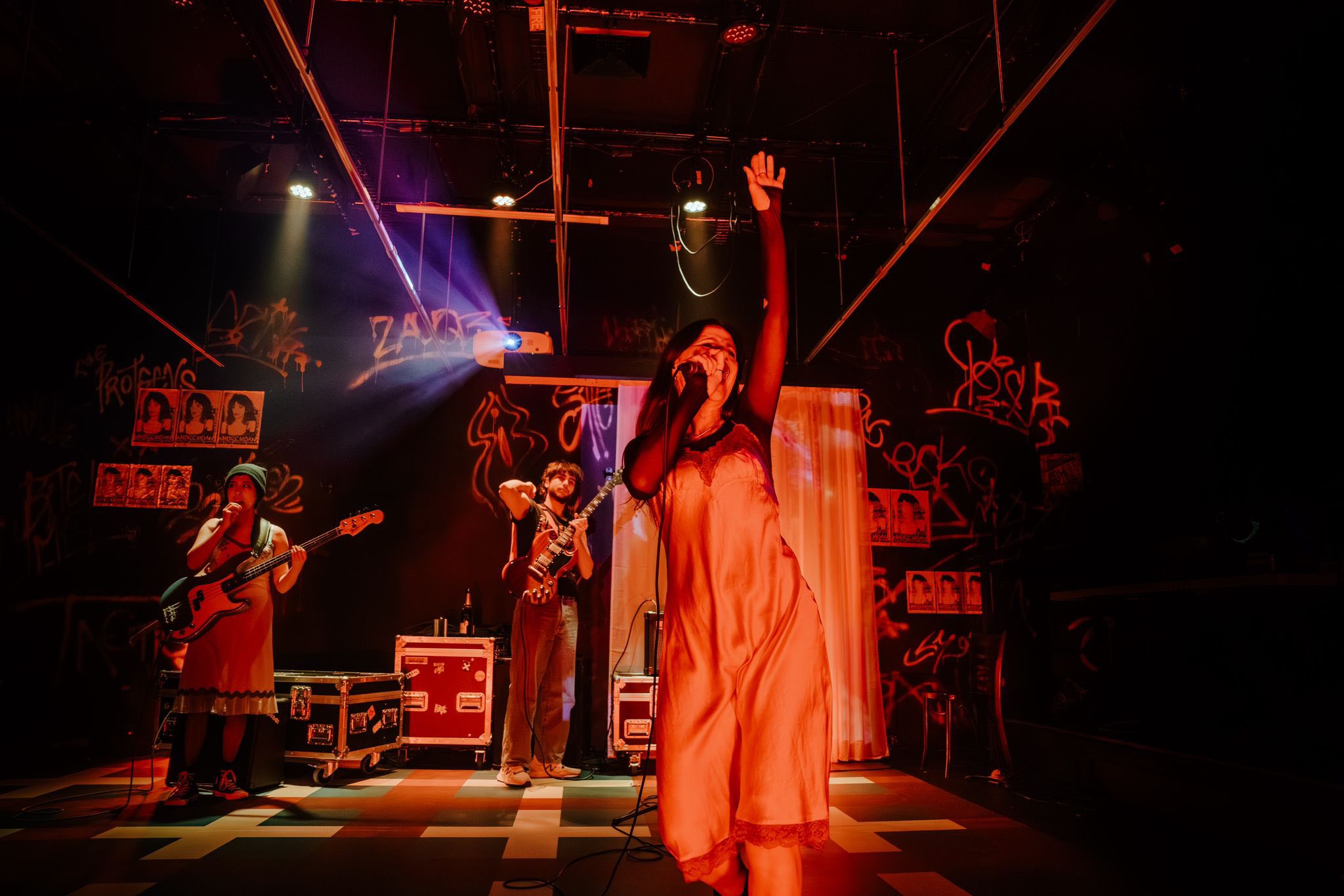
Lucinda Gleeson’s direction may lack elegance, but it is driven by a palpable passion that translates to the stage. The original music by Zoe Carides and Clare Hennessy stands out as a highlight, with the added delight of live performance from several cast members. Sound design by Rowan Yeomans and Elke reaches ambitiously, though it occasionally draws focus away from the action. Aron Murray’s lighting brings welcome dynamism, even if it is not always flattering to the performers, while Kate Beere’s costumes suffer from the same problem, her set design captures the intended mood.
As Amber, Zoe Carides delivers energy and focus, though the performance never fully convinces as that of a late-20th-century rebel hellraiser. Clare Hennessy is more persuasive as Alyssa, the ambitious newcomer, yet her portrayal of a contemporary media personality leans a touch too heavily on flippancy. The chemistry between the two requires greater development, and the progression of their relationship would benefit from being drawn with more care and less abruptness.
While it is unrealistic to expect women to always share affinity with one another, the pursuit of radical inclusivity and acceptance remains essential in resisting patriarchal and colonial systems. Such structures are sustained by division, repeatedly manufacturing wedges that isolate individuals and diminish their collective agency. Feminism, therefore, must be understood as a project of expansion—drawing in as many voices as possible in order to constitute a force capable of meaningful opposition.
www.kingsxtheatre.com | www.instagram.com/crisscross_productions
 Suzy Goes See