












Venue: Wharf 1 Sydney Theatre Company (Walsh Bay NSW), Jul 12 – Sep 7, 2025
Playwright: Annie Baker
Director: Dean Bryant
Cast: Ahunim Abebe, Nicholas Brown, Cameron Daddo, Rebecca Gibney, Jessie Lawrence
Images by Daniel Boud
Theatre review
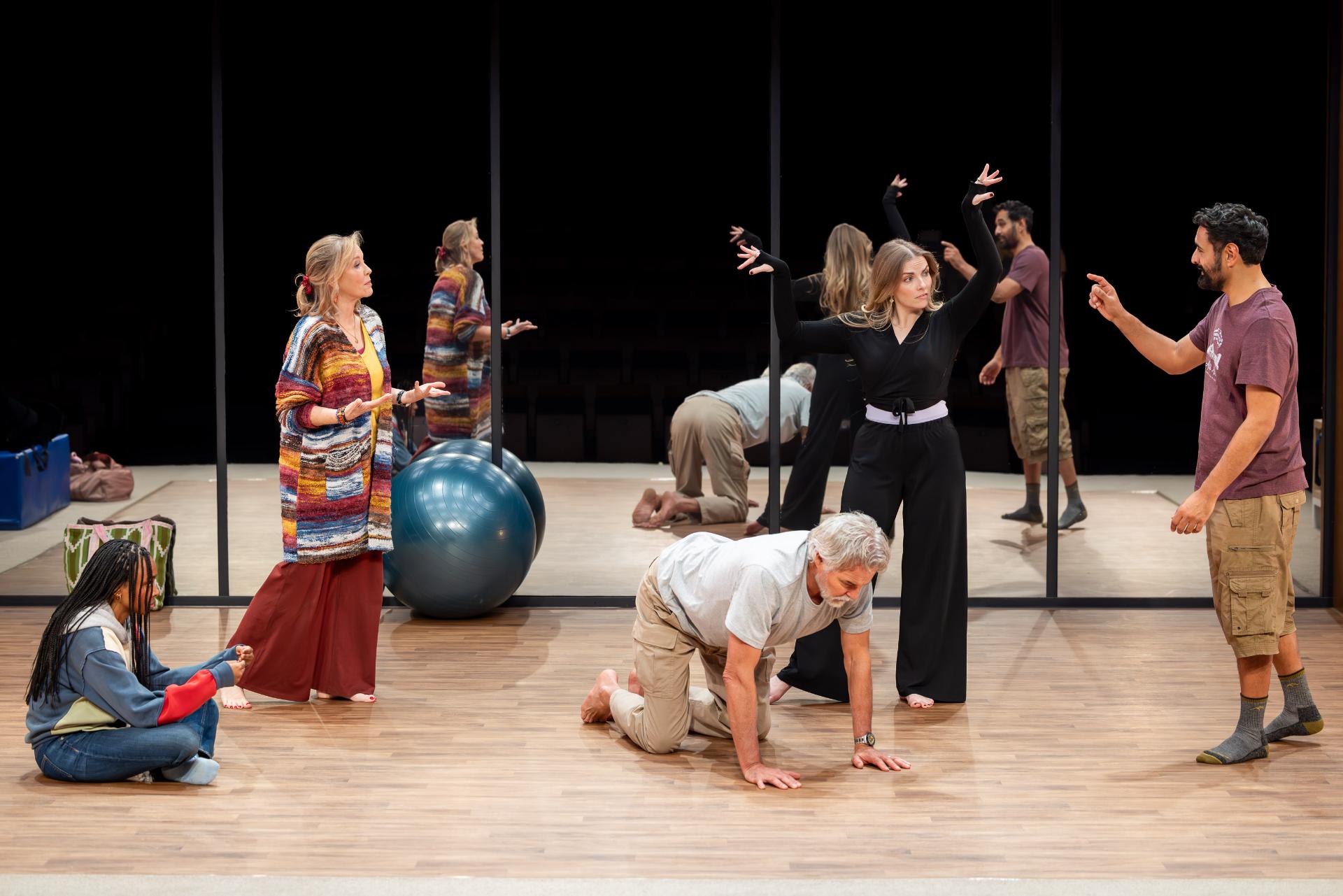
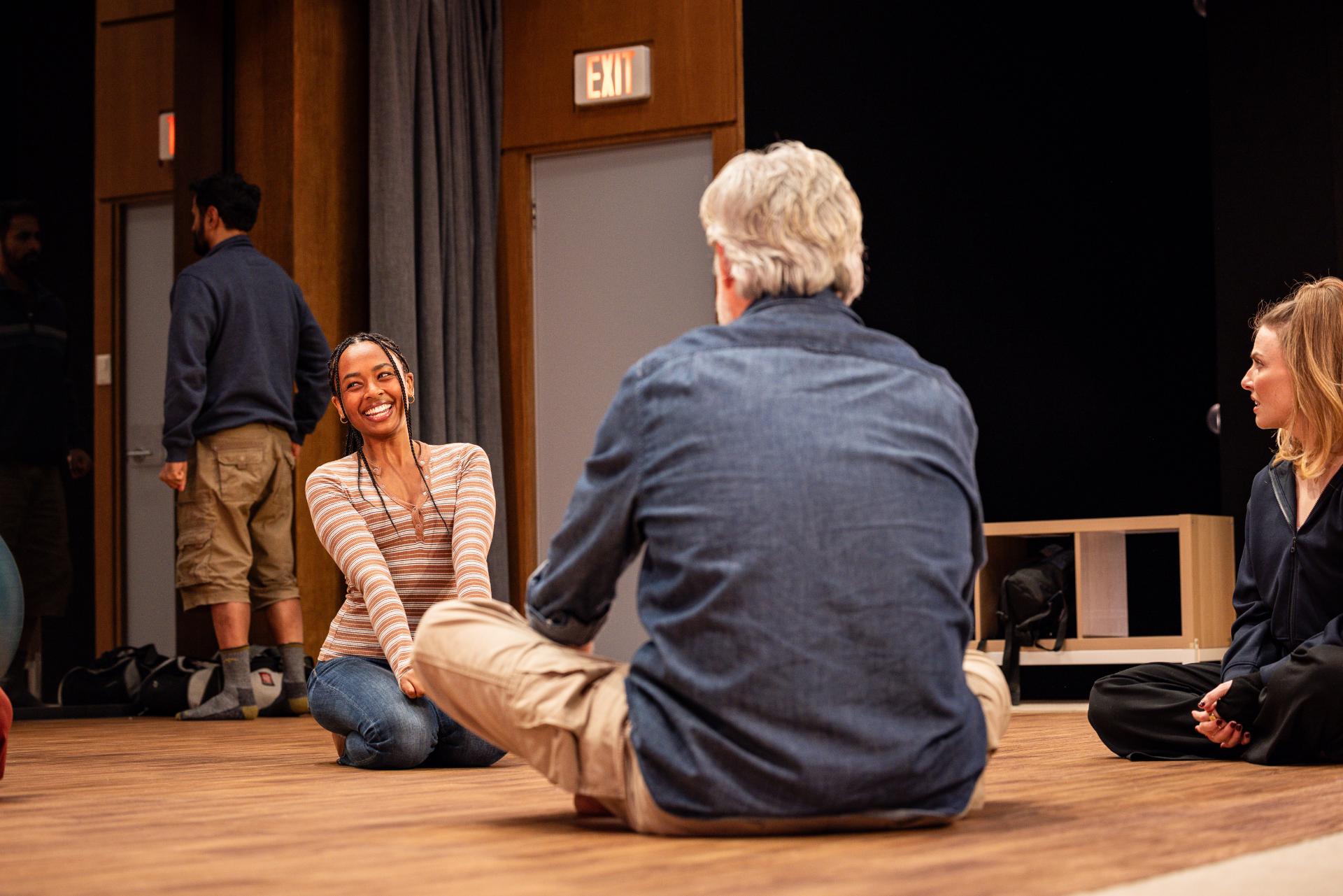
A small group convenes over six weeks, for drama lessons at a rural community centre. They focus on acting exercises, which look initially to be incredibly inane, but they lead to deep discoveries of a personal nature. Annie Baker’s Circle Mirror Transformation takes us into a microcosm of North American ordinariness. It is a quiet portrait of the middle class from 2009, years before any hint of the current pandemonium could even be detected.
If there are any socio-political implications in Baker’s play, they are deeply subsumed and open to all manner of interpretation. Direction by Dean Bryant provides no indication to wider connotations of the story, making for a somewhat pedestrian experience, but the intricacy he puts into the unfurling of subjective narratives, reflects an admirable level of integrity.
The very accomplished actor Rebecca Gibney grounds the work in a hyper naturalistic space as group leader Marty, making for a completely believable depiction of daily life at the dawn of the Obama years. There is a conspicuous blandness to the presentation which, although understandable within context, makes viewing somewhat challenging due to its lack of theatricality.
Fortunately Nicholas Brown and Jessie Lawrence are on hand to dial up the idiosyncrasy. As Schultz and Theresa, both performers bring exceptional depth and colour to the show, allowing us to enjoy more than the mundanity being explored. Ahunim Abebe brings a valuable richness to the humanity that her character Lauren reveals in later sections, and Cameron Daddo leaves an impression with his understated authenticity as James.
Designer Jeremy Allen brings unexpected texture to otherwise nondescript scenic requirements. Lights by Brockman and sound by Clemence Williams, are understandably operative rather than ornamental, rarely attention grabbing but certainly effective.
It is almost peculiar to return to a time when Americans could simply worry about their individual foibles, rather than having to grapple with unrelenting chaos and the impending collapse of their social structures. Circle Mirror Transformation may not even be a score of years old, but the vast changes that we witness the USA undergoing, make the play seem quaint, almost unrecognisable in its representation of modern normalcy.
 Suzy Goes See