
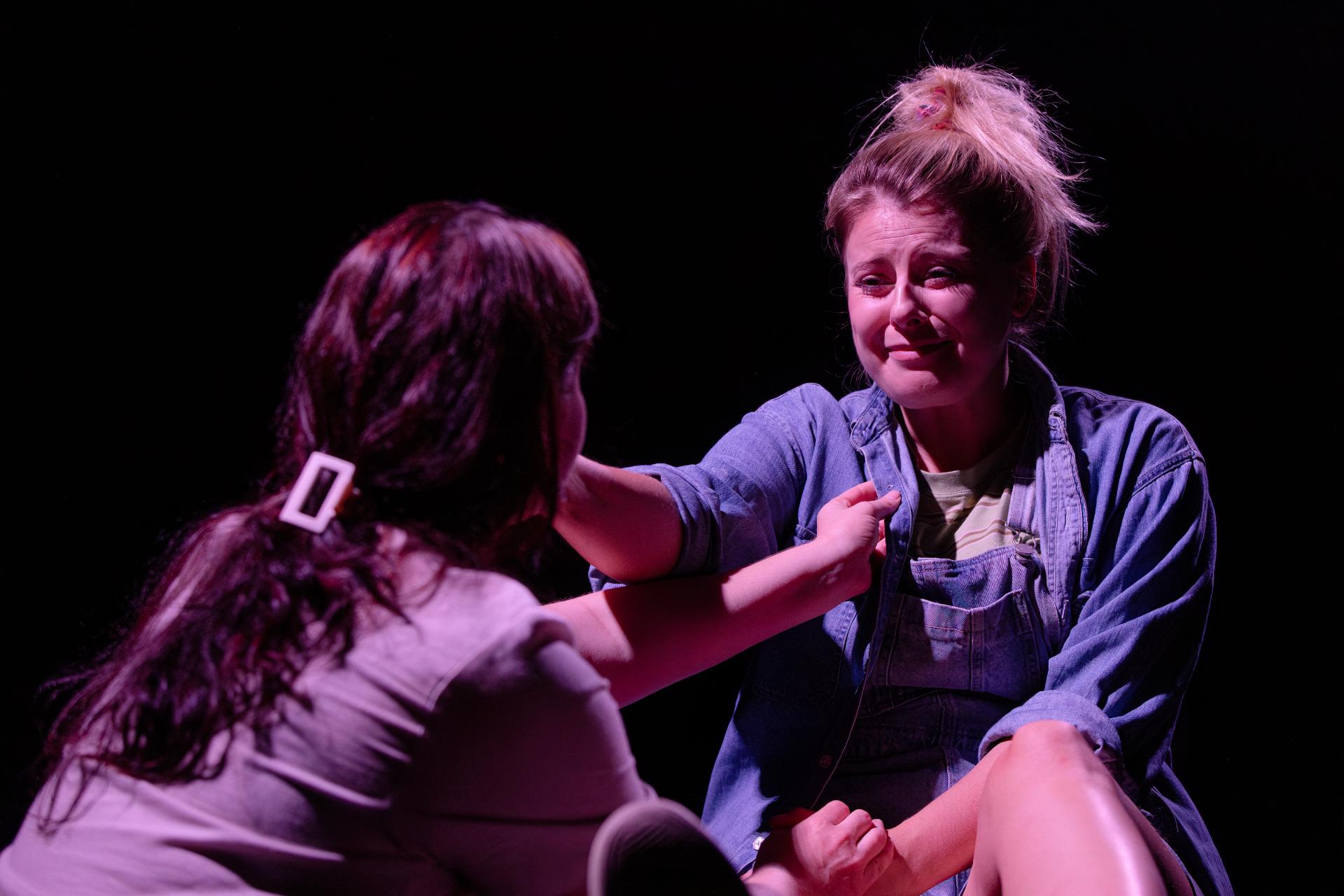
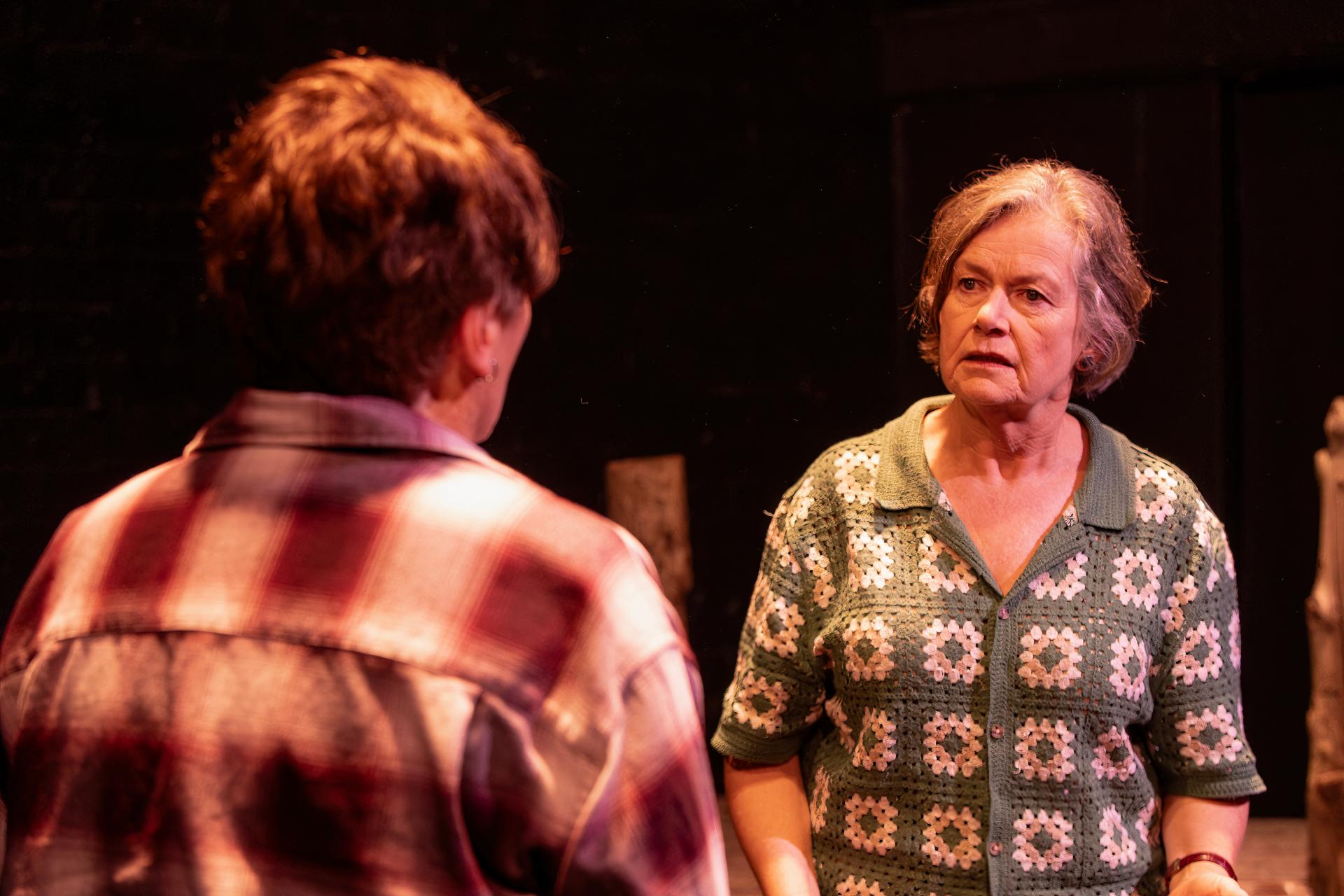
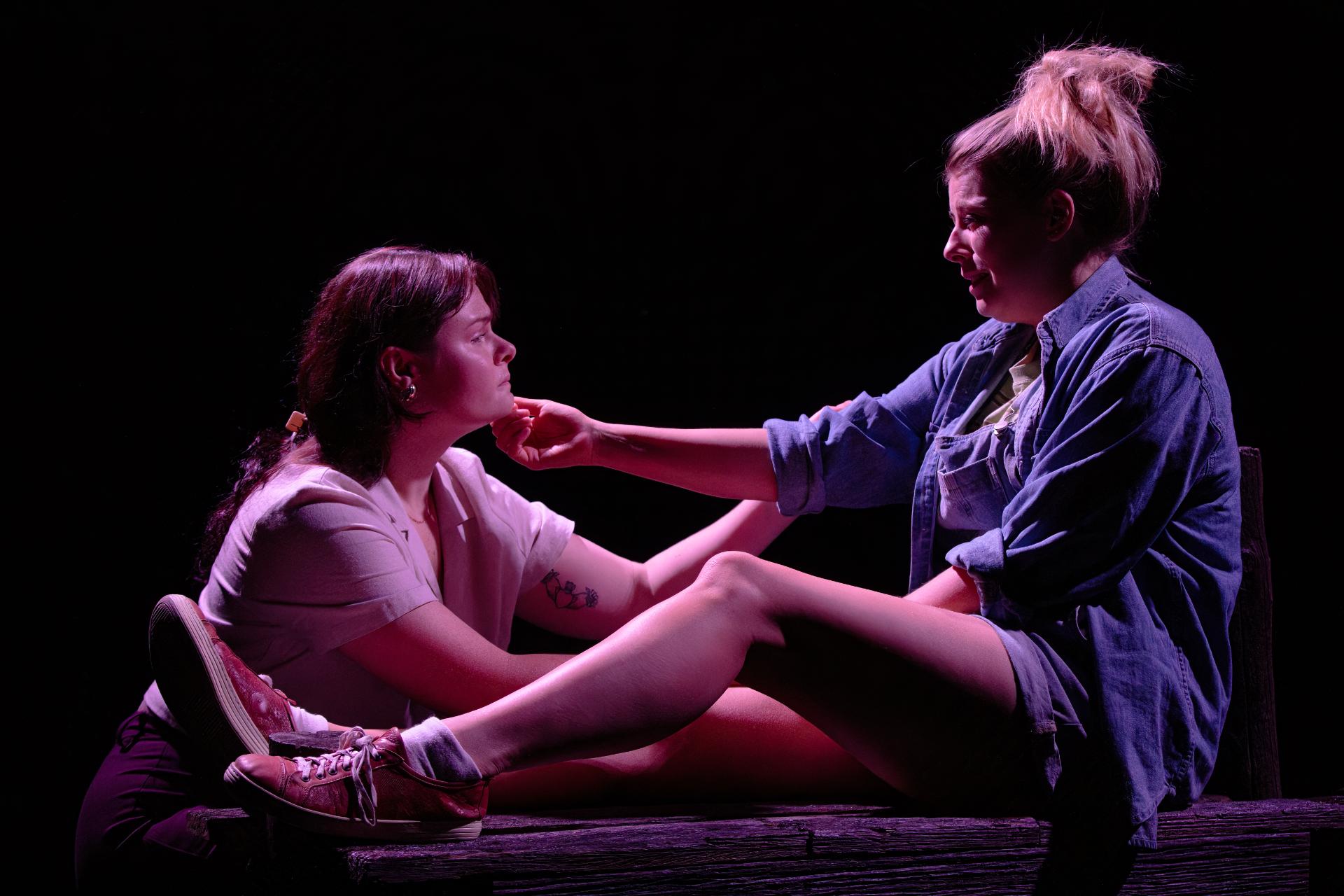
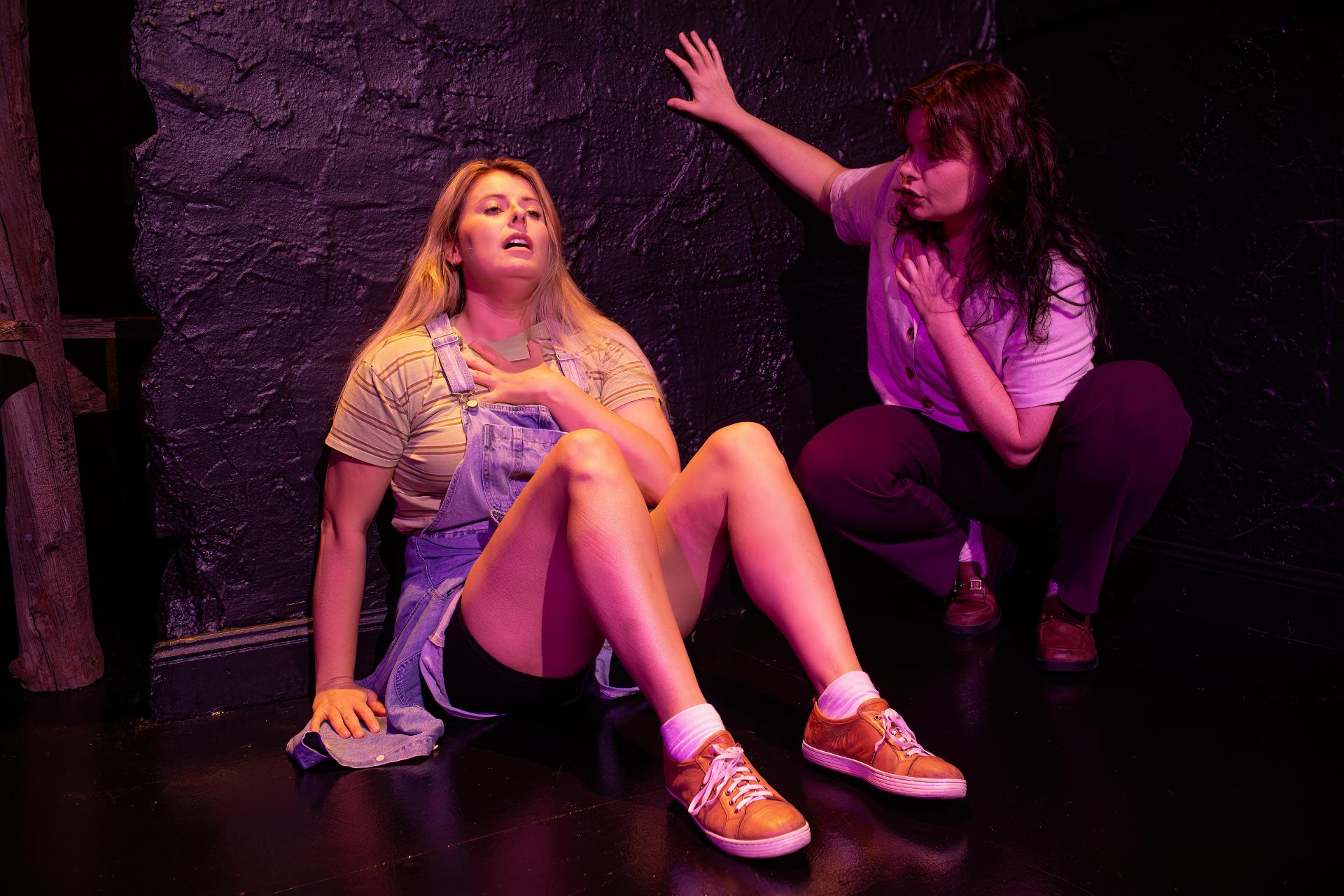


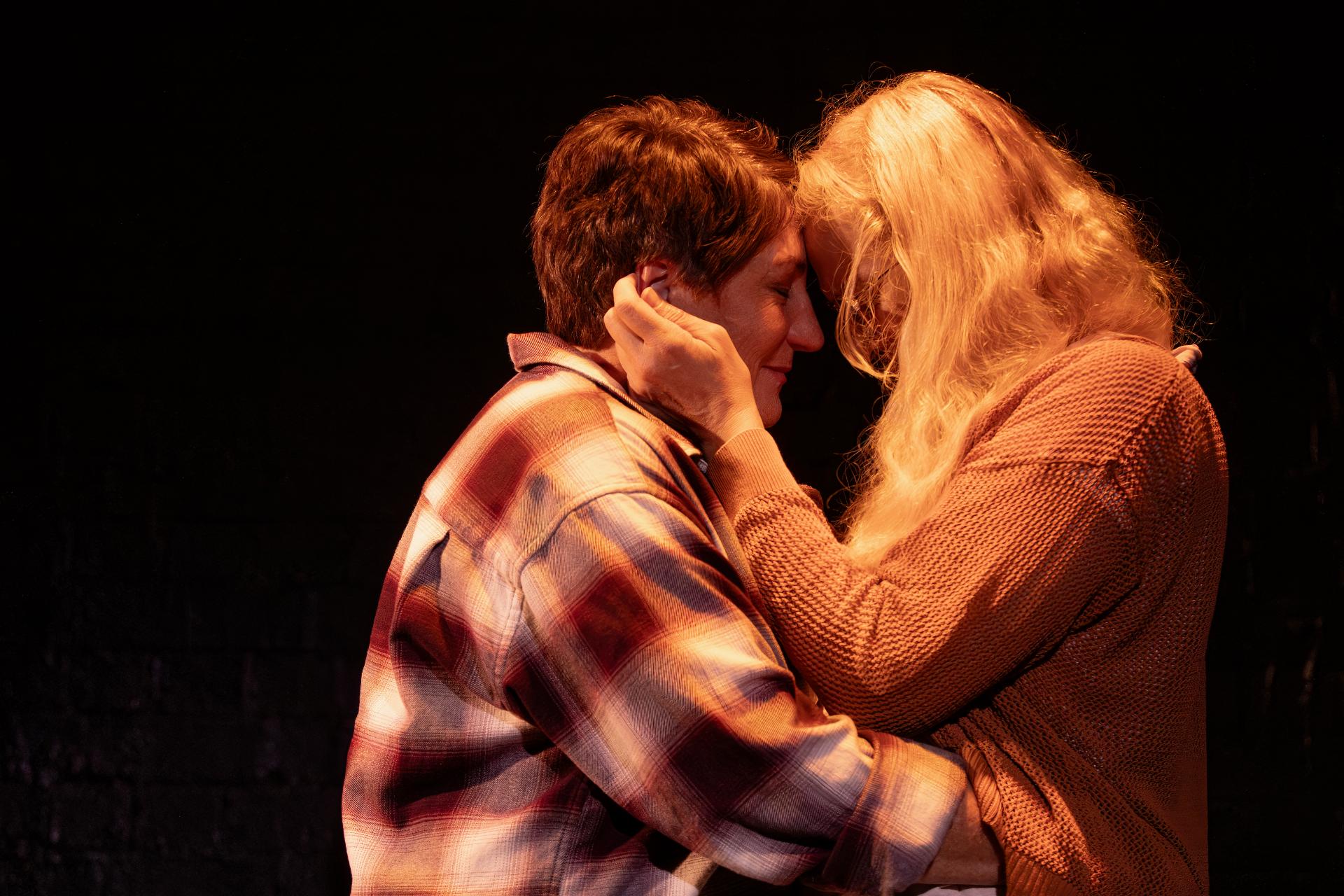
Venue: Old Fitzroy Theatre (Woolloomooloo NSW), Feb 15 – Mar 2, 2024
Playwright: Isley Lynn
Director: Julia Billington
Cast: Jessica Bell, Katherine Hopwood Poulsen, Deborah Jones, Alexandra Keddie, Fiona Press, Monique Sallé
Images by Phil Erbacher
Theatre review
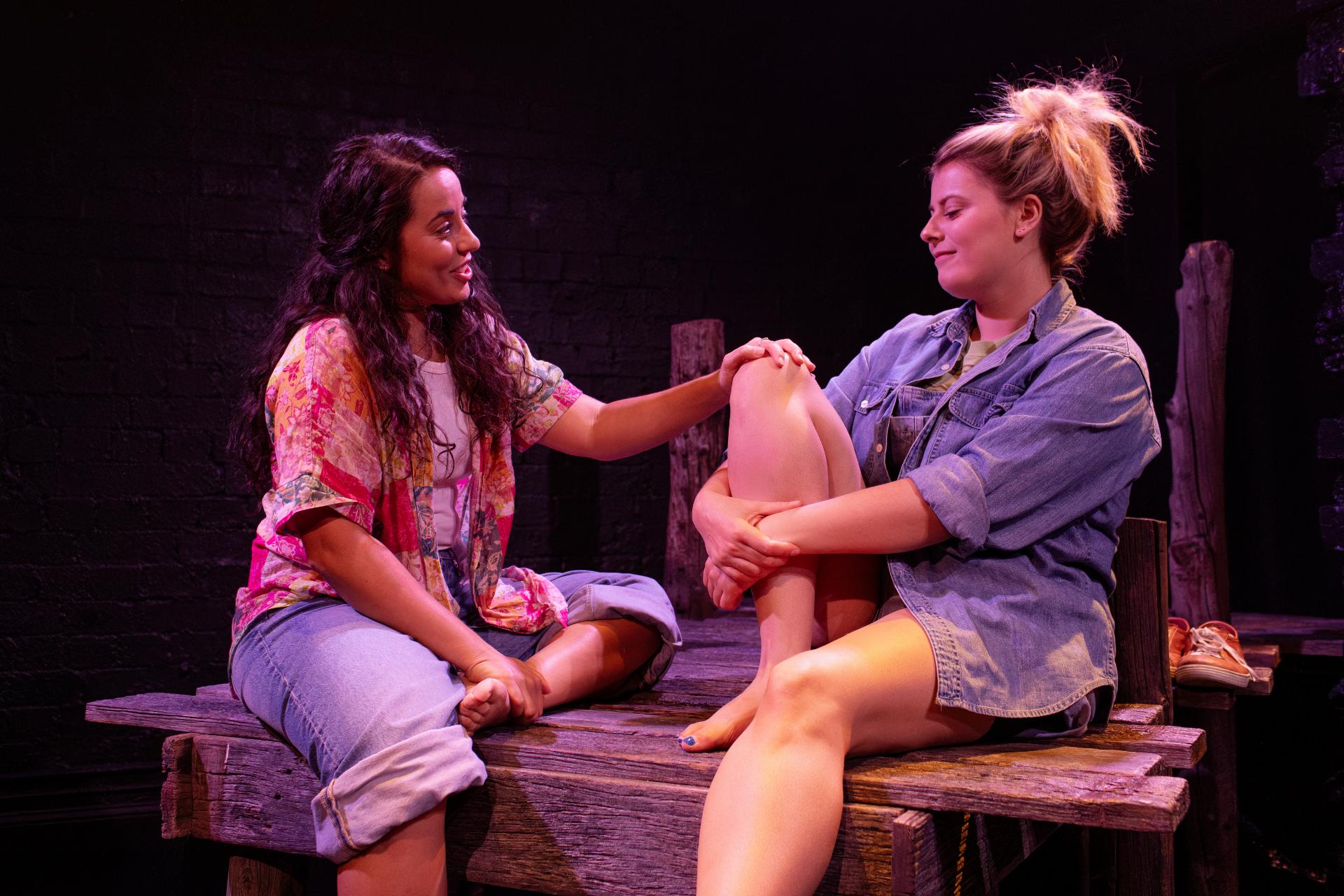
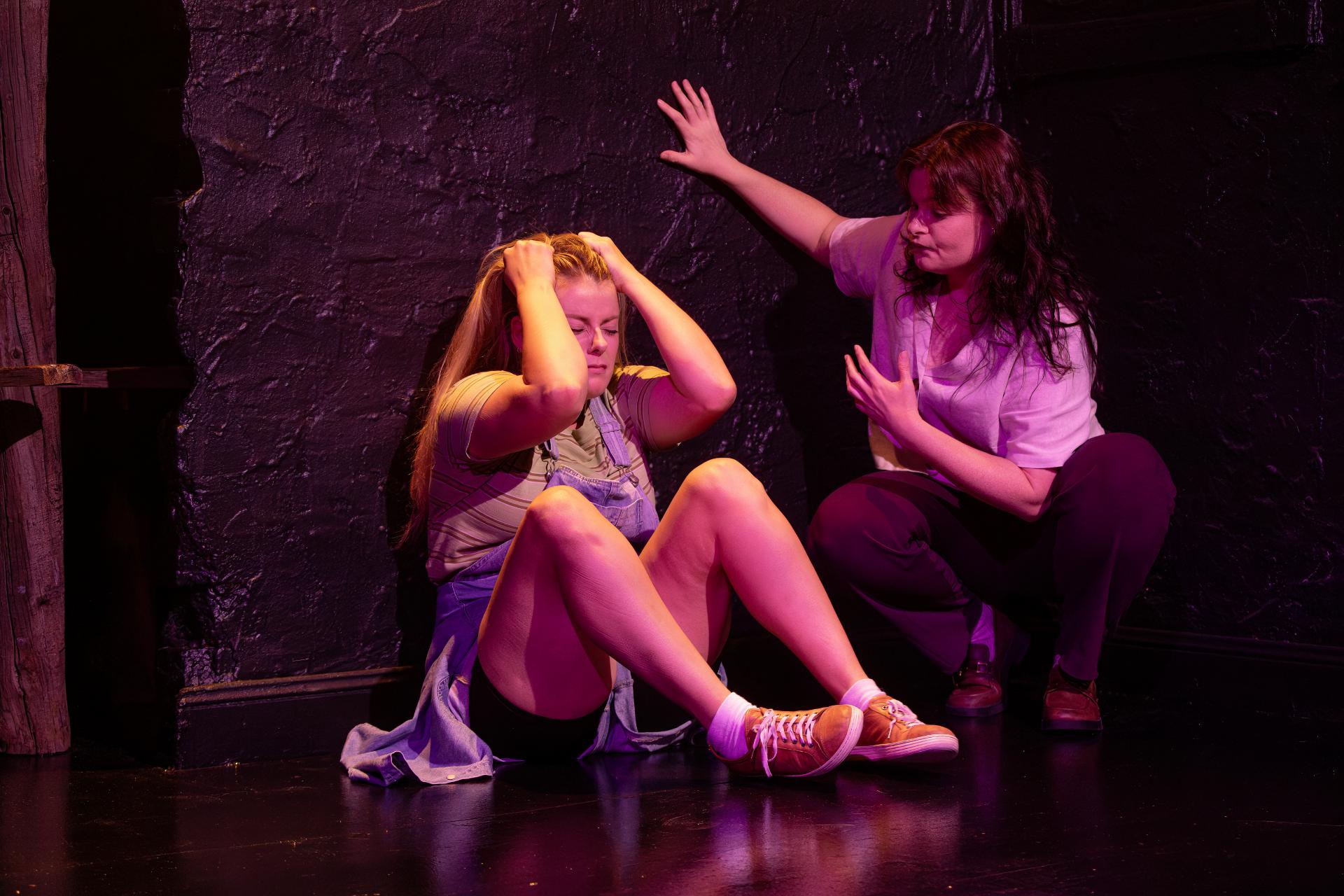
Annie and Bel are planning their wedding, when Flo returns from out of town for a visit. A surprising connection blossoms between Flo and one of the brides-to-be, instigating drama to ensue in the most unimaginable way. An electrifying plot twist in Isley Lynn’s The Swell brings us to the edges of our seats, in an otherwise slightly pedestrian tale, of a queer love triangle.
There is a leniency in Julia Billington’s direction of the piece, that is perhaps overly reliant on what their cast chooses to bring to the stage. It is a delicate work however, with a sense of integrity, that prevents The Swell and its undeniable sensationalised aspects, from feeling in any way unrefined or pulpy.
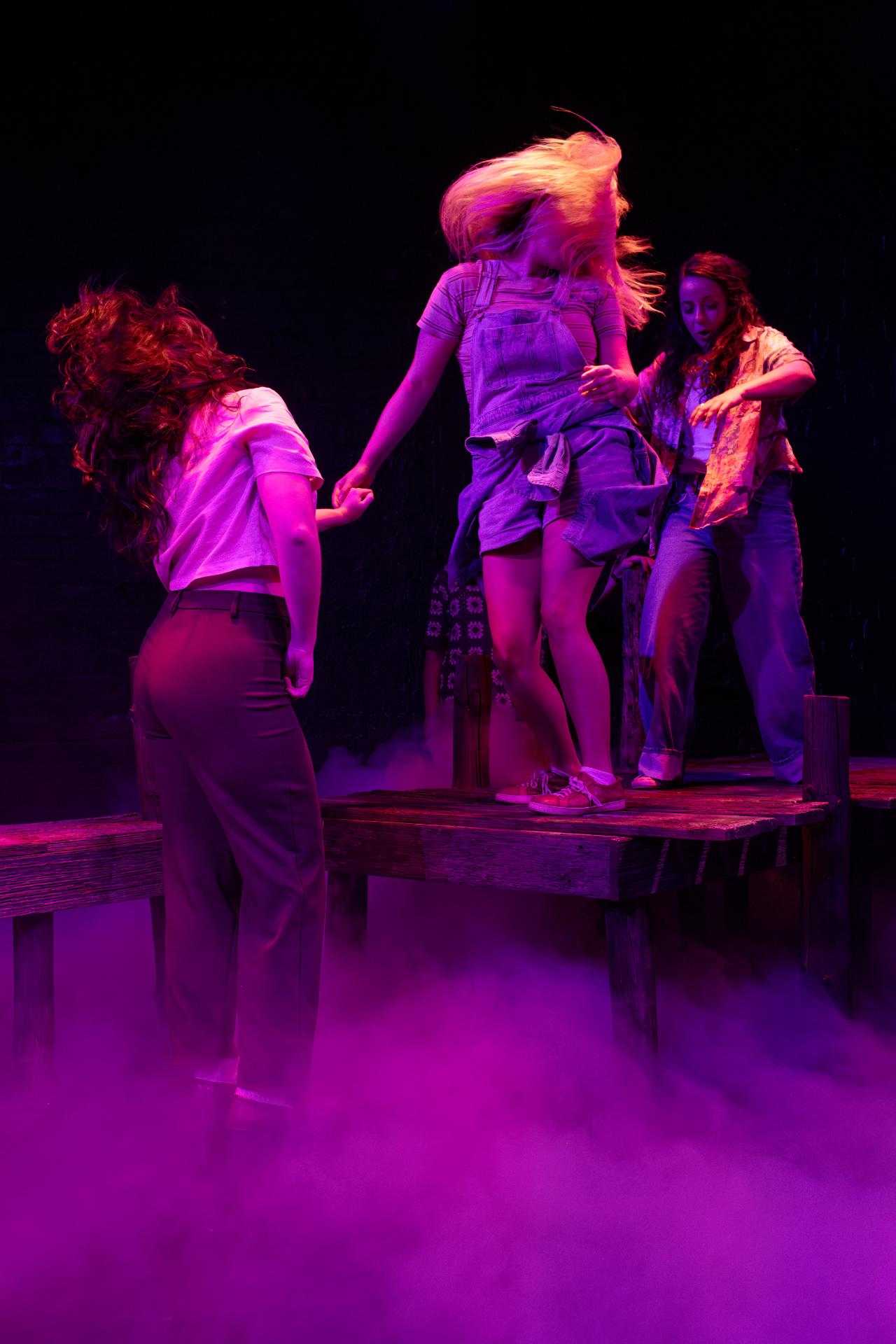
Hannah Yardley’s set design is extremely simple, forming an appealing representation of rural England, although not always sufficiently vivid with how it helps us imagine the physical contexts, in which the three women intertwine. Lights by Saint Clair are suitably moody, bringing an alluring edge to this dark romance. Sound design by Clare Hennessy is consistently subtle, effective at harnessing tension, but could benefit with a bolder approach to achieve a more stirring result.
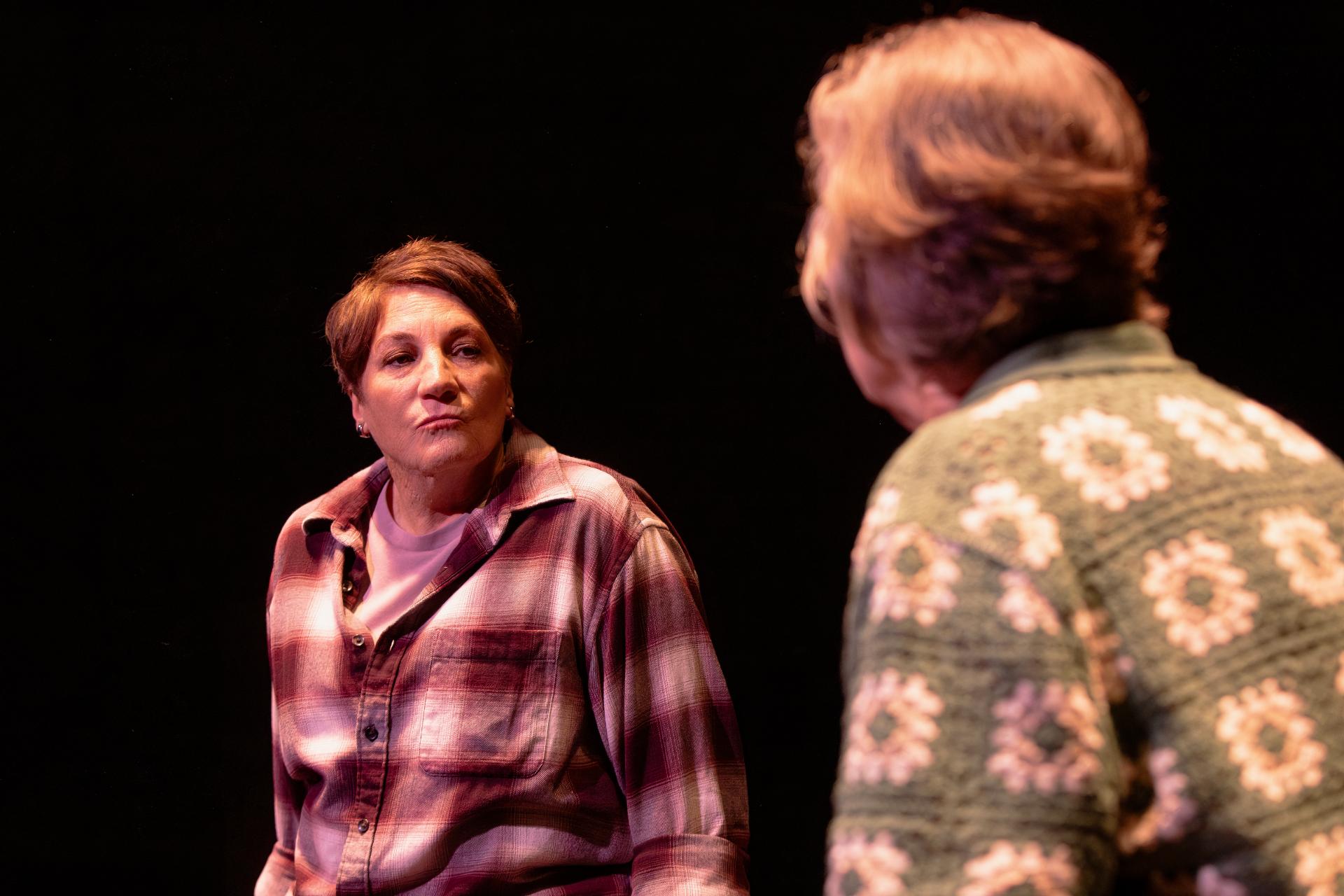
Six generous actors perform the roles across two generations, in a story spanning thirty years. Jessica Bell, Alexandra Keddie and Monique Sallé play the young women, each creating distinct personalities, but are not always convincing with the chemistry being generated. Katherine Hopwood Poulsen, Deborah Jones and Fiona Press deliver senior versions of the same characters, admirable for bringing the show to a satisfying climactic conclusion.
As we become increasingly comfortable with queerness in our art and lives, it is important that the particularities of our experiences as queer people are not disregarded. The Swell talks specifically about lesbians. In a climate of radical inclusivity, it is tempting to wish to represent as many marginalised people as possible, in each instance of theatre making, but we risk erasure of valuable differences pertaining to our LGBTQIA+ identities.
Emancipation naturally means that we will ultimately be freeing ourselves from labels, and we should always work towards a future of fewer limitations and greater possibilities, but there is power in embodying markers, especially those that carry with them, glorious histories of resistance, resilience and triumph. Lesbians have improved the world for everyone, in countless ways, and we must insist on their enduring and conspicuous presence.
 Suzy Goes See