Venue: Old Fitzroy Theatre (Woolloomooloo NSW), Oct 28 – Nov 18, 2023
Playwright: Hisashi Inoue (translated By Roger Pulvers)
Director: David Lynch, Shingo Usami
Cast: Mayu Iwasaki, Shingo Usami
Images by Phil Erbacher
Theatre review
Mitsue is on the surface, a contented librarian in mid-century Hiroshima, but having lived through the devastating bombing by Americans only three years prior, her inner turmoil is much more profound than can be easily perceived. The 2001 play The Face Of Jizo by Hisashi Inoue 井上 ひさし may be set decades ago, but its reflections on survivor guilt reverberate beyond its narrative about one particular catastrophe. Along with serving as a reminder on the tragic consequences of war, The Face Of Jizo is concerned with how we emerge from trauma, emphasising the point that to live well, is often a matter of choices we make.
It is perhaps inevitable that the play’s gravity is central and severe, but there is also excellent humour coaxing us into the story and its stirring intentions. Directed by David Lynch and Shingo Usami, the show is charmingly inviting, with a palpable warmth that accompanies the harder edges of a sobering tale. Simultaneously gentle and heartrending, this theatrical experience proves enjoyable even though its themes are unquestionably foreboding.
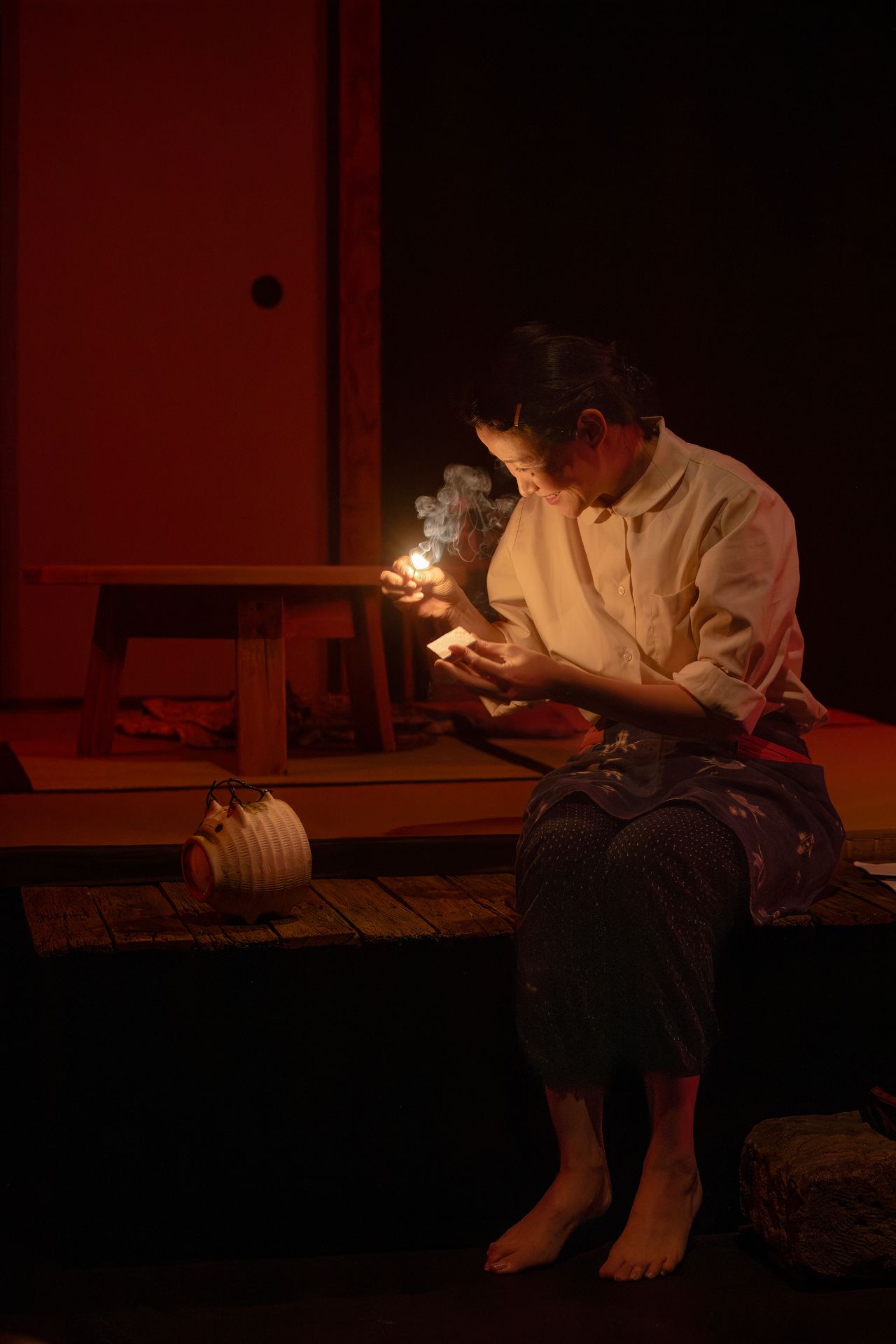
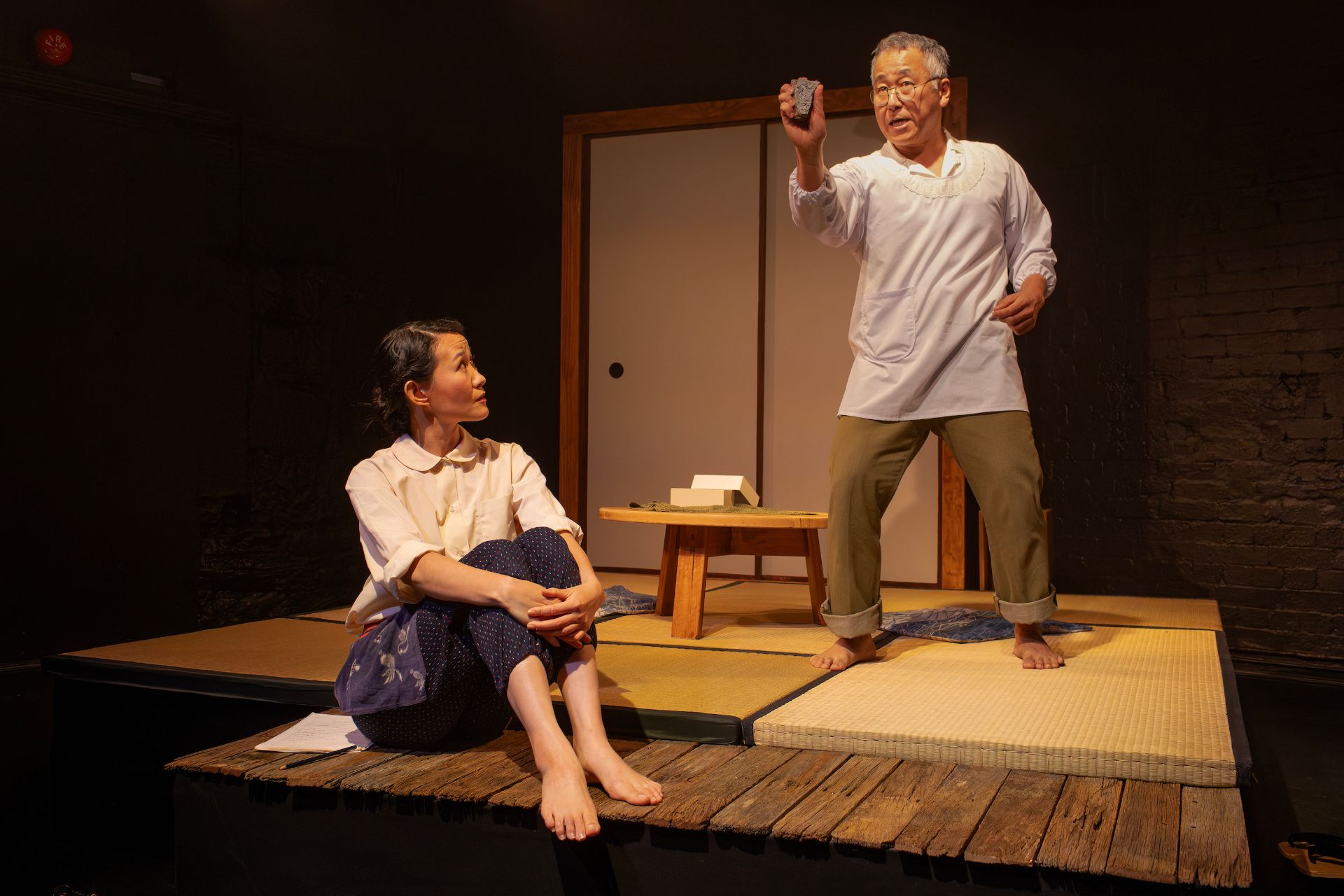
Set design by Tobhiyah Stone Feller convey a sense of accuracy, for the time and place being depicted. The subtleties of Matt Cox’s lights, as well as his more dramatic manoeuvres, reveal a commendable attentiveness to the meaningful text. Music by Me-Lee Hay and sound design by Zachary Saric are appropriately restrained, called upon when necessary to add embellishment and refinement, to a thoughtful and sensitive work.
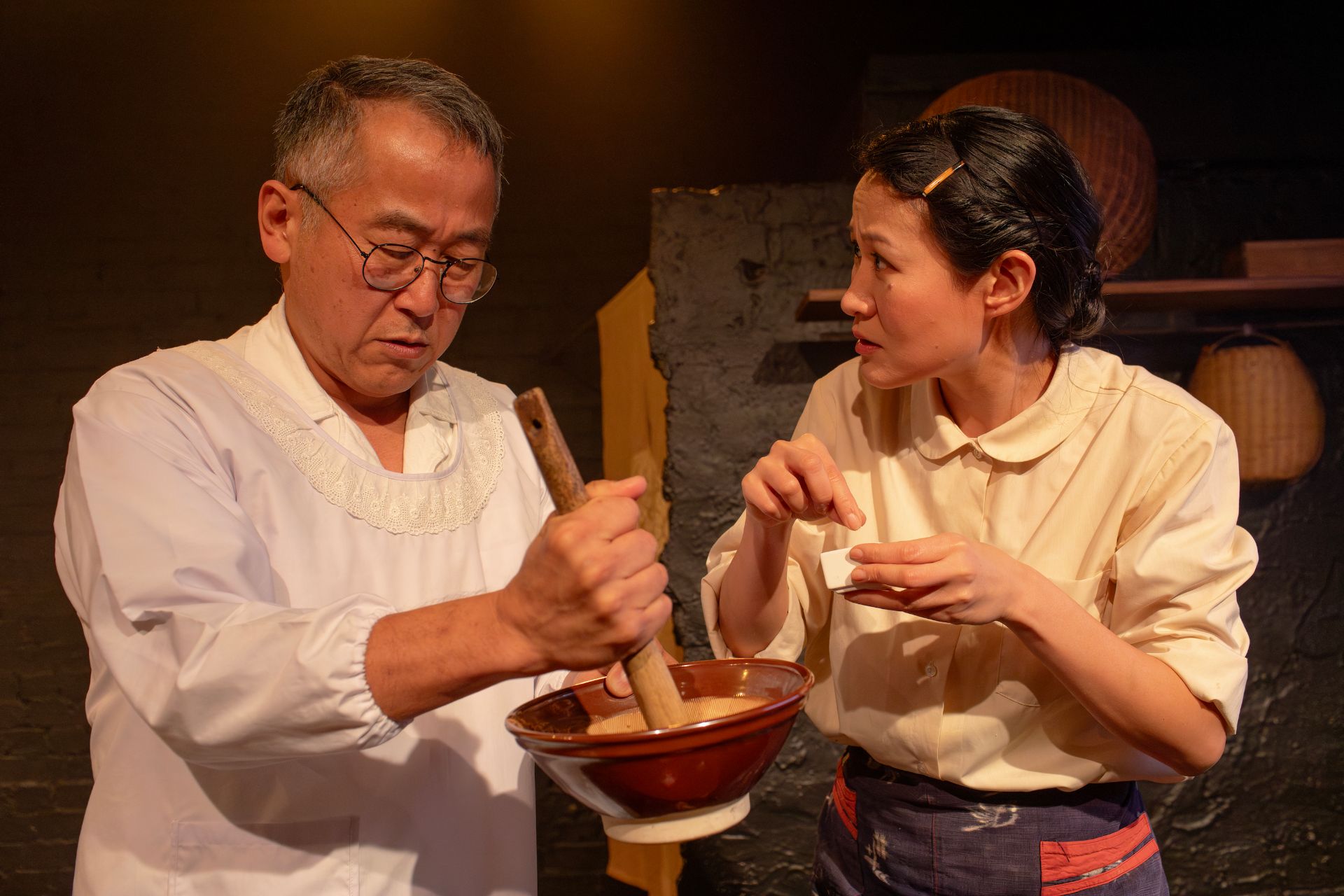
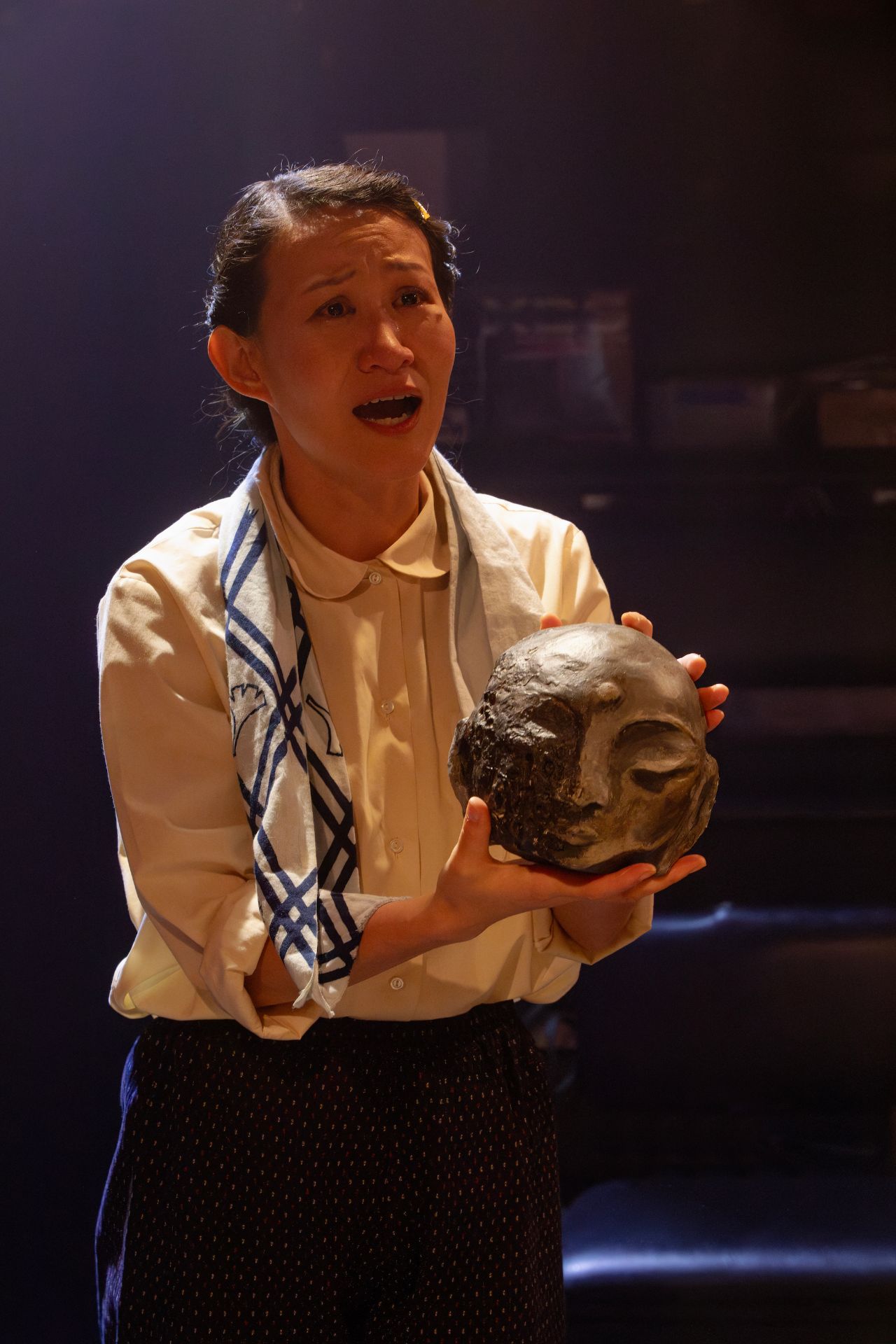
Actor Mayu Iwasaki brings both exuberance and poignancy to the role of Mitsue, with an extraordinary focus that keeps us compelled and hooked to her emotional journey. The aforementioned Usami plays the ghost of Mitsue’s father, similarly absorbing and persuasive, whether delivering joy or anguish, in a show that always takes care to render the light with the dark. The pair applies a distinct style of performance, for this translation by Roger Pulvers, to ensure that the English language never detracts from the cultural specificity being portrayed. Some of the adapted dialogue may feel awkward, but its sensibilities never for a moment, stray from mid-century Japan.
Guilt that turns inward, and that never finds resolution, can only be harmful. We see in Mitsue the futility of sorrowful regret and the damage it causes, having survived unspeakable losses. It is of course easier said than done, when urging a person to simply get over hardship of this magnitude. Indeed, the ray of hope should always be fundamental to any survival, but the grace of community is equally vital, to how we can heal, and how we can curtail the evil that always seems ready to inflict death and destruction.
 Suzy Goes See