


Venue: Belvoir St Theatre (Surry Hills NSW), Sep 20 – Oct 8, 2023
Playwright: Jane Montgomery Griffiths
Director: Abbie-Lee Lewis
Cast: Jessica Bentley, Angela Nica Sullen
Images by Phil Erbacher
Theatre review
Helen and Clytemnestra do not have the best of reputations; both women are known for the trouble they had caused, to men of great esteem and importance. An Ox Stand on My Tongue by Jane Montgomery Griffiths reframes the sisters, so that their own perspectives of events can occupy centre stage, shifting from antagonist to protagonist, in what amounts to a feminist interpretation of ancient myths.
The intriguing two-hander is a modern, often obtuse play that makes a statement about the impossible demands placed on women, in a man’s world. We see Helen and Clytemnestra grappling with the notion that to survive, is often to be perceived as dishonourable, whether or not they abide by all the rules of the game. Those same rules apply to the opposite sex, but garner much better results, if one happens to be a man.
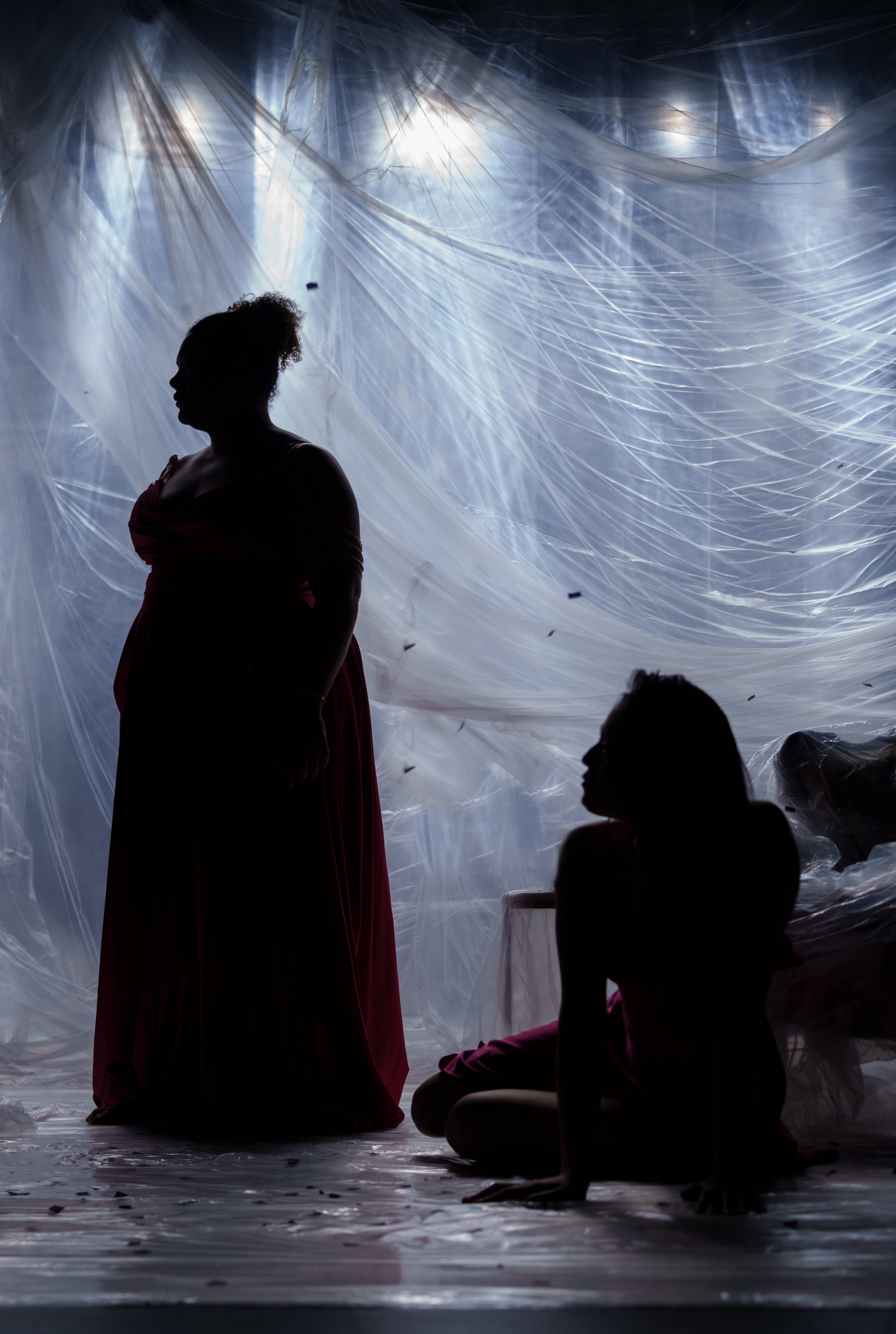
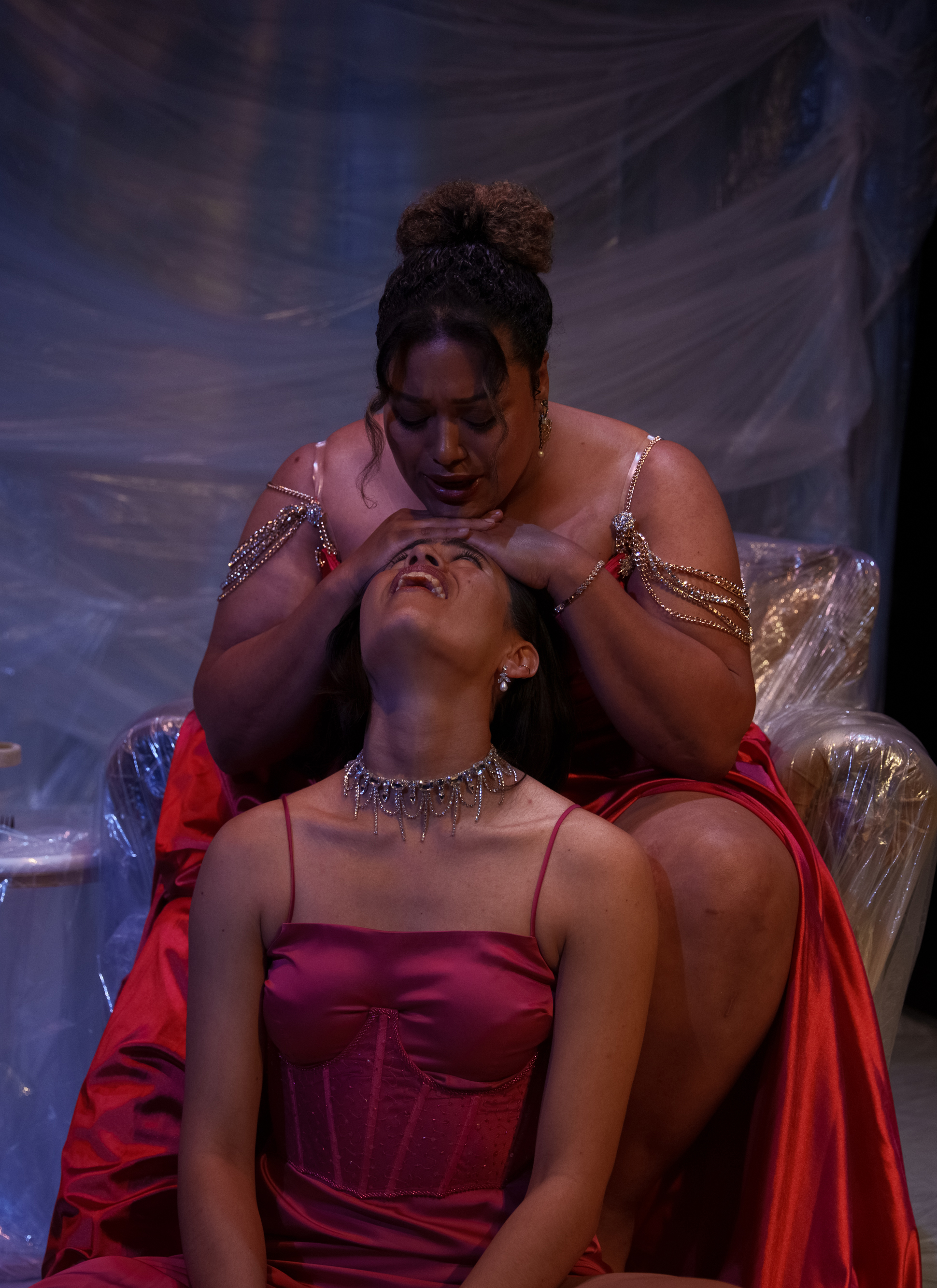
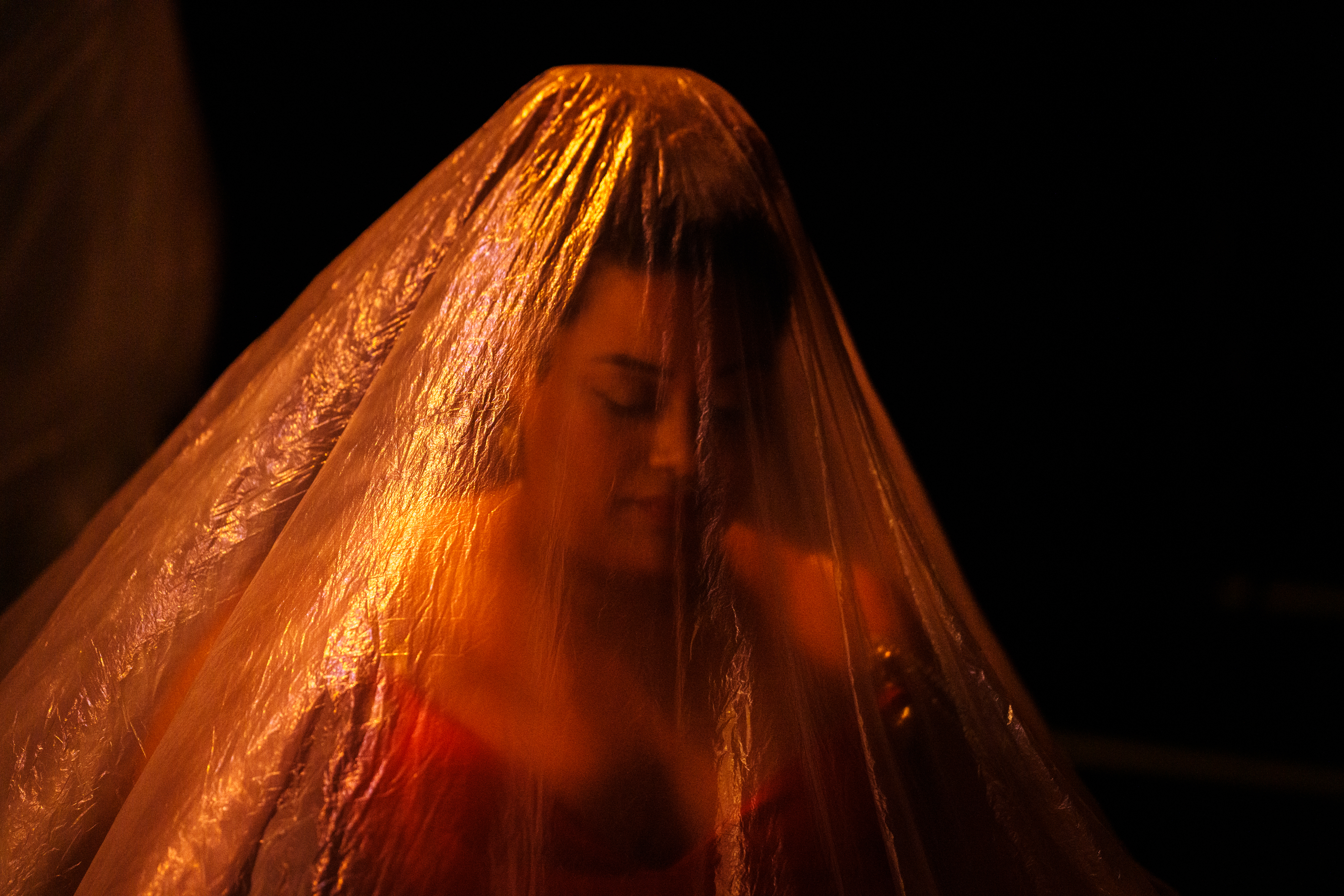
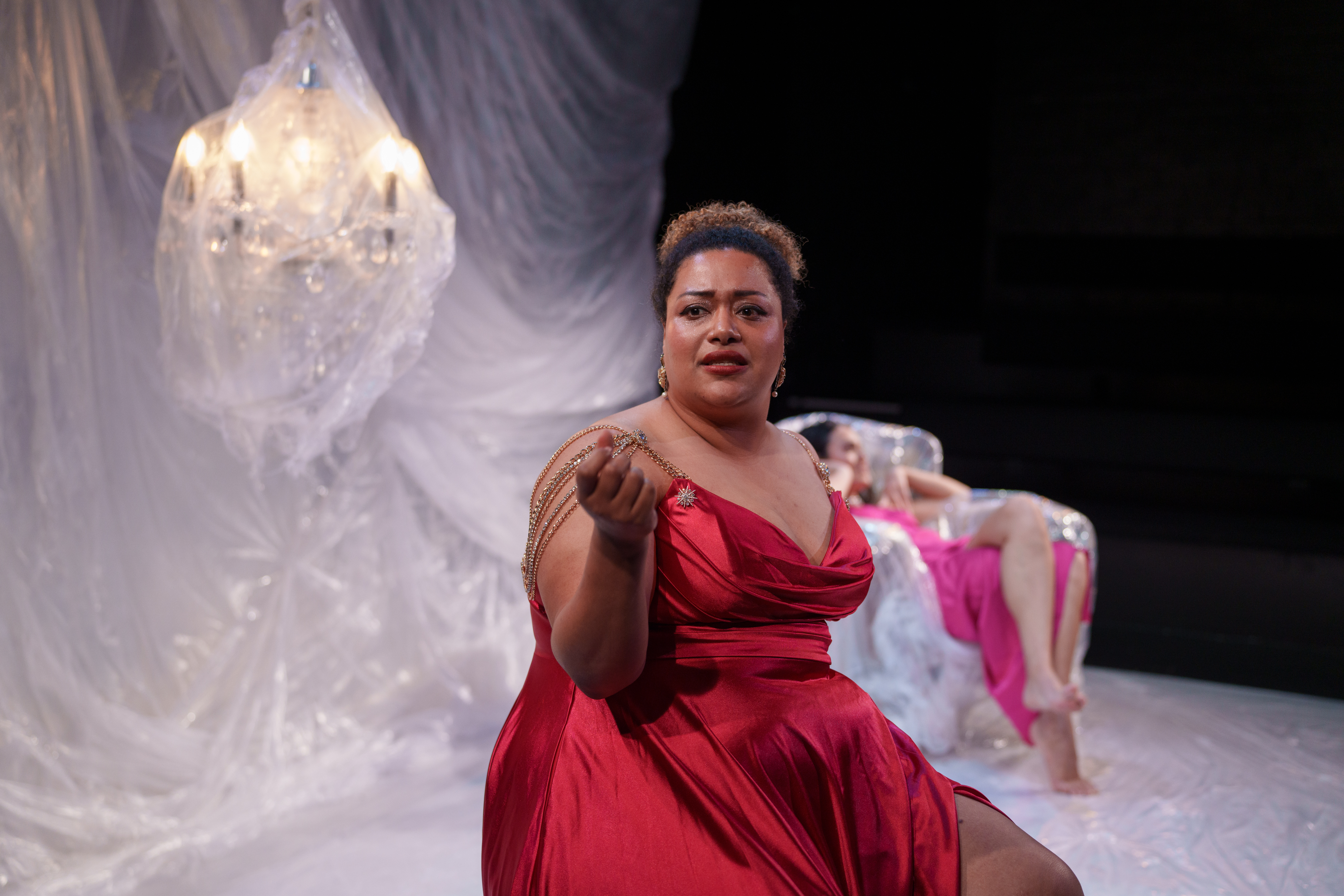
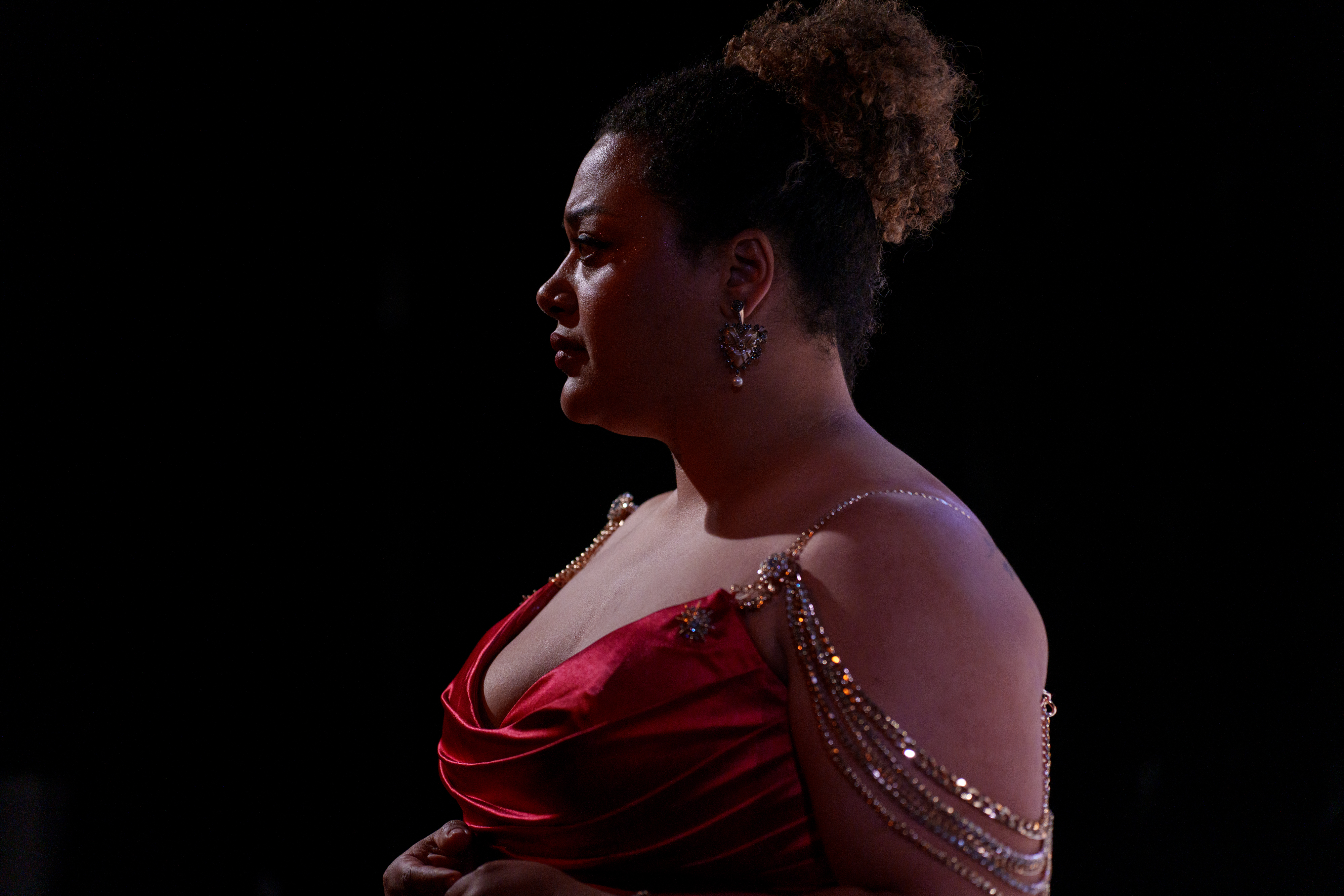
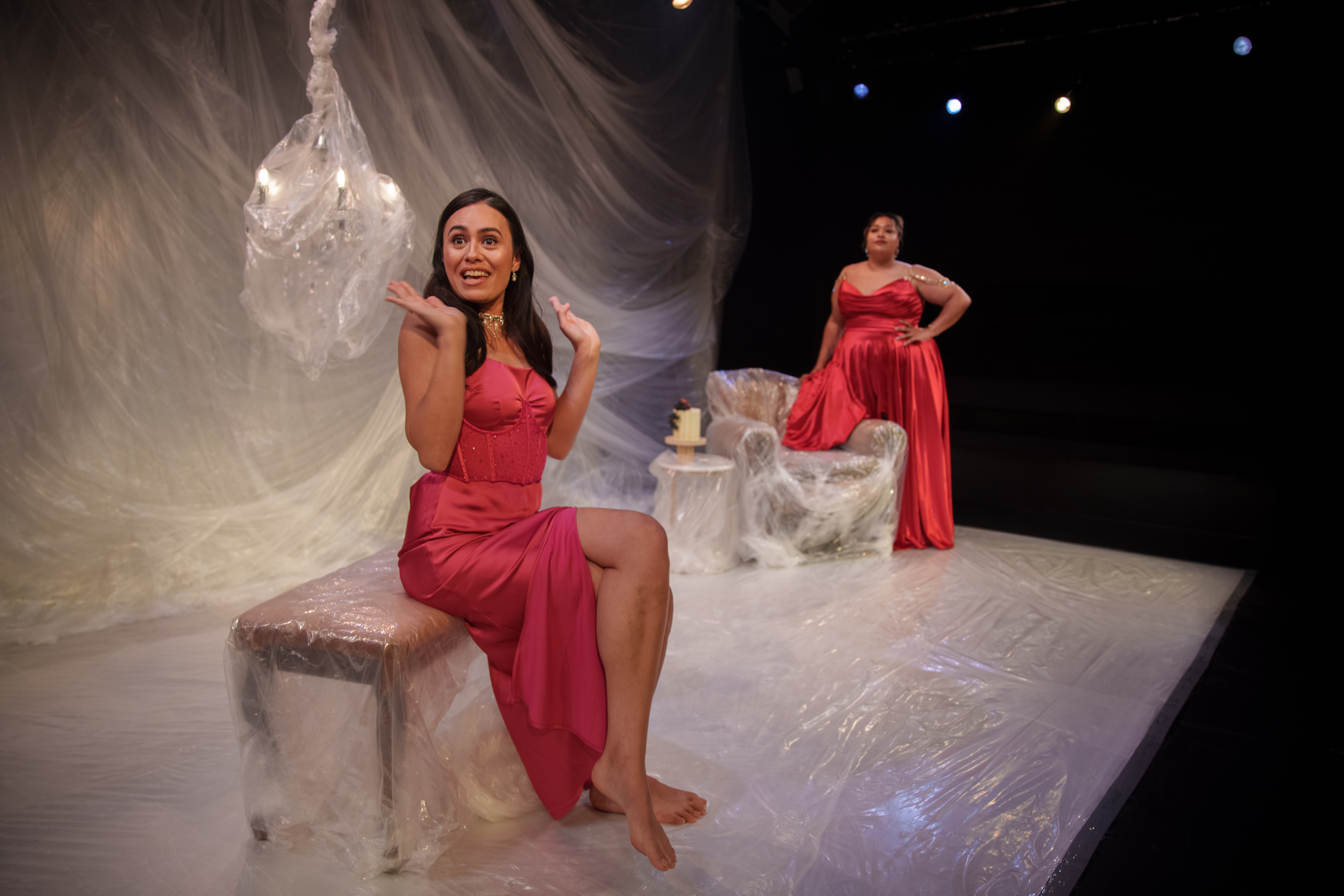
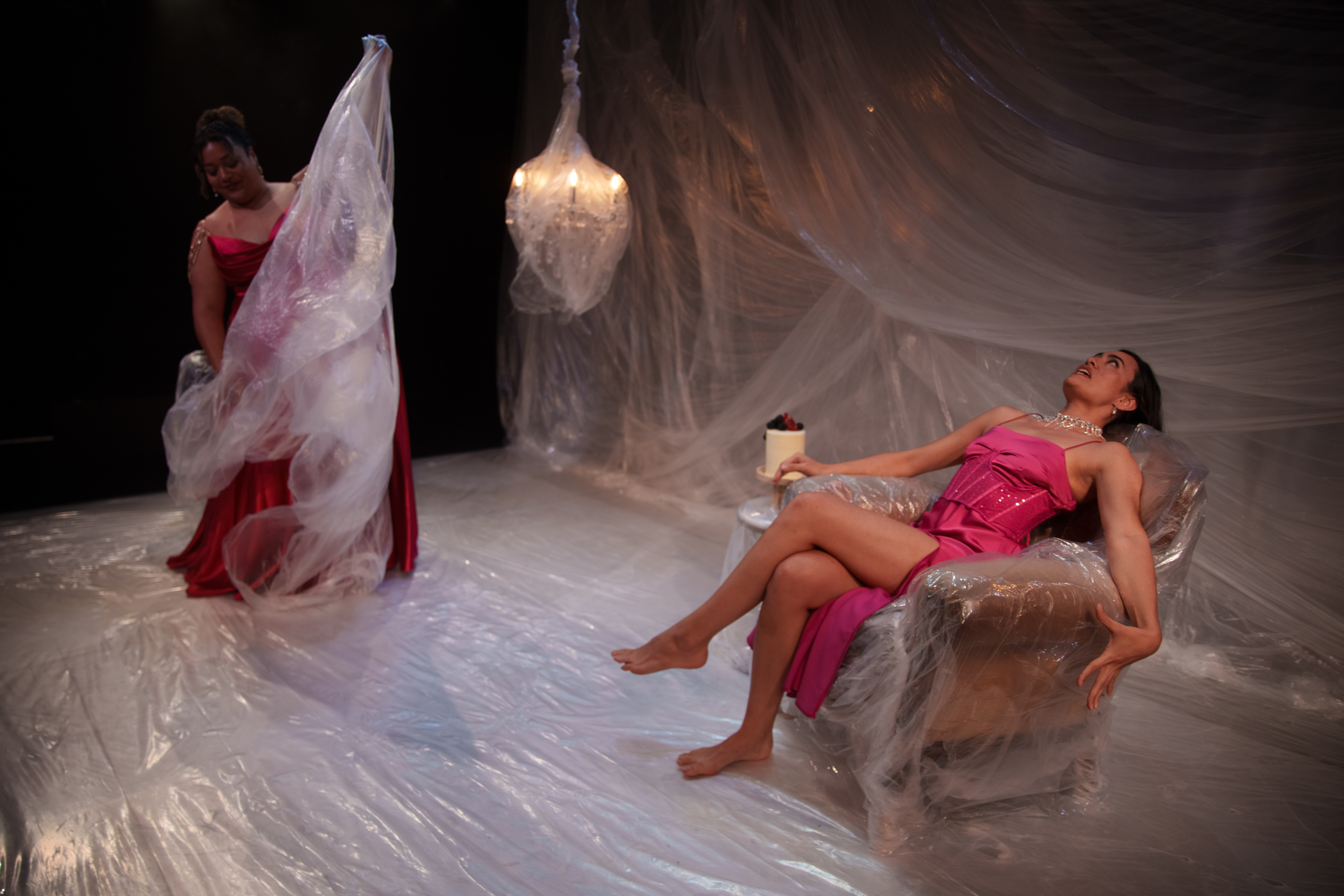
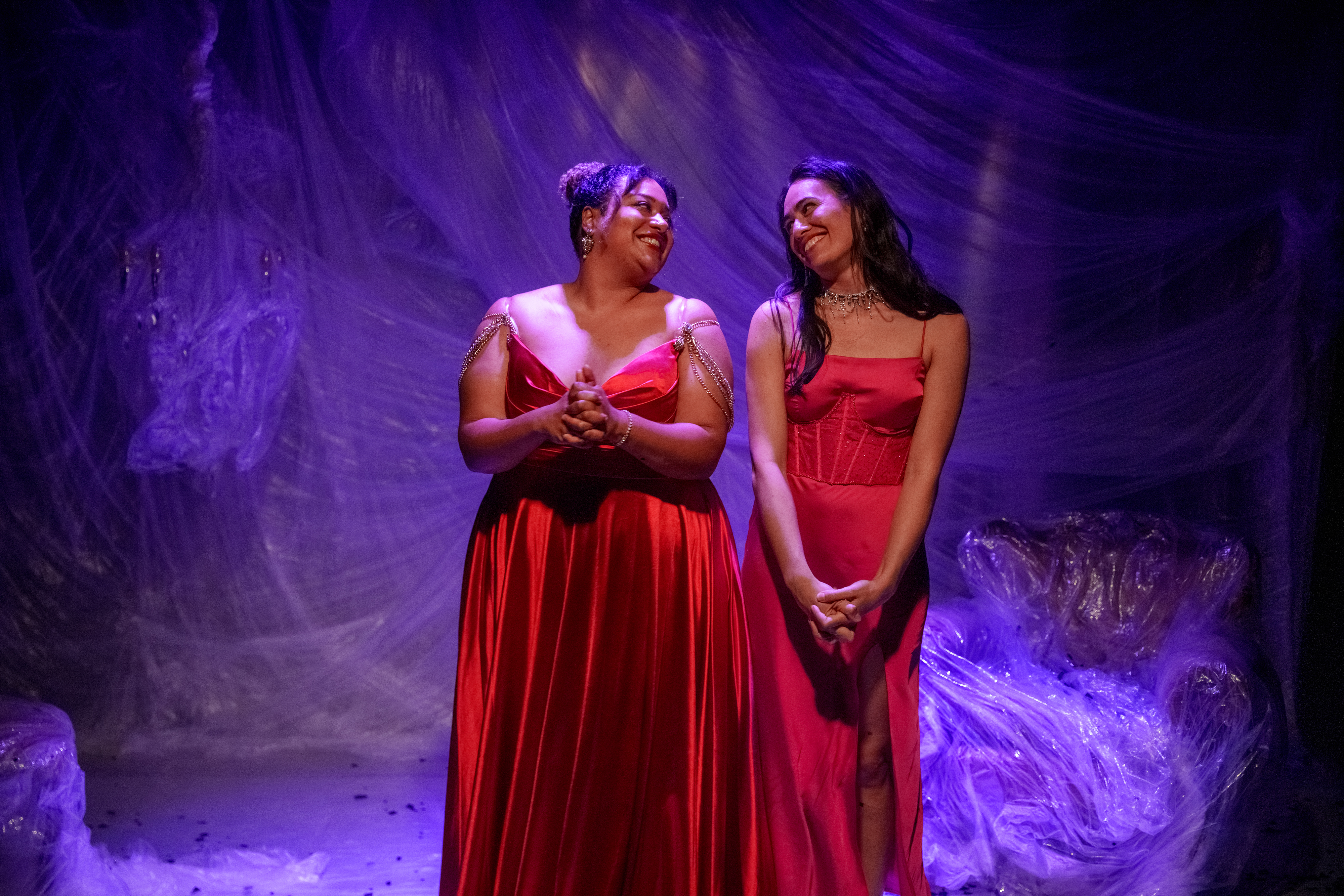
Direction by Abbie-Lee Lewis is uncomplicated, almost too simple in its approach, with a strong reliance on the charm of her leading ladies to sustain attention. Actor Jessica Bentley’s presence is consistently authentic, giving Helen a sense of believability and naturalism that add to the contemporary tone being rendered. Angela Nica Sullen is more inventive with her portrayal of Clytemnestra, especially effective in heightened moments to give us the delicious drama associated with all things tragic and Greek.
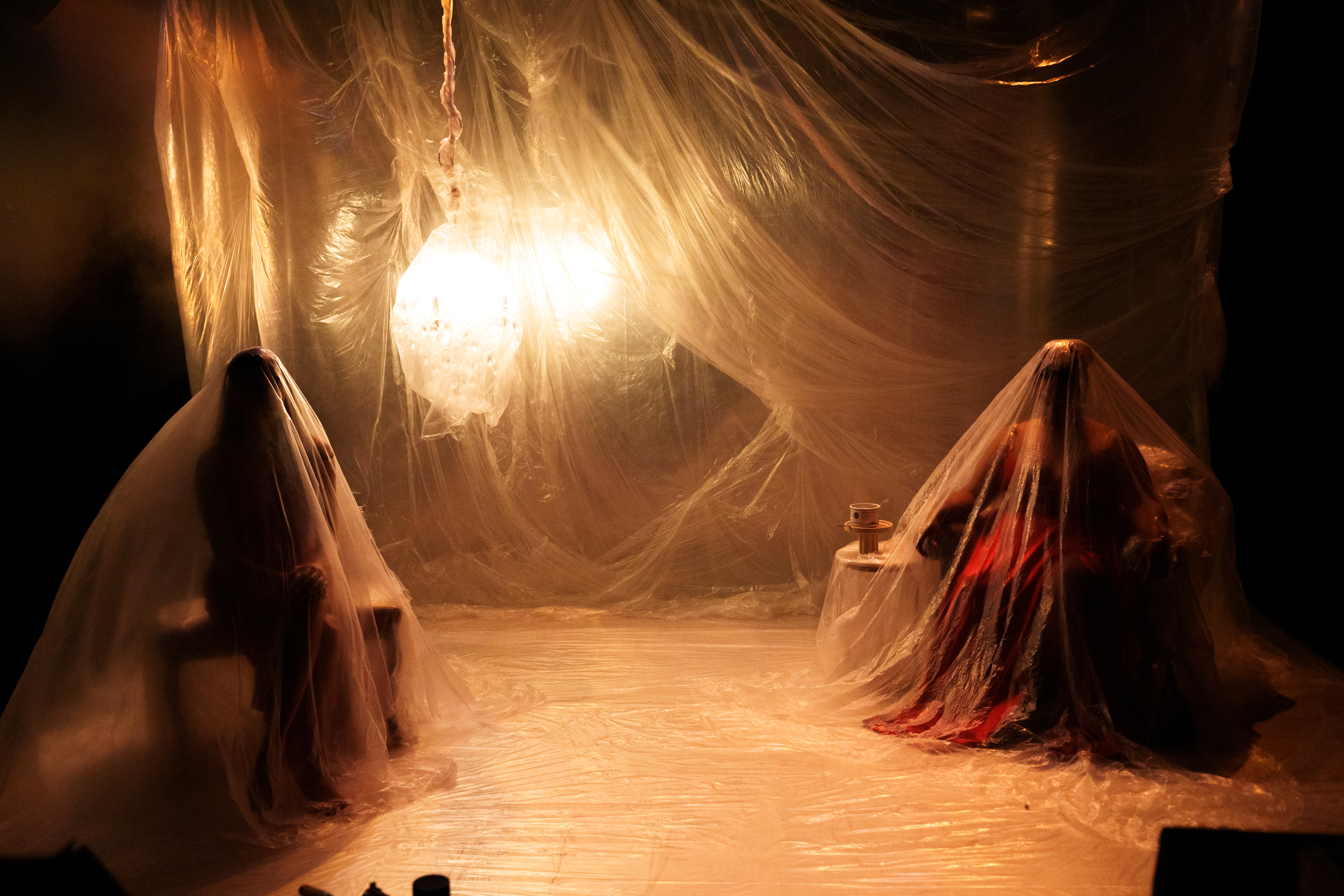
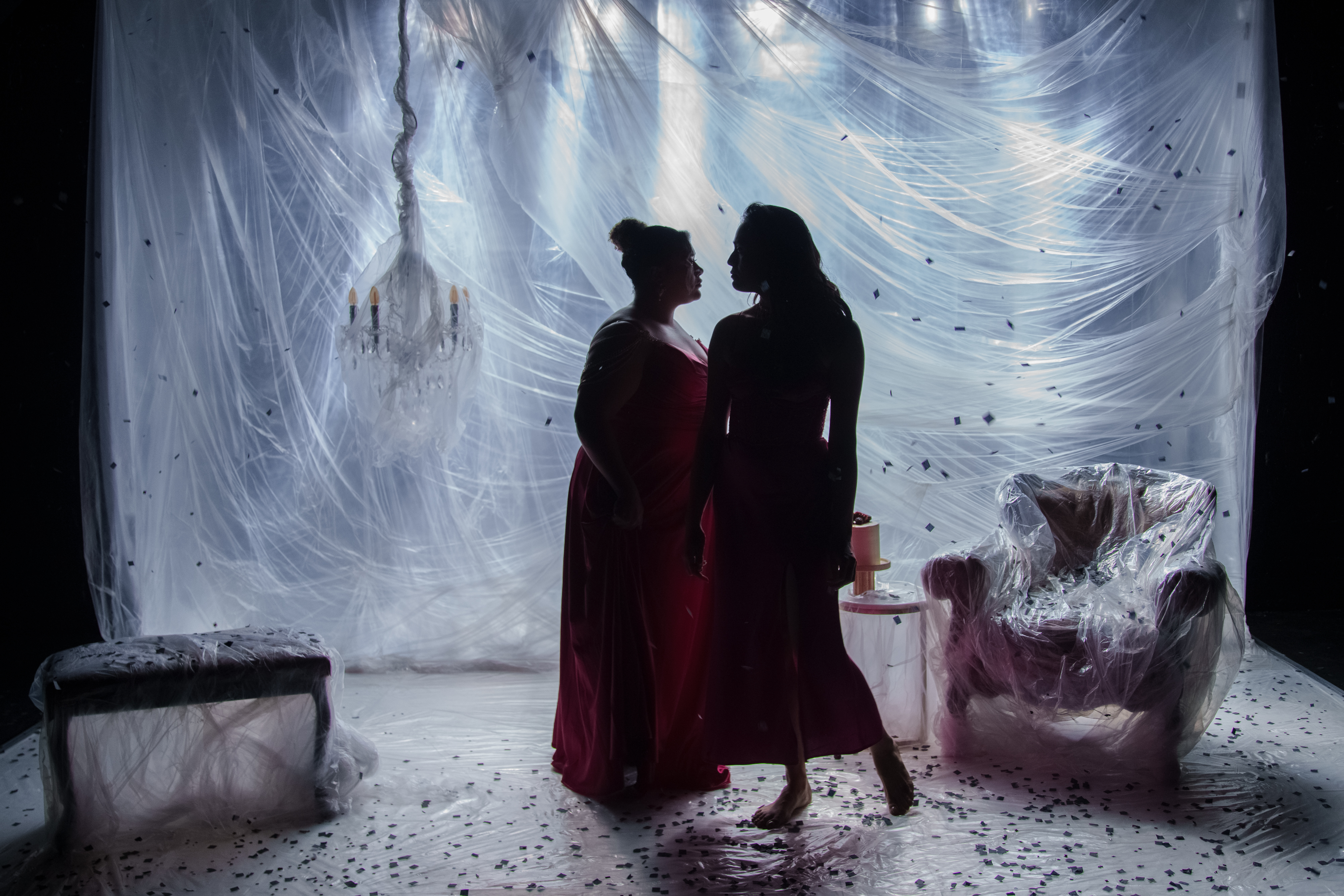
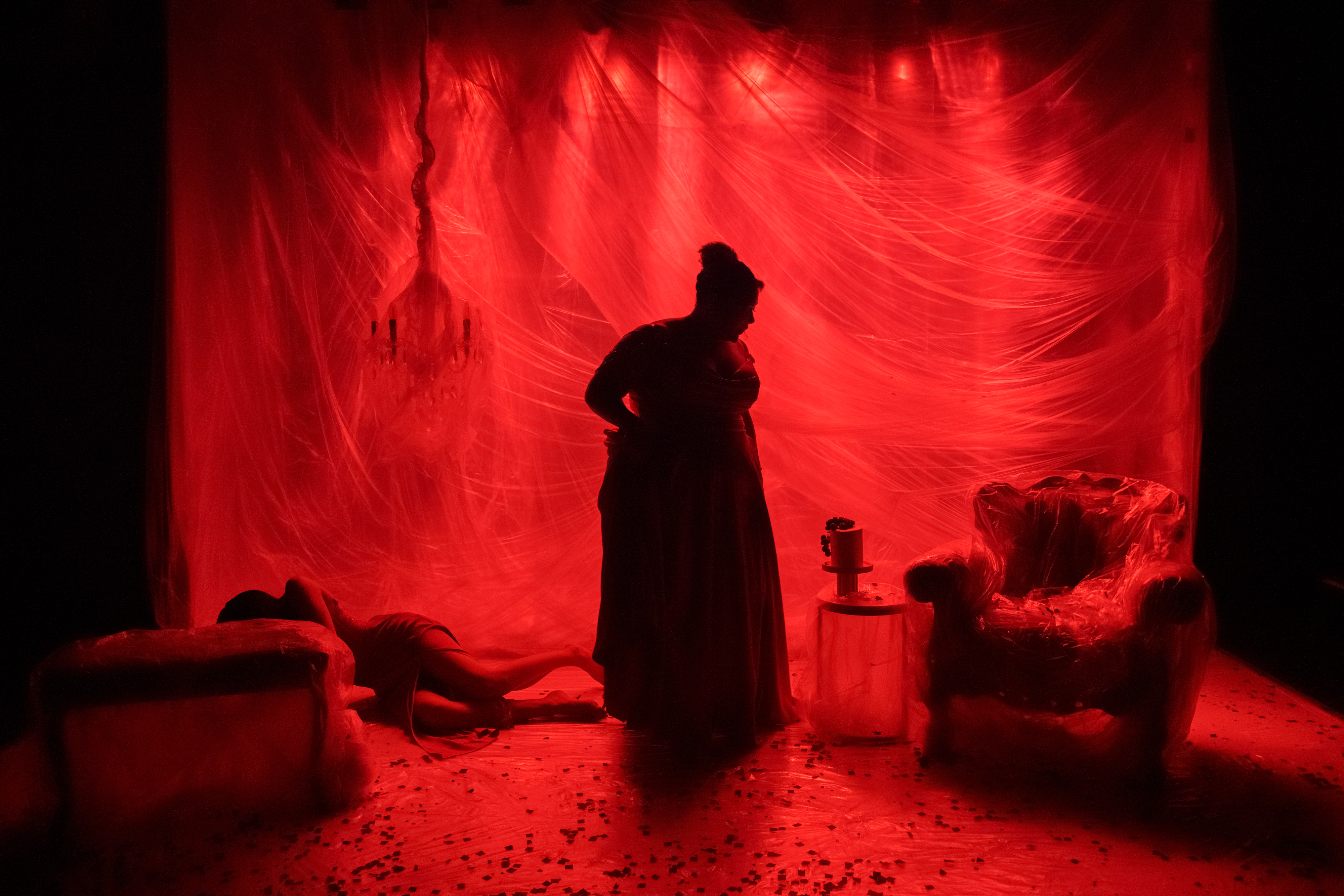
The production is elevated by Kelsey Lee whose set and lights offer a captivating flamboyance appropriate to this exploration of beings royal and celestial. Costumes by Grace Deacon are commensurately glamorous, although not quite sufficiently finessed for the refinement it wishes to depict. Zac Saric’s sound and music are rigorously created, to underscore the show with intensity as well as intentionality.
It is only human to wish to be regarded with respect and dignity, but when one arrives at the understanding, that social acceptance often comes at an unfair price, one begins to consider relinquishing those needs to be admired. One simply stops caring, not about things that are truly important, but apropos the meaningless approval and expectations of people who matter little. There is no denying that we are social creatures, but our societies can be as malevolent as they are benevolent. Women are taught to care too much, so that we may remain subservient, always terrified of being thought badly of. Helen and Clytemnestra recall their mother training them to always try harder, but it occurs to us that their persistent misery only ever seem to be in service of those who never love them back.
 Suzy Goes See