5 Questions with Mara Aplin and Andrew Guy

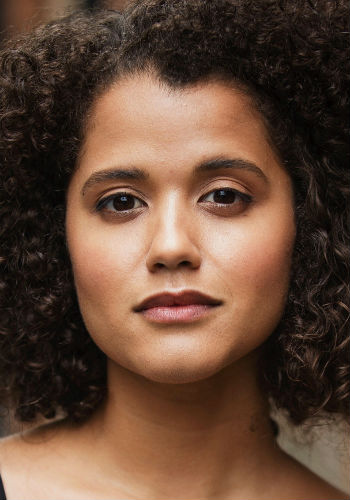
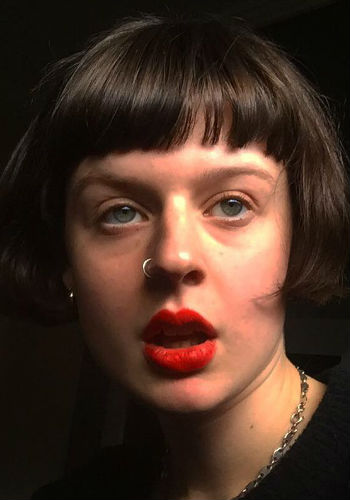
Mara Aplin

Andrew Guy: When did you first realise that you weren’t just a gender, what was happening during this experience?
Mara Aplin: I think at around age 16, when I first started coming to terms with my sexuality I found myself really drawn to androgynous people. This kind of forced me to assess my own gender expression: I think androgynous people are beautiful, but I don’t express myself as such. I began to question why I feel so comfortable with femininity, and began to experiment with expression etc. I shaved my head last year which made me realise that expressing my femininity is important to me, but I’ve come to realise that my own beauty and appeal does not depend on typical feminine expression. My sexuality also has allowed me to explore the irrelevance of gender, I try not to put any label on my sexuality because even bisexual seems limiting and like I owe a kind of consistency in my relationships that I just can’t guarantee. I have come to realise that, when it comes to choosing partners, gender is as relevant as hair or eye colour, I notice it but it’s not make or break, I can appreciate it (in whatever way it’s expressed) but it doesn’t really play a part in how I feel about people. Even in the LGBT+ Community, I think there’s a lot of stigma surrounding bi/pansexuality because we are still so stuck on gender, I’ve had queer women tell me they wouldn’t date me just because of my interest in men or male presenting people, like there’s some kind of stain on me because I’m not a “pure” lesbian. This strange sense of reverence that surrounds gender pervades all corners of society, which I find so strange and limiting.

What’s your favourite colour combination on yourself?
I just love wearing colour. Red, yellow and green are my favourites to wear but often not together. I often try to combine loads of colours if I can, but I like going for warm tones together and cool tones together. Red and orange or pink, orange and yellow are popular choices, but I never really know until I put it all together. I love bold patterns and colours in general, whatever I can get my hands on.

Describe a moment you took your power back while working in the industry?
I just don’t work with people who I don’t feel respect me and my work, particularly if that work is unpaid. I left a theatre company I was involved in because the director was asking us to workshop a script he’d written and would use our ideas and then claim them as his own when we did showings for feedback. He was also pretty sleazy and just didn’t know how to work with women, I had to stand up for myself and other women in the company a lot and it just got to a point where I couldn’t justify doing free work for someone who didn’t respect me in any way. I think maintaining your own power in this industry is not letting yourself be used. My work is valuable and it means something, so I deserve respect and credit where its due.

Does gender have a place in art?
I think it does because we’re so obsessed with it as a society. Gender plays a role in power, relationships and identity in present society, and art is meant to reflect society, but also to criticise it. I think art about gender makes us think about gender and whether it really means anything.

What is your definition of gender?
This one is hard. I think if you find comfort in a gender identity, that’s a great thing, but if you don’t that’s also fine. I think we’re so obsessed with putting names on everything, which can be so harmful because so many things cant be put in a box or behind a label. I think gender is just a scale of masculinity and femininity and how these are expressed, regardless of physical sex. I think we’re taught to assign femininity to female biological sex, and masculinity to male biological sex, but it doesn’t have to be that way. elements of both these traits are useful in understanding your own identity.
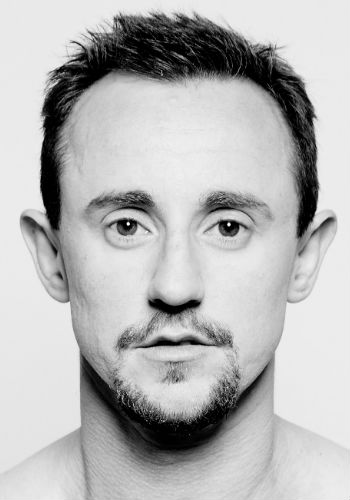
Andrew Guy

Mara Aplin: How has your own expression of gender benefited you? How has it hindered you?
Andre Guy: I’m sorry I can’t answer this question as gender has never been a forthright expression I have taken control of, it’s always in my experience just happened or been placed upon me.

Do you think gender plays some kind of positive role in society or should it be completely eradicated?
Gender plays a positive role in society I think if those playing the role they’ve been given (or chosen) are happy with what that role entails intrinsically. In short this rarely happens as people use the gender construct for all sorts of special “access exclusive area” games which excludes, oppresses, abuses and ultimately creates and reinforces human disconnection.

Eradicating it would be interesting to see, my greatest fear is that we’d turn into pleasant-ville sameness characters on a spinning rock in space, fear of the exposure of stepping into an expression that’s been soaked into our sense of self since the day we became human. People also like a box to fit into if they’re insecure in who else they know themselves to be (who am I if I’m not my gender?), so it has a place still, in short “man up everyone, be brave” so we can be done with this as a box on a form!

What are your thoughts on the use of labels in terms or gender, sexuality etc?
I think it serves individuals questioning their identity and how they feel the best feel accepted in society. Some like to be placed into their box. I personally try to exist each day with as little interactions with the terms as possible. Though saying that, I chose to medically transition for the social acceptance and the affirmation of being seen and treated as male by others. I’ve fallen victim to the social conditioning of others in society because my instincts tell me that’s what’s going to make you feel best. Any sway from that is futile to my existence, so actually maybe the terms are the most important thing in keeping me on this planet (biggest note of hypocrisy yet! 🙂 Thank you very much X.

Does gender have a place in art?
Whether I think it has a place or not, it’s palpable and used as part of the skeleton of a lot of work everywhere, find me a script or a piece of work without the use of pronouns and names where we don’t know who or what the genders are …

What is your definition of gender?
I don’t know any more, from travelling along a spectrum from one end to another (as the construct suggests and exists as), I forget its there and I no longer know how to live with in it as many do. Take me away into an oblivion where I can give you only feminine or masculine energy away from any form, as this bunch of molecules understands.

Mara Aplin and Andrew Guy are appearing in Genderification, by The Leftovers Collective.
Dates: 27 September, 2018
Venue: Surry Hills Library


5 Questions with Alana Birtles and Eleni Cassimatis

Alana Birtles

Eleni Cassimatis: What compelled you to audition for Everyone I’ve Ever Loved Or Slept With Or Both?
Alana Birtles: I decided to apply to audition for Everyone because I thought the title was very intriguing. I also liked the idea of investigating relationships and how people ‘mark’ or ‘stain’ us. Those particular words stood out to me.I also think the Sydney Fringe is a great festival and I jumped at the opportunity to be a part of it.

The process has been quite unusual, as we’ve been devising all while using a script. Can you explain what the process has been like for you?
It’s been a really interesting process devising and collaborating on this script. I’ve never worked in this way professionally before. I feel like it gives you a lot more room to play and discover, and I feel like it brought us closer as an ensemble. As each interpretation of this work will be unique, this will be the only time this version will be performed which is also a really cool thought.

Can you explain to everyone what “cup casting” is, and why we’ve been doing it?
Cup casting is this magical process by which we put ‘character names’ into a cup (a very particular cup mind you) and we each pull one out to see who we will be playing. It’s actually worked out amazingly as we all got characters/scenes that we had originally said resonated with us.

Have any moments or scenes from the play resonated strongly with you?
Yes there’s one scene in particular that I felt strongly about. Without giving anything away I’ll say that the scene is a complex one in its emotional variations but also the concept behind it. This is an instance where the magic cup casting worked because I actually ended up being allocated that scene. Otherwise, I believe the play presents a multi-faceted view of relationships that is relatable to everyone. Dissecting the play, the entire ensemble has related to particular experiences in the play or known someone that has had a similar experience.

We’ve been having a weekly guac comp during the rehearsal period… got any hot tips for a killer guac?
Ah the guac comp; one of the highlights of my Saturday’s. I am an avid avocado fan and pride myself in my guac-making abilities. I believe lots of flavour and freshness is key. I like to add a bit of raw garlic and Spanish onion, but I think you shouldn’t be afraid to utilise a decent amount of lemon, salt and pepper. I’m not usually a fan of coriander but I’ve been converted when used in guac. Coriander with a bit of tomato adds freshness.

Eleni Cassimatis

Alana Birtles: How are you enjoying working as part of a democratic ensemble?
Eleni Cassimatis: The collaborative nature of our democratic ensemble has been a lot of fun. As we are devising our way through a new text, it has meant we can basically pave our own way through it. Our cast and creative team are made up of a wonderful group of artists who all have a brilliantly diverse range of experience in various acting/theatre-making forms, meaning what each person brings to the table is a different wealth of knowledge, and therefore the experience of each scene or ‘vignette’ in the play has been injected with a variety of storytelling forms. On top of this, our cup casting has meant some scenes have been cast completely out of control, and then we’ve had the fun job of making it make sense!

What’s been the most challenging part of the process for you so far?
The most challenging part of the process for me was probably in the initial phases of staging the play – making myself succumb to the fact that we were going to have no idea what exactly the play was, or how exactly we were telling this story, and allowing myself to just play and create with no clear ending. St Clair’s text has been left so open for us, which at first seemed daunting, but gave us an abundant amount of delicious possibilities.

St Clair’s rejected a masculine story arch in her writing. How have you found working on a play that’s structure is more cyclical than linear?
The play’s structure, being more cyclical than linear, means that there isn’t a defined start point and end point to the story, and that where the play begins and where it ends could actually be anywhere in this order of experiences. In rejecting the traditional masculine story arch, Saint Clair has created an experience for the audience that gets ‘left hanging’ and doesn’t have a clear resolution, but what could instead be a new beginning. I’ve found working on this structure to be full of discoveries, because each time we would work out what one scene could be, we would find that it would open up hundreds more possibilities for what the preceding and subsequent scenes could be. I think it let us be more ok with pieces not directly connecting to each other, because they were still part of the inherent circling motion of the entire play, and thanks to the brilliant writing we were able to step back and trust that all the pieces connected and linked to form their own version of the traditional storyline.

Everyone explores intimacy and human connection in abstract fragments, which isn’t unfamiliar content in the theatre. How does this production present this universal experience in a different light?
I think the best way to talk to this is that in Everyone, we get to see little slices of life, which are short (or sometimes longer) glimpses into the relationship between couples or groups of people. These transactions explore many different assets of human connection and intimacy, are transient, and over the course of the play will hopefully resonate with and reflect experiences that everyone can relate to! The play breaks these concepts open and addresses them as the characters live out their experiences in front of the audience, and by allowing the characters to passionately try to work things out & make sense of things for themselves, pulling the audience in and along with them on the way.

There are 400 shows playing as part of the Sydney Fringe. Why should people come see Everyone?
Firstly – the title. Come on guys, how can you not be wanting to know more? Second – what a crew and cast I get to work with – working with Liz has been incredible, the guys at Revolving Days are amazing, and the 5 other actors I have got to spend this last six weeks with have been an absolute blast. I am so proud of the work we’ve created, I love the idea that no other version of this play will ever be the same, and love that I got to play part in putting St Clair’s work on it’s feet in the public for the first time.

Alana Birtles and Eleni Cassimatis can be seen in Everyone I’ve Ever Loved Or Slept With Or Both by M Saint Clair.
Dates: 4 – 8 Sep, 2018
Venue: Blood Moon Theatre

5 Questions with Jessica Bellamy and Kirsty Marillier

Jessica Bellamy

Kirsty Marillier: How does it feel to be staging Shabbat Dinner for the third time?
Jessica Bellamy: It feels very strange to be staging Shabbat Dinner for the third time. It felt strange staging it the other two times, too, though. I’m still getting my head around the idea of autobiographical theatre and the fact that anyone wants to take a night off their Bachelor viewing schedule to see my family story. But then I try to channel the confidence of a universally reviled politician deciding to make a tilt at national leadership. I ask myself: “why not me?” I would like to continually build my professional confidence so it’s akin to that of a mediocre white guy.

To offer a more serious answer to this question, it is quite rare for an Australian playwright to get multiple productions of their play in a five year period. I’m glad this work resonates with people, and I’m also really lucky it was championed and incubated by the much-missed Tamarama Rock Surfers, who supported me becoming a playwright by giving me the opportunity to make shows.

If you could be one character from Broad City for the day, who would you be and why?
Ilana! Everyone wants to be Ilana, right? I’ve actually written an article for Feminartsy journal explaining why I love her so much. I love the way she traverses her city like it was meant for her. Her effervescence, her passion, and her incredible fashion sense. The way she is styled reminds me that it’s OK to have big, frizzy hair, to wear whatever you want, to feel safe (or that you deserve to feel safe) walking the streets of your city at night.

What is your favourite dish to eat at Shabbat?
Bloody borscht, mate! It’s heaven! Anyone with a womb should eat beetroot at least once a month. A traditional Shabbat dinner would involve chicken soup, and when I can be bothered I might whip up a vegan version using vegie stock and alphabet noodles. My own strange version of the real deal.

What advice would you give teenage Jessinka?
Don’t worry so much. No one cares as much as you think they do. There’s no certain thing you have to achieve by a certain time. Say what you think, get angry, demand your rights, and take up space.

What does your family think about the play?
My family have been very generous about this work, especially considering the fact that it is so personal. They have also supported me in my personal growth over its three seasons. I’ve learnt a lot about my own value system through making this show, and I’m making decisions now, in my thirties, that I wouldn’t have had the emotional intelligence to make any earlier. This involves weighing up a cost-benefit analysis of anything autobiographical I write. Asking myself: who benefits from this, and who is challenged, in a way they haven’t asked to be, by me deciding to write something? When a story belongs to more people than just me, these things need to be negotiated and carefully considered.

I will paraphrase another Russian writer, Maria Tumarkin, whose memoir workshop I went to a few years ago. She said that if her work is going to hurt people, she won’t do it. Caring for people is more important to her than whatever art might come out of being provocative.

Ultimately, I value my relationships over anything I’ll make in my career. And I know that I’m a strong enough writer to make excellent work that also prioritises care in every element of its creation. In my first few years of practice, I didn’t really understand the fact that art – this great amorphous thing – could be chopped and changed to abide to your moral code. I used to think the art was the art, and I had to get out of its way. I’m getting better at thinking a little wider now.

Kirsty Marillier

Jessica Bellamy: Did little Kirsty know she wanted to be an actor?
Kirsty Marillier: Yeah she did. It all started from around age 9. In year 3, I was cast in a tiny role as the indigo fairy. During the performance I fell over on stage in front of the entire school and I reckon I made a pact with myself that it would be the last time I would EVER let people laugh at me on stage unless I had told them to. I auditioned for the lead the next year and got it! I also had a wonderful performing arts program at Leeming Senior High School and some really inspired teachers. I think I owe a lot of my drive and confidence to them.

What’s a family recipe as significant to you as some of the food we serve in Shabbat Dinner?
My GiGi’s Magwinyas. Magwinyas are deep fried savoury doughnuts that you break apart and shove curry inside. They are not for the faint hearted; oily as and have zero nutritional value but are insanely good and give you that combined sweet/savoury dopamine hit. Yum. They are really hard get to right because you need to make sure you knead them with “gentle hands”. So they have enough air. It’s an art form and my Gig is going to give me lessons on them next time I’m in Perth.

How do you get those curls so stunning, girl?
Girl, it’s called Shea Moisture and Priceline have 20% off as we speak. I also started making my own aloe vera gel. You need fresh aloe vera and an entire Sunday to do it but it’s worth it. I also sleep with my hair in a pineapple and wrap it in a silk scarf, it’s a process.

What are the ways you connect to a play about Jewish ritual and Torah stories?
This play centres around tradition, women and food. How we inherit tradition from those who came before us, and the intergenerational effects of migration. I’m a coloured South African woman. I moved to Australia at age 10, have religious parents and 7 South African aunties scattered around Australia. It would be pretty hard for me not to connect with this play.

I said to someone a few of weeks ago that this show (in 2015) was my first encounter with intersectional feminism. It was the first time I’d said that out loud, but it’s totally true! I’ve learnt a lot about my own culture and feminist practice doing this show. How one can re-appropriate culturally specific beauty regimes to suit their own life, how perspective and clarity on your gender and identity can be found by unpacking your past, and how the women in our lives have influenced us more than we know. They hold power in their rituals and it’s something to celebrate! (I feel like I’ve gone on a tangent but I thought it would be an interesting thing to add.)

I connect with this show by thinking about the women in my life, past and present. How much they have made me who I am and how I carry their stories with me.

What do you want to be doing artistically in 5 years’ time?
I want to be writing. I’d love to have a play or two under my belt. I also want to more involved in the telling of culturally diverse stories. I want to see more people of colour on stages; I’d like to help push that process along in any way possible.

Jessica Bellamy and Kristy Marillier are appearing in Shabbat Dinner, by Jessica Bellamy.
Dates: 10 – 15 September, 2018
Venue: SBW Stables Theatre

Review: The Maids (Glitterbomb / 25A Belvoir)

Venue: Belvoir St Theatre (Surry Hills NSW), Aug 25 – Sep 15, 2018
Playwright: Jean Genet (translated by Bernard Frechtmann)
Director: Carissa Licciardello
Cast: Alexandra Aldrich, Skyler Ellis, Amanda McGregor
Images by Jasmin Simmons

Theatre review
Jean Genet’s The Maids is based on a 1933 murder in France. A pair of sisters work as maids in a rich man’s house, isolated from the rest of the world. Their shared oppression turns them monstrous, as they gradually bring to fruition, the heinous contents of their imagination. We may no longer, in the West, have servants of that kind, but it is a story that draws parallels with the many inequalities that persist, or are in fact escalating, in these supposedly modern times. We look at the birth of evil, from evil, and are made to consider the repercussions of a society determined to maintain its hierarchies.

Carissa Licciardello directs an extraordinarily intense and flamboyant production, using Genet’s macabre poetry to inspire a marvellous sense of heightened drama. Three wonderful actors work in perfect tandem, delivering a sensational piece of grotesque theatre, intriguing and powerful with what they bring to the stage. Alexandra Aldrich and Amanda McGregor play the sisters, both commanding in presence, as Claire and Solange, compelling from beginning to end, even when Genet’s writing turns impenetrable and obtuse. Male actor Skyler Ellis takes on the role of Madame with aplomb, demonstrating excellent nuance alongside the role’s predictable extravagance. Watching the maids feud with a man, creates a fresh intellectual dimension, helping the old play speak with more pertinence than it would otherwise have.

Humans have an insatiable desire to control one another. Our thirst for power, when untamed, has the ability to blind us to the fact that people’s freedoms are always essential. Compromises can be reached in all our interactions, of course, but it is clear that transgressions occur frequently, with or without our acknowledgement. The servants have no choice but to submit to the consequences of their poverty, but when people are subjected to conditions unnatural and perverse, it is certain that morbidity will result.

www.dasglitterbomb.com | www.belvoir.com.au