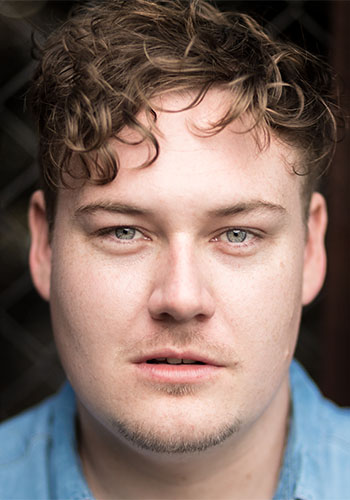
Patrick Howard
Victoria Zerbst: Patrick, you have traversed many stages and productions in various wonderful roles, what has your theatre journey been like for the last few years and what brings you back musical theatre?
Patrick Howard: The past few post-drama-school years of working freelance in theatre have been really challenging and rewarding. I’ve found myself naked, covered in blood, crying on top of four tonnes of soil before quick-changing into a devil costume. I’ve found myself playing a weird detached version of myself, doing stand-up comedy about death. But mostly I’ve worked behind the scenes in production/stage management and as a director and sound designer. The last book musical I did was six years ago, discounting Marat/Sade a few years back, and it’s been wonderful and very different to be doing a musical again. As a musician (which I was before I was a thespian) and an actor, there’s something so incredible about reaching a place of heightened emotion as your character, where your only choice is to sing; words alone won’t cut it. Of course, Sondheim does this so well and seamlessly, it never jars at all. I missed that thrill, and I missed making music with a giant bunch of passionate actors, it’s so thrilling to be doing it again after all this time.
Frank would be such an interesting character to play! How do you develop a character who does such terrible things but remains likeable and charming throughout the show?
It’s a tricky one. I often find myself very frequently playing men that are quite performatively masculine, aggressive and do terrible things. I take a lot of perverse pleasure in this, being a bit of a bleeding-heart queer boy in real life – I feel like this gives me a unique take on what can be, at times, pretty architypical roles. The difference with Frank is that, as the central protagonist of the story, the audience needs to root for him even though he does some really awful things – he’s not a cut-and-dry bad guy. With any character, playing the truth of what’s in the text should do almost all of the work, you’ve got to trust the writer as god of the world you’re inhabiting, and in Merrily, Sondheim and Furth have cleverly arranged Frank’s story in reverse, with the audience watching him transform from a tragic, miserable wreck of a man into his former, youthful, optimistic self. Your empathy for Frank grows through this, you can see the mistakes he’s made, and more than if it were played chronologically, I think it makes you really consider what choices lead us to our various ends.
What has it been like working with Little Triangle and all the amazing members of the cast and crew?
A bloody dream. The team are so wonderful and it’s got to be the most professionally-run indie company I’ve ever worked for. Our producer, Rose, is so organised and her love of her work is so evident. Our director, Alex, is an absolute dreamboat, and is incredibly insightful and intelligent. Conrad, our MD, is a wizard and has to be one of the most optimistic and encouraging people I’ve ever met. Our répétiteurs Antonio and Alex are remarkable, and the rest of the cast… I mean you just have to come and see them. Each is more talented, generous, gorgeous, encouraging and intelligent than the last. There’s an incredible synergy in the room, and I’m not ashamed to say that after the first few rehearsals I’d walk the bus home with happy tears welling in my eyes, because they all brought so much joy into my little artfag heart. We sing a lot about being ‘Old Friends’ in the show for people who’ve only known each other for a few months, but it truly feels like we all go way back.
Do you reckon prospective audience members should listen to a few tunes before coming to the show? Which ones would you recommend?
Oooh, I suppose it depends if you’re someone who likes to know everything about what they’re about to see, or if you like to be completely surprised. Not many people know this show very well, it was famously a tremendous flop when it opened on Broadway in 1981, and despite being re-written a bunch and being a truly brilliant show, it doesn’t get seen often outside of, oddly, high school productions (as can be seen in the recent movie Lady Bird). But if you wanted a little taste of the show before going to see it, I’d recommend tapping your toes along to ‘Now You Know’, which is the absolute banger that closes Act 1, or the titular ‘Merrily We Roll Along’ which opens the show. For something with a little more heart, ‘Growing Up’, ‘Not A Day Goes By’, or ‘Good Thing Going’ are what you’re after.
Why do you think this musical is still important? What do you want the audience to get out of it?
I think often a lot of theatre tends to focus on romantic relationships as central to plot, and that’s particularly the case in most musical theatre. Merrily does have quite a bit of romantic drama in it, certainly, but this is one of only a few shows that really focuses in on a complex, messy, beautiful friendship, namely between Frank, Charley and Mary. These three are the best of friends there are (and ultimately, they aren’t, which is just so, so heartbreaking), and I think it’s wonderful to celebrate friendship and have it portrayed quite honestly on stage. Playing scenes where Frank and Charley, two married, heterosexual men, openly tell each other in quite emotional terms that they love each other, is such a special thing as well – for all their faults, the way they express their friendship is really beautiful. I think watching the story unfold backwards makes it important, too. It gives an audience the relief of guessing ‘what happens’ and lets them concentrate on what’s happening, with the dramatic irony of knowing what comes next. You can find little moments in the action to think, ‘See, here’s where it starts to go wrong. Why can’t you see it happening Frank?’ and maybe that gives you pause to think more carefully about the choices you’re making in your own life.
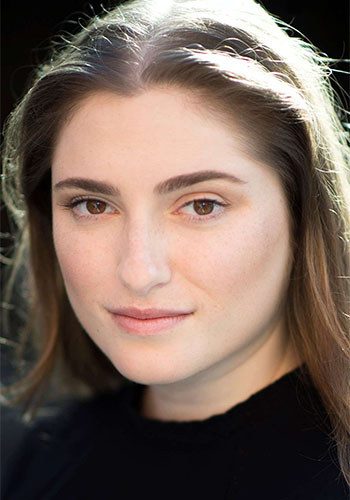
Victoria Zerbst
Patrick Howard: What about theatre in Sydney is exciting you most at the moment?
Victoria Zerbst: I’m so excited by theatre in Sydney at the moment and there are so so many shows on my to see list. I think that’s because a lot of shows coming up align heaps with my interests – sick female-centred stories, independent musicals, works by new and emerging Aussies writers and lots of theatre for young people.
How has your background in comedy helped you prepare the role of Mary Flynn?
I think coming from a comedy background has helped me find new and interesting ways to deliver lines and bring out humour in dialogue. Mary is already a very wry and hilarious character with sick one-liners so experimenting with timing and delivery of the lines has been such a blast.
But I also think writing and performing comedy for the past few years has really helped me find my voice as a performer. Writing my own stuff has been very empowering because I’ve learnt what makes me laugh, what makes me different as a performer, and how I can uniquely shape a role from my own point of view.
That has really helped me find an honest and real way for me to tell Mary’s story that comes from my blood. Hopefully this will connect with audiences and bring the character to life.
Mary is quite an intelligent, complex character, but spends years pining for Frank, even when there’s little-to-no chance of fulfilment. What is it like to play a role like that in 2018?
This is such a cool question and something I think about a lot! Mary is a smart, thoughtful character but one of her primary arcs in the show is her dealing with an unrequited romantic situation. She is often left disempowered by her relationship with Frank and I often wonder if it appears that she is primarily defined by this relationship.
But I really think there is a lot more to her thank that. I try to reframe her romantic pursuit of Frank from her own point of view – she’s a total dreamer, she’s endlessly hopeful and loyal and she really cares about the people in her life. I think this speaks to her complexity as a character and her intertwined strength and vulnerability.
Strong female characters don’t have to be flawless, completely empowered women. I think her enduring love for Frank is totally relatable and, while I often wish she would just snap out of it and see her own worth, I think this internal conflict is something with which a lot of people can relate.
What’s been most thrilling about the process so far, and what’s been most challenging?
Thrilling: Definitely running all the songs in rehearsals. I love the music so much and hearing them sung so well by this amazing cast I swear everyday I’m so moved and then I’m dancing and then I’m crying.
Challenging: Oh man some of Sondheim’s melodies!! So often I sit by the piano frozen by this man’s genius and then I curse his name for those subtle little changes in musical phrases that literally keep me up at night.
Sondheim is a god of 20th Century theatre, and his music and lyrics alone are reason enough for people to come and see the show. What are some other reasons to come, and what do you hope audiences take away?
The thing I love most about this musical is that is has such a big heart. It’s definitely one of those ‘makes you laugh, makes you cry’ shows. I think audiences will totally fall in love with these characters and feel for them on their journeys as the show takes them back through time.
Because the show spans so many years of these characters lives, there are so many amazing emotional arcs and moments of growth and change. I hope in watching this show audiences are moved to think about the choices we make in life, how we define success, how people change over time, how our dreams are found and forgotten, and about how friendships are made and lost over time. There are so many juicy moments in the show about friendship and forgiveness, love and connection and I think that will speak to everyone who comes and sees the show.
Patrick Howard and Victoria Zerbst are appearing in Merrily We Roll Along, by Stephen Sondheim.
Dates: 7 – 24 March, 2018
Venue: The Depot Theatre
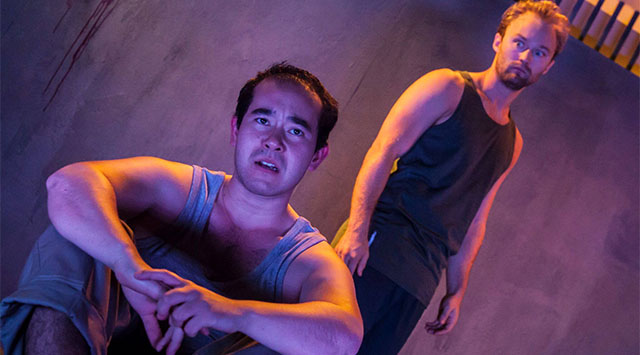 Venue: Old 505 Theatre (Newtown NSW), Feb 27 – Mar 3, 2018
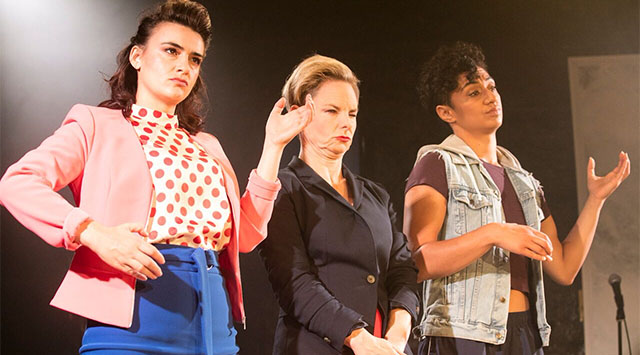 Venue: SBW Stables Theatre (Kings Cross NSW), Feb 23 – Apr 7, 2018
 Suzy Goes See