Review: Orlando (Sydney Theatre Company)

Venue: Sydney Opera House (Sydney NSW), Nov 9 – Dec 19, 2015
Playwright: Sarah Ruhl (based on the novel by Virginia Woolf)
Director: Sarah Goodes
Cast: Matthew Backer, Luisa Hastings Edge, Garth Holcombe, John Gaden, Jacqueline McKenzie, Anthony Taufa
Images by Prudence Upton

Theatre review
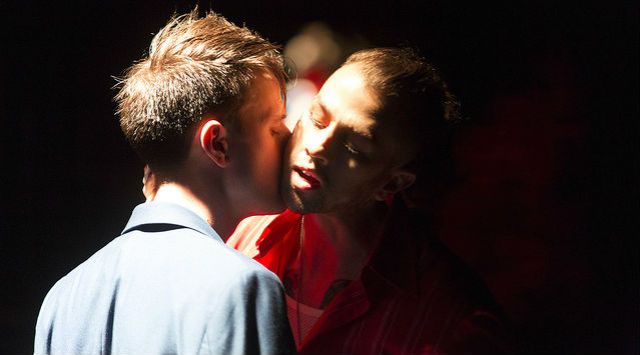
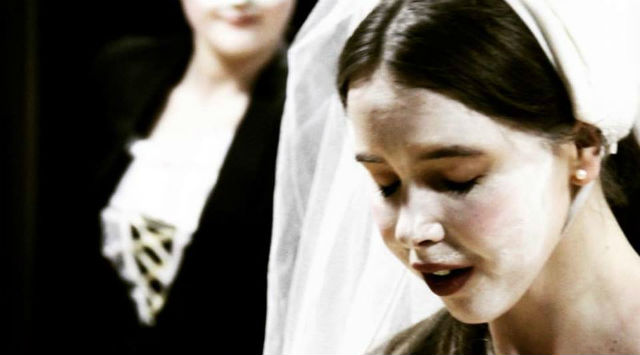
Virginia Woolf’s novel Orlando: A Biography was published in 1928, when discussion of sexuality was made in hushed tones, and inseparable from notions of gender identity. If a person loved a woman, they had to take the form of the masculine, and the reverse was true. The centrepiece of Orlando‘s story is a man’s magical transformation into a woman, wistfully described but scarcely explained, though by simple deduction, one could perceive more than an indication of sexual fluidity, and a desire to explore what is now known as sexual orientation. It would be remiss however, to reduce the work to be simply about sex, for its interest in fluidity extends to the whole of a person’s identity, or how one sees themselves, along with how society conceives of that individual.

Sarah Ruhl’s 2010 stage adaptation can be understood as a feminist piece. Orlando’s life as a man is depicted with an extroversion that is concerned with the character’s appetite and discovery of the world around him, but as a woman, she turns introspective and we are presented with constant interrogations about her place in relation to things as the fairer sex. In other words, maleness is seen as an unquestionable natural state, while the feminine requires persistent justification. In dramatic terms, Ruhl’s work is poetic, sublime theatre that uses all the capacities of language to excite, provoke and enchant, and to tell a fascinating story that is strangely engaging in spite of its contextual distance.

It is a humorous text, gentle in its approach, but always charming and amusing with its renderings. Director Sarah Goodes executes that subtle comedic tone with great sophistication, and although the production is seldom laugh-out-loud funny, her brilliant wit is deeply endearing. There is clever use of space, with a relatively small ensemble establishing an active and visually dynamic stage. Comprising two flights of mobile staircases and concentric revolving platforms, our eyes are kept busy and no time is wasted on scene changes, but the production is not strikingly lavish. It makes occasional reference to the well-known Sally Potter film of 1992, but that extravagant beauty, still fresh in many of our memories, is absent from this staging.

Our focus is placed squarely, and appropriately, on the title role’s narrative, but the show features a charismatic four-man chorus that helps with a lot of heavy lifting. Matthew Backer, John Gaden, Garth Holcombe and Anthony Taufa play a wide range of roles in all gender states, and provide commentary in song and narration that moves the plot along in spirited, gay fashion. Backer in particular, is impressive with his fervent embrace of the show’s vaudeville style of presentation, taking the opportunity to showcase delightful comic timing and a flair for exquisite camp.

In the role of Orlando is Jacqueline McKenzie, keeping us spellbound with a delivery that will be remembered for its intelligence, precision and unrelenting effervescence. It is noteworthy that the actor’s interpretation of Orlando’s personality does not alter significantly with the sensational gender transformation. Whether in male or female costume, McKenzie maintains a singular essence, reflecting a modern and enlightened attitude toward the construction of gendered identities. Her unfaltering energy gives life to two solid hours of stage time, every minute compelling and whimsical, keeping us engrossed in the development of Orlando’s extraordinary narrative with her captivating confidence.

The word “transgender” was recently announced as one of Collins’ dictionary’s “Words of the Year”. As Western societies begin to better understand the way we live out our gendered lives, we can recognise that a new dawn in civilisation is imminent, where people will no longer be persecuted for the way they express their gender, and individuals are free to adopt any form of gender identity they wish to inhabit. Hardly anyone bats an eyelid when Orlando emerges as a woman after living thirty years as the opposite sex. We may not share her aristocracy, wealth and power, but we can appreciate the nonchalance surrounding her transformation, and indeed realise the curious irrelevance of something that convention considers so crucial to how we understand life. Feminism is about achieving equality, and in equality, all that we think separates us, can be vanquished.

www.sydneytheatre.com.au

Review: Mortido (Belvoir St Theatre)

belvoirVenue: Belvoir St Theatre (Surry Hills NSW), Nov 7 – Dec 23, 2015
Playwright: Angela Betzien
Director: Leticia Cáceres
Cast: Toby Challenor, Tom Conroy, Colin Friels, Louisa Mignone, Renato Musolino, David Valencia
Image by Brett Boardman

Theatre review
At the centre of Angela Betzien’s Mortido, is a wretched life. Jimmy is a soft and kind soul, misguided by family and exploited by every person he trusts. Emerging into adulthood from a background of poverty and addiction, the only barometer he possesses for a better life is a need for acceptance, along with our definitive measure of success, money. Without the support of anyone who has Jimmy’s own interests at heart, and with no education to speak of, his fate is sealed, and doomed. The story is a dark one about the underbelly of Sydney, and how our affluence is built upon the perpetuation of an underclass, kept aspirational and concurrently ignorant.

Betzien’s script is highly ambitious and vast in scope. It encompasses themes of family, money and addiction, set against historical contexts, to explore attitudes and machinations of our current sociopolitical environment. The play looks at our problems with narcotics and poverty from micro and macro perspectives, refusing to diminish their complex enormity for convenient storytelling. What results is a piece of writing that is detailed and intricate, but also challenging, for audiences and theatre makers alike.

Director Leticia Cáceres does well at providing the production with tension and intrigue, but the plot’s clarity suffers from that tautness of pace. In its second half especially, too much is revealed too quickly, and our minds struggle to process every poignancy. Each revelation is an important one that contributes, not only to our appreciation of each character’s circumstances, but also to our understanding of the real world. Many of the story’s elements will resonate deeply if given the chance, but the show seems to rush quickly past and we are left wondering if we had learned everything that is worth knowing.

Nevertheless, Mortido is gripping, and very exciting, with each scene holding surprises, frequently overwhelming with its keen portrayal of brutality, both physical and psychological. Composer The Sweats and Sound Designer Nate Edmondson do exceptional work with their manipulations of atmosphere. The production relies heavily on its sounds to control our responses, and the precision at which it guides our emotions through every sequence and transition is remarkable. A disappointing contrast does occasionally occur however, when it takes a back seat, leaving the actors to their own devices, and we begin to feel the emptiness of space.

There is plenty of impressive acting to be found, including the very young but very compelling Toby Challenor, whose immovable focus on each task in every appearance, belies his tender age. Colin Friels plays several disparate characters, displaying a good level of versatility and enthusiasm, but is probably most effective as Detective Grubbe and El Carnicero. The star’s presence is undeniable and the intensity he brings to the stage has an effortless drama that is absolutely captivating. The central character Jimmy is performed by Tom Conroy with a faultless vulnerability. For all of Jimmy’s regrettable mistakes, we are always on his side, hurting for his every adversity and hoping that a twist of fate appears. Conroy excels in the role, successfully depicting Jimmy’s personal difficulties as well as the social connotations of a problematic life. We understand the responsibilities that are due young people like Jimmy, and realise how we have failed those who share his disadvantage. Also noteworthy is David Valencia as the enigmatic Spanish-speaking El Gallito, memorable for his simultaneous delivery of danger and ethereality, and an aggressive sex appeal that electrifies the stage.

The title of the work refers to our human tendencies toward self-destruction. It is a discussion about weakness, and along with that, we encounter ideas surrounding ethics, responsibility and social harmony. Mortido is a cautionary tale about the seduction of death, and the perils involved when allowing lives to be less than honourable. It confronts the inequity that exists in our wealthy cities, and our complicity in maintaining that damaging status quo. We can always identify good from bad, but we do not always make the right decisions.

www.belvoir.com.au

Review: Roadkill Confidential (Lies, Lies And Propaganda)

liesliesVenue: Kings Cross Theatre Kings Cross NSW), Nov 11 – 28, 2015
Playwright: Sheila Callaghan
Director: Michael Dean
Cast: Alison Bennett, Sinead Curry, Michael Drysdale, Jasper Garner Gore, Nathaniel Scotcher
Image by Emily Elise

Theatre review
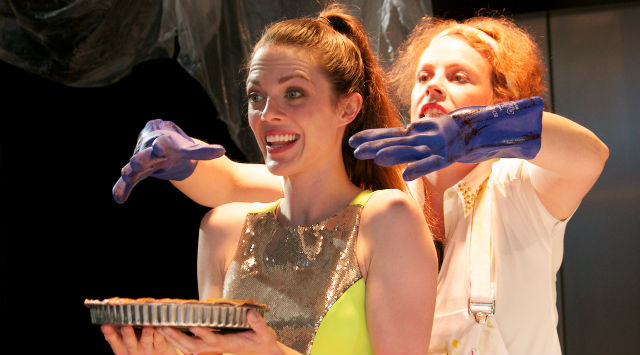
Trevor is not a happy artist. She watches the doom and gloom on the news to stay in touch with things so that her very high profile work in the field of visual art may be relevant to her public. In fact, her studio is highly secretive, maybe she is insecure about the unfinished product, or maybe she is trying to control the reaction to her controversial art. Meanwhile, a government agent is investigating her, and everything begins to look sinister. Sheila Callaghan’s Roadkill Confidential is however, no straightforward cop drama. It is an abstract and often surreal piece of writing that celebrates the dramatic art form by prioritising the stage’s unique abilities of relating to its audience. Beyond the use of a narrative to satisfy, the play features sequences that resonate independent of characters and stories. Its free form allows actors to create moments of wonder, in service of theatre and all its possibilities.

Michael Dean’s exuberant direction is concerned with creating an experience that fascinates and intrigues. The show’s plot is not always coherent, and we leave with uncertainty about the moral of the story, but there is much to get involved with at every step of the way. Lights by Richard Neville and Mandylights, along with Benjamin Garrard’s sound are playful and dynamic elements of a production that is determined to deliver whimsy and extravagance. Creativity is in abundance here, and there is little that holds it back from making its ubiquity felt in every nuance.

Performances are suitably colourful, from a committed ensemble, unified in style and tone. The charming Michael Drysdale plays the unnamed agent with a quirky flair, and a confident physicality that brings life to the stage. His work needs better polish to reflect a more precise grasp of the text, but Drysdale’s execution of the show’s anti-realistic scenes are consistently amusing, and memorable. The artist Trevor is depicted with admirable strength and vigour by Alison Bennett who introduces an alluring severity to the mysterious role. Her piteous neighbour Melanie becomes a force to be reckon with under Sinead Curry’s surprising interpretation. The actor’s flamboyant approach and magnetic presence provide her character with excellent entertainment value, and offers good balance to a show that has a tendency to bewilder.

There is no discussion about whether Trevor’s new work will be understood, yet its effects are gravely anticipated. We need to talk about theatre in a similar way; to allow it to do more than just telling stories. There is no fear of abstraction in this production of Roadkill Confidential because it believes in affecting its audience in a more inventive or perhaps, sophisticated manner. At the theatre, we share a space for a couple of hours, and when we go our separate ways, we will depart having grown a little. It is by that amount of extension that we can measure an artist’s worth.

www.liesliesandpropaganda.com

5 Questions with Toni Scanlan and Jamie Oxenbould

Toni Scanlan

Toni Scanlan

What characters do you play in Good Works?
Toni Scanlan: Mrs. Kennedy – who is a working class woman with a strong connection with Catholisism and who has a daughter who challenges and disregards the social and religious expectations of the church.
Mrs Donovan – initially from a poor background and is now a social pillar of society. She is a glamorous, controlling woman who completely understands her role in her adopted community.
Sister John – A nun.

Nick Enright , the writer of Good Works, is a theatre legend. Did you ever meet him or work with him?
I met Nick through a couple of his friends who became mine – which inadvertently led me to being cast in his first production of Daylight Savings at the Q Theatre. I remember saying to him after the first read of the play on that Monday morning, “Don’t worry Nick I’m a better actor than I am a reader”. He just laughed this warm wonderful thing. Nick’s are the best “deathbed anecdotes” I have ever heard. Told to me by two of his closest friends. I’ve been telling them now for some time. They make me feel less worried about dying!

What’s you earliest memory of performing?
Earliest memory of performing was at the drinks party Mum held at home for the Chairman and bosses from the “shipping and export” department at Wesfarmers. This is the 60s. Mum’s high heels, shorts, mid-drift top and castanets. Humming a Spanish tune. This was my idea – my mother was completely unaware of what I was about to do.

Name your 3 most memorable shows, either as audience or performer?
1. Richard III performed by a Georgian Company. I was at Drama School in London. This was at the Round House. The play was, of course, spoken in Russian, I had never read it and it was the clearest Shakespearean play I have ever seen to this day.
2. An Evening With Erik Satie. In the tiniest theatre (max 30 people) on Isle de Cite, Paris – one man, one girl, a piano and 50 minutes. Heaven!
3. All My Sons was a major thing for me. I’ve now performed in a few plays by Arthur Miller and they are all up there with, arguably, some of the best work Ive done but there was something about this production… the cast and the director, Iain Sinclair, it was incredibly special and I will never forget it.

What’s your dream role?
Easy. Bessie Berger from Awake And Sing by Clifford Odets. Any takers?

Jamie Oxenbould

Jamie Oxenbould

You play several characters in the play, can you briefly tell me who they are?
My characters are Alan – a friend of Tim, one of the two central boys, who we meet in a gay bar in 1981. Iain Sinclair (our director) described him as a gay Mr Miyagi (Karate Kid reference for those in the dark). Brother Clement – who is a homophobic, sadistic teacher at the country Catholic boys school where our two central boys meet. Barry Carmody – who owns the local pub. A bit of a boofhead, besotted with Rita the firecracker barmaid and also partial to giving boys a beating. And Mr Donovan – the town’s lawyer and church elder who represents the puritanical, patriarchal side of rural Australia in the 1960’s.

Nick Enright , the writer of Good Works, is a theatre legend. Did you ever meet him or work with him?
I did meet him a few times. And I also worked with him acting in The Three Sisters at the Old Fitz many years ago. A true gentleman, a bit cheeky and a very charming actor. He was an icon of the industry and I would have loved to have been taught by him at some stage.

What’s your earliest memory of performing?
I did a play called Charlie’s Aunt at high school. I must have been about 16. It was a very corny farce and I got my first taste for laughs. I’ve been on the hunt ever since.

Name your 3 most memorable shows, either as audience or performer?
La Fura Dels Baus. A Spanish company that toured here in the 80’s. Just wild anarchy and visceral madness in the Hordern Pavillion. There were chainsaws and blood and weirdness. You had to run out of the way of the performers or risk injury. To a youngster starting out in theatre it was a real eye opener. Nicholas Nickleby – The STC did it in the 90’s (?). It was about an 8 hour production with a massive cast and just a fabulous piece of storytelling. I laughed and cried for the whole Dickensian ride. As a performer I would say Fully Committed at the Ensemble Theatre. It was the first one man show I did and basically after doing that you lose your fear of doing anything.

What’s your dream role?
Either King Lear or Mary Poppins. I’m going to go with Mary Poppins.

Catch Toni Scanlan and Jamie Oxenbould in Darlinghurst Theatre Company’s production of Good Works, by Nick Enright.
Dates: 31 October – 29 November, 2015
Venue: Eternity Playhouse

5 Questions with Sinead Curry and Nathaniel Scotcher

Sinead Curry

Sinead Curry

Nathaniel Scotcher: What animal that would play you in the story of your life?
Sinead Curry: An otter would play me in the movie of the story of my life. It would be called “Call of The Wild: One Otter’s Journey from River Obscurity to Voice Over Success”.

If your character was an ice cream flavour, what flavour would she be?
Melanie would be a double scoop combo of Vanilla and Pralines, served in a children’s-sized cone. She’s watching her weight.

If your character and Nate’s character went on a date, where would you go and what would you say to keep him interested?
Randy, being 14, must surely still be interested in parties; Melanie would take him to a funland playground-cum-bistro, and they would eat fish fingers and talk at length about his fork collection. If Randy could resist his urge to stab, that is.

Do you think Nate’s picture should have been on the postcards instead of yours?
Definitely. Nate’s bone structure is way more alluring and would lead to more ticket sales. Also, Nate’s skin tone is warmer and more welcoming than my pasty hue. Maybe if we had Nate’s face on the Australian currency instead of the Queen the AUS Dollar might improve?

If you could be Nate for a week, what would you do?
I would dance all of the time, and in my breaks from dance, I’d swim the English Channel. I’d also get many tattoos of Rabbits.

Nathaniel Scotcher

Nathaniel Scotcher

Sinead Curry: If Randy was a song, what would it be?
Nathaniel Scotcher: “Living Dead Girl” by Rob Zombie or “Gay Bar” by Electric Six.

What do you know about rabbits?
When I was a young lad I used to breed dwarf rabbits and sell the babies to pet shops. They were very cute and I spent many hours looking after them, however, I’m not sure that I ever really knew them.

If you could give Sinead one piece of career advice, what would it be?
Just be the artist you are and you will continue to shine brighter than the sun. Be true to yourself, coz yourself is marvellous!

What is your favourite piece of Sinead’s clothing?
Sinead has an eclectic assortment of tiny T-shirts that are tricky to decipher, this amuses me when I get bored in rehearsals. She also looks smokin’ in them.

Could Sinead be any more attractive?
I don’t believe she could be any more attractive, especially when she is doing her odd little Kath and Kim dance in the show… so elegant.

Sinead Curry and Nathaniel Scotcher are appearing in Roadkill Confidential, by Sheila Callaghan.
Dates: 11 – 28 November, 2015
Venue: Kings Cross Theatre

Review: Round Heads And Peak Heads (Actors College Of Theatre & Television)

acttVenue: Bondi Pavilion (Bondi NSW), Nov 5 – 9, 2015
Playwright: Bertolt Brecht
Director: Lex Marinos
Cast: Simon Benjamin, Campbell Briggs, Alex Brown, Cait Burley, Sarah Anne Carter, Abbie Coco, Keegan Fisher, Joseph Hallows, Reilly Anne Keir, Richard Littlehales, Angelika Nieweglowski, Jake Scherini, Amy Shapiro, Romney Stanton

Theatre review
Bertolt Brecht premiered Round Heads And Peak Heads in 1936, when Hitler was leading Germany. The play talks about racial persecution, without specifically naming the Jews, and how ethnic minorities are used as a scapegoat of sorts for people in positions of power. It explores the dynamics between greed and justice in a way that is not far different from discourse today, although its cautious language (as a result of censorship) is certainly much more indirect than we are used to.

The production, directed by Lex Marinos, is an energetic one, with variations in texture that occupy our senses, but a more explicit adaptation to current political climes and social concerns would make it more engaging. Performances are uneven in the 14-strong cast, with some talents outweighing others. Cait Burley is a striking Isabella De Guzman, with intense and raw emotion accompanying a studied physicality that displays a daring adventurous spirit. Romney Stanton and Campbell Briggs have interesting roles that they sink their teeth into, both providing colourful portrayals energised by impassioned creativity. Also noteworthy are Angelika Nieweglowski and Alex Brown, who exhibit interesting presences and excellent commitment to their charmingly idiosyncratic roles.

Life is often not fair. Ability does not guarantee success, and hard work does not always see commensurate returns. We exist in predetermined structures that will identify and subjugate the weak, but fortunately in this lucky country, some semblance of democracy exists, and individuals are able to attain their heart’s desires against all odds. What the secret ingredients are, is anyone’s guess, but it is the very definition of success that needs to be evaluated and re-evaluated every step of the way.

www.actt.edu.au

Review: Good Works (Darlinghurst Theatre Company)

darlotheatreVenue: Eternity Playhouse (Darlinghurst NSW), Oct 31 – Nov 29, 2015
Playwright: Nick Enright
Director: Iain Sinclair
Cast: Taylor Ferguson, Lucy Goleby, Anthony Gooley, Stephen Multari, Jamie Oxenbould, Toni Scanlan
Image by Helen White

Theatre review
In Nick Enright’s Good Works, we are often confused about time and characters. It is a deliberate ploy to have us focus on what people are doing to each other, regardless of when things had taken place or who those people might be. It probes us to consider if contexts matter when we are unkind. It talks about how we treat children, and how behaviour is perpetuated beyond the illusion of growing up. The play’s plot structure is perhaps its most interesting feature. The story and its themes are not unusual or spectacular, but through its highly inventive way of communication, we are required to relate to its ideas on a level of intimacy. If we do not have certainty about characters, we can only understand events by applying them conceptually, to our selves.

Director Iain Sinclair’s construction of space through Hugh O’Connor’s complex multi-tiered platforms is theatrical magic. The constant profusion of movement, visual depth and dimension is an aesthetic joy, and also an effective mechanism for providing demarcation for minute scene transitions. Sinclair’s knack for creating dramatic tension and his ability to extract meaning from them, ensures that the play unfolds with a gravity necessary for its poignant messages to hit home.

It is a strong cast that presents this challenging work. Each player is required to embody a range of ages and personalities, and although not every scene is equally powerful, there is no questioning the authenticity and thoughtfulness of their approach to individual parts. Lucy Goleby leaves an impression with studied stillness on a stage buzzing with energetic activity. Her eyes are, on more than one occasion, our sole focus as they convey quiet but intense emotion. Taylor Ferguson brings remarkable exuberance and strength to a character who faces multiple setbacks. The resilience and fallibility of humanity that she demonstrates is touching, and beautiful.

There is not much point to life if we do not try to do good, but Good Works shows us the conflict and complications that occur in communities when flawed individuals try to do their best within their inevitable limitations. We examine how it is that we can come to conclude which decisions are best, without resorting to convenient solutions that religions are keen to provide, and we question if there is possibility for behaviour to be anything else than emulation. Whether Enright’s play is pessimistic or otherwise, would depend heavily on one’s own outlook on life.

www.darlinghursttheatre.com

Review: Duck Hunting (Contemporarian Theatre Company)

contemporarianVenue: King Street Theatre (Newtown NSW), Nov 4 – 29, 2015
Playwright: Aleksandr Vampilov
Directors: Shai Alexander and Toby B. Styling
Cast: Michelle De Rosa, Nicholas Drummond, Paul Gerrard, Louise Harding, Christian Heath, Jessica Saras, Carlos Sivalingham, Anthony Sottile, Joshua Wiseman
Image by Toby B. Styling

Theatre review
Craig’s only passion is duck hunting, but he spends every second of his life avoiding it, preoccupied with all the petty mundanity of a bourgeois existence. He seems full of hatred for his job, his new home, the women around him, and most of all, himself. We see him snorting cocaine and downing copious amounts of alcohol, fantasising about better times, to which he never commits. The eccentric 1976 script by Aleksandr Vampilov is about a small man’s state of crisis. There is hardly anything likeable about Craig, but we do recognise the issues that he grapples with. The play is transposed to a modern day Australian context fairly effectively, but the sheer length of the work at three-and-a-half hours is a challenge. A heavy edit would most certainly make things more dynamic.

Shai Alexander and Toby B. Styling’s highly stylised direction delivers a lot of hits, but also more than a few misses. Their experimental anti-naturalistic mode of presentation is refreshing, with an ability to add surprising dimensions to the text, but the staging needs greater finesse to ensure that its surreality does not fall into pointless gesturing and mere pretence. The tone of performance required for the piece is specific and highly unconventional, using an idiosyncratic physical language that the cast is not always sufficiently au fait with. Michelle De Rosa and Paul Gerrard stand out for their confident embrace of the production’s offbeat nature to create characters that seem strange on the surface, while providing firm logic to their respective narratives. Craig is played by Christian Heath who brings energy and presence, along with an unshakeable conviction to hold our attention. In spite of his character’s faults, the actor’s own vulnerability and his determination to portray fragility in the protagonist’s story, help us gain an unusual, albeit objectionable, perspective of the world.

Duck Hunting is an ordinary tale that the everyman can understand. More interesting is the way it attempts to explore the potentials of the theatrical medium, and how the stage conveys meaning. It is not always successful with its endeavours, but its sense of adventure and pursuit of originality should not be disregarded. We never discover if Craig has any talent at all, but we know that he does not make it to the hunting ponds. For the artist, talent will always be subjective, but as long as self-belief and commitment exist, art will be created, and that alone, is achievement.

www.contemporarian.com.au

Review: Cats (The Really Useful Group / Capitol Theatre)

catsVenue: Capitol Theatre (Sydney NSW), from Oct 30 – Nov 29, 2015
Music: Andrew Lloyd Webber
Lyrics: T.S. Eliot, Trevor Nunn, Richard Stilgoe
Book: T.S. Eliot
Director: Trevor Nunn
Resident Director: Stephen Morgante
Cast: Daniel Assetta, Amy Berrisford, Madeline Cain, Jade Hui-Wen Coutts, Christopher Favaloro, Keanu Gonzalez, Delta Goodrem, Dominique Hamilton, Ross Hannaford, Ashleigh Hauschild, Sam Hooper, Thomas Johannson, Emily Keane, Sarah Kate Landy, Bree Langridge, Tobias Madden, Matt McFarlane, Holly Meegan, Samantha Morley, Brent Osborne, Josh Piterman, Taylor Scanlan, Stephanie Silcock, Jason Wasley, Patrick Whitbread

Theatre review
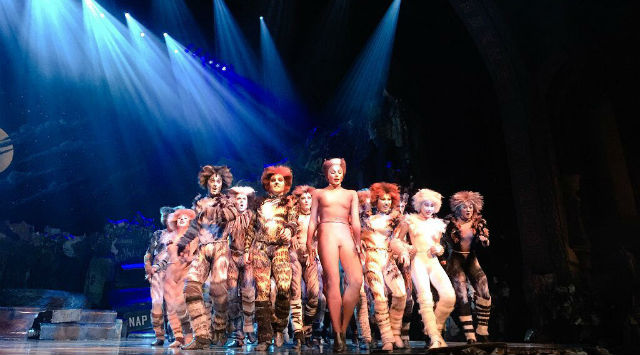
Cats first appeared in London in 1981, and remains one of the world’s longest running musicals. This Australian tour is based on last year’s West End revival by its original team, with minor updates that preserve its familiar charm, while taking the show into the twenty-first century. Cats has a distinct quietness that sets it apart from the bold and brash shows of today, where humour tends to be obvious and songs are unsubtle. We are transported back to the theatrical age of Bob Fosse and Alvin Ailey, rediscovering that lost sophistication in sound and movement.

The emphasis on dance is its most glorious feature, and this energetic Australian cast executes all the show’s feline frolic with impressive athleticism, discipline, accuracy and flair. Christopher Favaloro’s turn as Mr. Mistoffelees is delightfully memorable, exceeding expectations by delivering technical excellence along with a superbly effervescent characterisation of the magical cat.

It is an exceptionally well rehearsed cast, and although vocal abilities can vary quite starkly depending on the level of dance required in roles, each performer is accomplished in their own right. Matt McFarlane as Munkustrap, the narrator and second-in-command of the Jellicle tribe, is the strongest all-rounder of the production, with a voice and physicality that has the necessary power to direct our attention at will, and a sex appeal that seems to transcend boundaries of species. The mainstream hit song “Memory” is a significant motif in the show, sung by Delta Goodrem, whose indisputable commitment to her role of Grizabella, complete with suitably raspy tones, almost delivers the goods. Goodrem’s portrayal of age and faded glory is not quite up to scratch, and her trouble with the lower registers of her song are clearly audible in spite of the pronounced reverb effect appearing quite abruptly. Nonetheless, her louder belting sections are crowd pleasing, and help make the production an unforgettable musical theatre debut for the pop star.

Frivolity will always be big business in entertainment. Masses go to musicals to forget their troubles, and for a short time, be transported and filled with wonderment. Cats is entirely fantasy, but its approach is dignified and at times, aloof. Some people will prefer dogs, but art must never aim to please everyone.

www.catsthemusical.com