Review: This Is Our Youth (The Kings Collective)

thekingscollectiveVenue: TAP Gallery (Darlinghurst NSW), Sep 16 – 21, 2014
Writer: Kenneth Lonergan
Director: Dan Eady
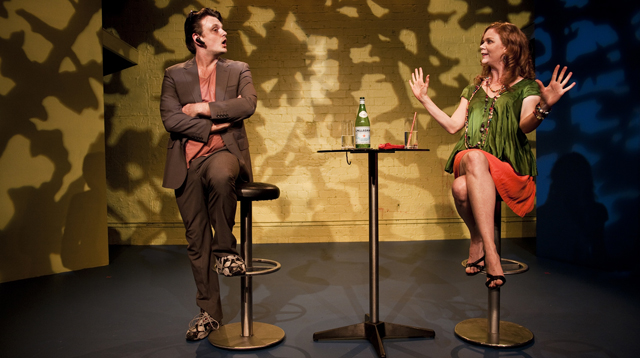
Cast: Joshua Brennan, Scott Lee, Georgia Scott
Image by Kate Williams Photography

Theatre review
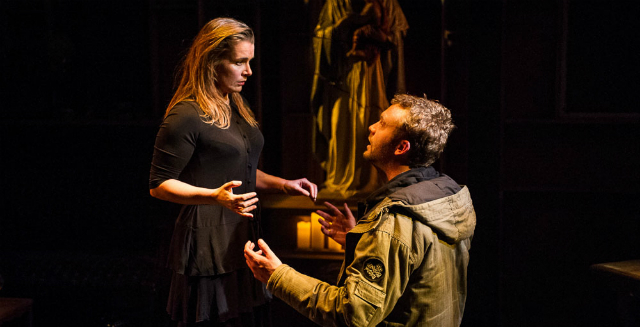
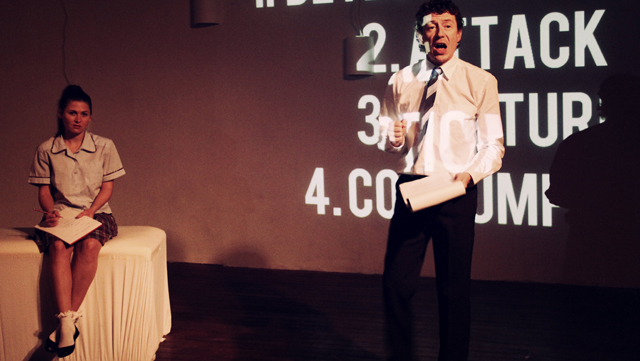
Not all stories are universal. There will be characters we are interested in, and others that we do not give two hoots about. Kenneth Lonergan’s This Is Our Youth is a lamentation of sorts about spoilt rich kids. It is concerned with the neglected offspring of wealthy baby boomers, providing a perspective of new money in 1980’s Manhattan and the repercussions on its subsequent generation. Lonergan’s script is full of mischief and energy, but embodies the pointlessness of the characters it portrays. Their lives are lost, frivolous and sordid. Everything is dazed and confused, but the writing provides a rich and colourful inventory of drama and jokes for an electrifying work of theatre, and this is what The Kings Collective delivers.

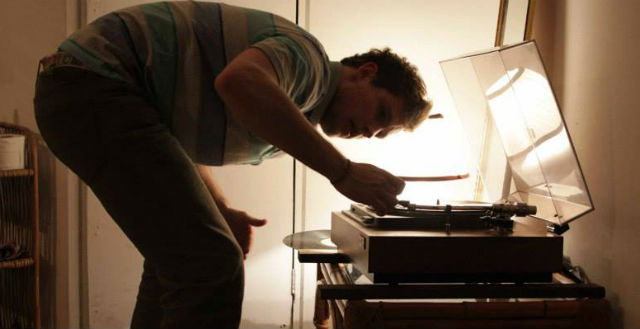
The cast is extraordinary. Three young actors, sublime as a group but individually sensational, give a performance that is quite literally flawless. They all make bold choices that delight and surprise us, but are always thoughtful and sensitive to the creation of depth in their characters. We are enthralled by the dynamism in their work but never lose sight of contexts and circumstances. Joshua Brennan is Dennis, the misguided alpha male, whose bravado, anger and aggression are the only things getting him through life that do not come in small self-sealing plastic bags. Brennan’s range begins at bombastic, and then escalates further. His work is outrageously flamboyant but completely engaging, and one is able to sense a lot of substance behind his delicious madness. The material gives him many opportunities for comedy and he executes them brilliantly, but poignant moments at the end are slightly less effective even though his portrayal continues to be convincing.

Georgia Scott transforms the supporting role of Jessica into a memorable one. She fools us with a Barbie-esque appearance and surreptitiously shifts the play into intellectual gear. Scott brings a palpable complexity with strength, humour and tenderness, creating an authentic sentimentality that gives the production its humanistic aspect. Her romantic scenes with Warren are beautiful and real, allowing the play to speak compassionately, albeit fleetingly. The feminine voice is only secondary in the play, but Scott’s work is disproportionately impressive.

Warren is a clever young man who suffers from a lack of confidence and direction. He allows his father and friends to dominate him, and seeks refuge in drugs to silence his intelligence. Scott Lee’s moving depiction of that impotency gives the play its weight, and his comedic flair sets the tone of the production. Lee’s phenomenal chemistry with both colleagues shows an openness in approach that gives theatre its sizzle, and every second is kept lively by his marvelous commitment and presence.

Direction of the piece by Dan Eady ensures excellent entertainment and precise storytelling, without an instance of misplaced focus or loss of energy. This is the tightest of ships that any captain can hope to deploy. Audiences will laugh, be touched, and be provoked into thought, but the play’s social message is not a particularly potent one. It is hard to summon up any empathy for the very rich, even if they are innocent young adults. This Is Our Youth is thrilling and amusing, and while it does have some depth, they can be tenuous. Fortunately, theatre is about the craft as much as it is about meanings, and on this occasion, the artists are alchemists that have turned lead into gold.
www.thekingscollective.com.au

Review: Procne & Tereus (Montague Basement)

montaguebasementVenue: TAP Gallery (Darlinghurst NSW), Sep 16 – 20, 2014
Director: Saro Lusty-Cavallari
Playwright: Saro Lusty-Cavallari
Cast: Christian Byers, Lucinda Howes, Victoria Zerbst

Theatre review
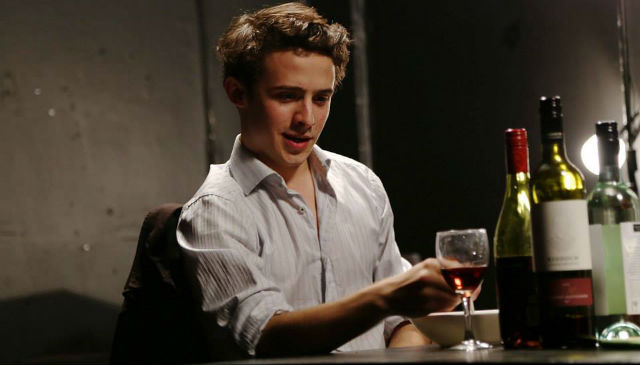
Philomela visits her sister Procne’s home. Procne and her boyfriend Tereus are only a little older but their lives seem a world away from Philomela’s university student existence. The couple is expecting a child, but Tereus is more interested in the wine. He enjoys the intoxication and likes the way its price tag makes him look. The play begins in a space of middle-class ordinariness, but like in many middle-class spaces, there is an insidious deluge of quiet anxiety. Not enough happens to write home about, but its inanity gradually wears you down into sickness. In Procne & Tereus, we associate that anxiety with early adulthood, and a sense of being at crossroads, always wondering what that crucial next step holds. The young cast play older characters, and we see our frightening reflection in their portrayal of innocence lost.

Saro Lusty-Cavallari’s script is simple but poignant. His love for the art of inference makes that which is not being said, speak louder. His direction is even more accomplished, with a brave and adventurous spirit that emerges alongside thoughtfulness and subtlety. Not all manoeuvres are elegant, but there is always clarity in intent and a theatrical flair that feels natural yet purposeful. Lusty-Cavallari’s work is conceived with complexity, but his execution is articulate and concise. His talent is real, and its development is incredibly exciting.

Tereus is played by Christian Byers who deceives us with a surface of frivolity. His darkness within is almost completely hidden but Byers drops hints of malice that unnerve with a dangerous delight. It is a relaxed performance, sometimes silly in tone, but there is an impressive measuredness that accompanies his exaggerated nonchalance. Lucinda Howes as Procne, brings realism to the production with a restrained and minimalist approach that is strangely engaging, but her energy levels can read a little muted at times. Victoria Zerbst’s commitment to the role of Philomela is spine-tingling, and her presence shines through when performing the more surreal sections of the play.

Lighting by Eunice Huang and sound by Lusty-Cavallari and Byers, are key features of the production. Atmosphere is shaped and varied beautifully, contributing substantially to the narrative’s coherence. This Greek tragedy leaves us at a satisfying, albeit apocalyptic end. It relates marriage and family to questions about gender and sex. The story is grim because it is about our taboos. It shows us some of our greatest fears, and warns us about our unexamined but commonly-held beliefs. It leaves us nowhere to hide because its truths prevail.

www.montaguebasement.com

5 Questions with Sean Hawkins

seanhawkinsWhat is your favourite swear word?
It’s cunt. The Rookie gets to say it quite a bit, so I’m enjoying that.

What are you wearing?
Jeans and a tee shirt.

What is love?
Back scratches from your partner.

What was the last show you saw, and how many stars do you give it?
Out Of Gas On Lover’s Leap by The Kings Collective. 4/5 stars.

Is your new show going to be any good?
It’s going to be corker.


Sean Hawkins is appearing in Howie The Rookie, with Strange Duck Productions.
Show dates: 30 Sep – 25 Oct, 2014
Show venue: The Old Fitzroy Hotel

Review: Four Dogs And A Bone (Brief Candle Productions / Sydney Independent Theatre Company)

briefcandleVenue: Old Fitzroy Theatre (Woolloomooloo NSW), Sep 16 – 27, 2014
Playwright: John Patrick Shanley
Director: Kate Gaul
Cast: Amanda Collins, Melinda Dransfield, Paul Gerrard, Sonny Vrebac
Image by Katy Green-Loughrey

Theatre review
There are four actors and only four scenes in John Patrick Shanley’s Four Dogs And A Bone. It is a work about horrible people trying to make a film, and their self-serving manipulations to change the film to their advantage. The personalities are thoroughly caricatured, and the script derives its humour from their absurd behaviour.

Performances are uneven in the production. The first scene features the stronger players Melinda Dransfield and Sonny Vrebac kicking off with some promise. Brenda is a starlet who lies and sleeps her way up the career ladder. Dransfield has moments of brilliance in the role and delivers laughter with a more subtle approach than her cohorts. Sonny Vrebac plays the film’s penny-pinching producer Bradley, who is so highly strung that he develops a canker sore the size of a jumbo shrimp in his rectum. Vrebac’s comedy is the most consistent in the piece, and the personal narrative he is able to communicate for his character is clearest in the group. Vrebacg’s vibrancy is an asset to the production, and the slump in energy levels is noticeable in scenes without him.

Chemistry between actors is an issue that seems to arise from their focus on individual styles. We do not see a sense of cohesion, which results in missed opportunities for laughter and amusement. Amanda Collins focuses her efforts on creating a snake-like persona for Collette but does not manufacture enough substance for her story to resonate. It is noteworthy however, that she displays good commitment and focus, and leaves a memorable impression with a flamboyant display of devastation from being described as a “character actor”. Paul Gerrard as Victor, the screenwriter for the film, tends to underplay his role, allowing his more extravagant colleagues to overwhelm his work, but he does have a solid presence that gives the show a firm grounding.

This is a staging that does not quite take off until its final scene. Economic realities mean that much of what we see in the theatre can be revealed too early in the creative process, and opening night of Four Dogs And A Bone feels prematurely presented. Art strives for an imagined notion of perfection, but no art of great merit is created in an idealistic environment without challenges that need to be overcome. The factor of time and the practicalities of money can be cruel to artists, but they are also what compels us to hold their work in great esteem.

www.sitco.net.au | www.briefcandleproductions.com

Review: Jennifer Forever (Two Peas)

twopeas1Venue: Old 505 Theatre (Surry Hills NSW), Sep 17 – 28, 2014
Playwright: Tara Clark
Director: Tara Clark
Cast: Dominic McDonald, Gemma Scoble

Theatre review
Note: This review reveals a key plot twist.

The play begins with ambiguity, danger and tension. Our minds and emotions struggle with meanings and morals, trying to form a narrative while jostling for head space with our own senses of right and wrong, theatrical representations and social acceptability. The work is about sexual predators, sex work and the way sex is used to construct perspectives of the world and the way we live in it. These ideas are best enjoyed in an air of uncertainty, instability and disquiet. When Tara Clark’s Jennifer Forever is provocative, it has a fierce and unsettling energy, but when it dissolves into a more assertive political position, its arguments lose their edge to become more conventional.

The strength of Clark’s writing lies in its passionate dialogue and the textured characters it presents. Fiery and thought-provoking confrontations between Man and Girl are used to great dramatic effect by Clark’s own direction. Playing Girl is Gemma Scoble who attacks her counterpart with a sadistic glee. She performs Girl’s two age brackets convincingly but can sometimes be too surface in her approach. She is persuasive as a figure of power and aggression but moments of vulnerability are not as compelling. Dominic McDonald’s performance as Man is impressive in its complexity. He makes the role despicable, intriguing and palpable, with an ability to find qualities that are universal to the human experience. McDonald has a sensitivity that allows us to connect with the daunting character that he portrays, and the several stages of transformation he performs is gripping entertainment.

For several scenes, Man addresses the audience directly in a series of lectures, but it is not just this element that makes the play feel excessively didactic. Clark has a clear message she wishes to relay, and her voice is unapologetic and direct. The story quickly subsides and we witness intense quarrels about the main themes of the text. The characters give way to the big ideas that take centre stage, but what remains becomes too simple and obvious in comparison. Jennifer Forever‘s timely look at paedophelia is honest and refreshing. It reflects our contemporary concerns and even though its theatrical effectiveness waivers, it addresses our need for discussion on the topics. We are at the precipice of a disintegrating taboo and achieving a greater understanding that will protect and heal is crucial.

www.thetwopeas.com

Review: The King And I (Opera Australia / Sydney Opera House)

thekingandiVenue: Sydney Opera House (Sydney NSW), from Sep 7 – Nov 1, 2014
Music: Richard Rodgers
Book and Lyrics: Oscar Hammerstein II (based on Anna And The King Of Siam by Margaret Landon)
Director: Christopher Renshaw
Cast: Lisa McCune, Teddy Tahu Rhodes, Shu-Cheen Yu, Jenny Liu, Adrian Li Donni, Marty Rhone, John Adam
Image by Brian Geach

Theatre review
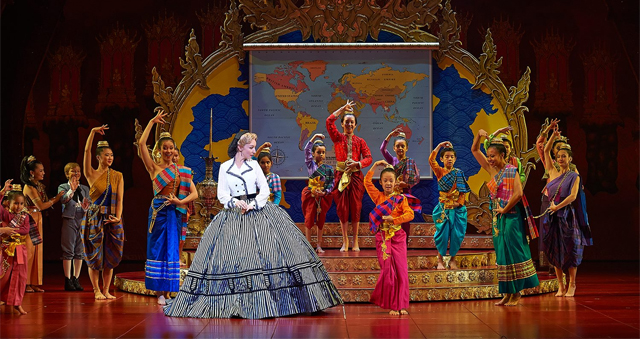
There is no denying the contentiousness of casting a performer who is not of Asian heritage to play the role of the King of Siam. It is a very rare occasion that a main stage production in Australia features a specifically Asian character in its lead, and to deprive Asian actors of the opportunity to headline a show of this grand scale is unfortunate. On the other hand, we are a culture that believes in meritocracy, where the best candidate for the job should win the part. Instead of background, we look at ability, and in the case of Teddy Tahu Rhodes who is King, in the Sydney season of The King And I, he proves himself a force to be reckoned with. Handsome, imposing and astonishingly talented, Rhodes is in many ways, perfect for the role. His humour is confident and sharp, and his rich baritone voice is immensely satisfying. Rhodes has charisma in abundance, which is key to his successful portrayal of royalty and chauvinism.

Anna is played by the endearing Lisa McCune, who is surprisingly animated in her depiction of the English language teacher from Wales. Her voice is not the most powerful in the cast, but her interpretation of classics like Getting To Know You and Shall We Dance is thoroughly accomplished, and her enthusiasm for the role is more than evident. McCune’s Anna is a delicate figure, but her energy is consistently buoyant, and her performance is compelling and enjoyable. The production features outstanding supporting players, including soprano Jenny Liu as Tuptim who provides the most ethereal and emotional singing in the production. Liu’s ability to convey passion and angst is a great asset to the show, and she embodies the tragedy of the plot effectively. The role of Lady Thiang is performed by Shu-Cheen Yu who delights with a stunning theatricality derived from traditional Chinese forms. Her use of physical and facial expressions is a rare treat on Australian stages, which simply must not be missed.

Designers never share top billing with cast members, but this is a production with a visual glory that will be remembered for years to come. Brian Thomson’s scenic design is luxurious and exquisite, with Nigel Levings’ lighting providing further variation to scenes. We never stray far from the King’s palace, but the stage looks and feels different in every scene, and nearly every change is awe inspiring. The glamour and vibrancy of Roger Kirk’s costumes are second to none, with every ensemble conveying beauty and romance. Choreography of the legendary segment The Small House of Uncle Thomas by Susan Kikuchi (based on Jerome Robbins’ original work) is sublime. Watching the famed sequence emerge from the familiar film into reality, in such fine form is a dream come true. Christopher Renshaw serves as director of the production, bringing with him great amounts of flair and elegance, especially in bigger scenes with groups of children and servants. There are always nuances to discover and flourishes to admire in the background. Renshaw handles the writing’s awkward (and dated) racial dynamics well. Jokes are made out of the clashing and discord between races, but caricatures are toned down significantly so that characters escape obvious degradation.

In spite of the productions efforts however, we cannot escape the core message of The King And I, which pits two cultures against each other and concludes at a point where the Siamese King experiences a dramatic transformation, while the Caucasian Anna remains the same person. The underlying message is clear; one side requires improvement and the other can stay unchanged. Furthermore, the Asian character’s evolution needs to be in line with the Westerner’s standards of taste and acceptability in order for the show to find resolution. It is understandable that the esteemed nature of Rodgers and Hammerstein’s work is resistant to radical alteration, and the fact that the story is based on famous memoirs places psychological constraints on artistic licenses, but creativity in the arts should know no bounds, especially when it takes on the responsibility to improve ideologies and advance civilisations.

www.thekingandimusical.com.au

5 Questions with Joanna Weinberg

joannaweinbergWhat is your favourite swear word?
POES! It’s a South African word which is extremely rude and derogatory and politically incorrect and therefore satisfying to those in the know.

What are you wearing?
Bare feet , black nail polish and lots of drapy shawl things.

What is love?
My husband reads my reviews and lies to me if they are bad.

What was the last show you saw, and how many stars do you give it?
Storytiller on the Sydney Fringe. Lots of stars.

Is your new show going to be any good?
My new show is already good. What a dumb question.

Joanna Weinberg is starring in Baroness Bianka’s Bloodsongs.
Show dates: Sundays 14, 21 and 28 Sep 2014
Show venue: Hayes Theatre Co

5 Questions with Amanda Collins

amandacollinsWhat is your favourite swear word?
There’s such a wealth, it’s hard to pick. Plus most depend on the situation. But I guess if I have to choose, I’d go with the tried and true Fuck! It’s just so versatile.

What are you wearing?
Currently I’m sporting a rather enviable crusty old track-suit pant and jumper combo. Stylish.

What is love?
Big question. Love is many things and comes in many forms. It is the very best humans are capable of and from its roots spring beautiful things such as hope, joy, kindness, happiness, empathy, wonder, understanding, acceptance, comfort, forgiveness, support, courage, empowerment, and strength.

What was the last show you saw, and how many stars do you give it?
Macbeth. Loved it. 5 stars!

Is your new show going to be any good?
Absolutely!

Amanda Collins is appearing in Four Dogs And A Bone, with Brief Candle Productions.
Show dates: 16 – 27 Sep, 2014
Show venue: The Old Fitzroy Hotel

5 Questions with Christian Byers

christianbyersWhat is your favourite swear word?
Fuck, fucked, fucker and all it’s fuckin’ cognates. Favourite fuckin’ word. Fuck. Fuckin’ nothin’ like a fuckin’ good fuck. If I had to choose between ‘fuck’ and oxygen, I’d choose oxygen, I’m not an idiot but I’d be in no rush. Stretch it out long and sing ‘fuck’ super strong without pause for breath in the interim. Beautiful word.

What are you wearing?
Socks.

What is love?
Tenderness and time dilation.

What was the last show you saw, and how many stars do you give it?
Double bill of Black Comedy and The Real Inspector Hound at SUDS, went on first night which was pretty good and again on final night, where vases were spontaneously smashed with hammers because directors deserve to cry. I kept a shard of the vase to remind myself to aaaaalways improvise, 5 stars.

Is your new show going to be any good?
It fucking better be. Actually, no you know what, it’s going to be brilliant but I get the feeling it’s going to get its fair share of hate. But those who love it will start devoting their lives to adapting Greek tragedies. Or makin’ fuckin’ pies with fuckin’ people in. That’s our aim at least.

Christian Byers is playing the role of Tereus in Procne & Tereus part of Sydney Fringe 2014.
Show dates: 16 – 20 Sep, 2014
Show venue: TAP Gallery

Review: Europe (Slip Of The Tongue)

slipofthetongueVenue: Seymour Centre (Chippendale NSW), Sep 10 – 27, 2014
Playwright: Michael Gow
Director: James Beach
Cast: Pippa Grandison, Andrew Henry
Image by Kurt Sneddon

Theatre review
Making sense of humanity requires that we look at history. History gives us meaning and inspiration, it tells us how we should progress. The same follows for the concept of nationhood. The conceit of nations is a discussion about identity in relation to histories. Australia is thought of by many as a derivation of sorts. Its European settlement and ancestry has shaped its public image into one that is invariably referential. It constantly negates its first cultures and its recent migrations, to place emphasis on its ties with the European continent. We are spurned, forgotten and disparaged, yet we are desperate, supplicant and nostalgic. We define ourselves in European terms, and our score cards are created in their image. We wait for acceptance and approval like abandoned babies suffering from developmental retardation. We live in the shadows of parents who no longer remember our birth.

Douglas sacrifices every dollar on flights to Europe. He seeks to rekindle a week long romance with Barbara who had visited Australia briefly. Douglas believes that his life would be perfect if he wins her over. Barbara is perplexed that a flippant moment from the past has returned to haunt her. Douglas is surprised by her reaction and says repeatedly that he would leave, but misses every train. Michael Gow’s script is a comical love story, and a meditation on Australian whiteness. It examines tenuous connections with a motherland, and the existential angst of the castaway. James Beach’s direction is thoughtful and gentle. The duplicitous nature of the narrative is conveyed successfully, and the minimalism of his staging creates a tenderness that reflects Douglas’ internal complexion. There is a languidness that detracts from humour in the early scenes, but the resulting show is an elegant one that speaks intelligently, with an openness that welcomes interpretation.

Pippa Grandison is suitably continental in her approach. She succeeds in portraying the foreignness of Barbara, and her conscious efforts at creating a sense of exotic otherness is well considered and entertaining. Barbara is a stage actor, and Grandison could benefit from playing up her theatricality further, especially in the early segments where more energy could be put into the comedy of the characters’ encounters. Aussie country boy Douglas is played by Andrew Henry who uses just enough stereotyped conventionality to depict cultural relevance, but more appealing is the authentic naiveté he brings to the role. Henry’s work is confidently simple, which ensures that small gestures speak volumes, and dialogue is allowed to resonate. It must also be noted that his performance of intoxication at the play’s conclusion is completely delightful.

Romance provides spice to life. We long for attention and adoration to be reciprocated, so that some kind of affirmation can be established, but that attainment is only temporarily satisfactory, for romance is a need that can never be sated. As long as we keep thinking of ourselves as a chip off the old block, or as the apple that has fallen a little too far from the tree, we will forever be an inferior echo that fails to be its own self determining entity. There is much to love about our own place on earth. We need to acknowledge our histories but we need to make the best of the here and now, wherever we may be.

www.slipofthetongue.com.au