Review: Of Monopoly And Women (Brave New Word)

brandnewwordVenue: Exchange Hotel (Balmain NSW), Jul 9 – 24, 2014
Playwright: Pamela Proestos
Director: Sascha Hall
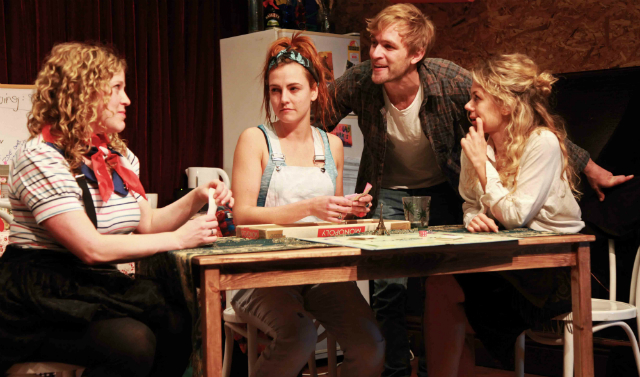
Actors: Ainslie Clouston, Bianca Raess, Victoria Greiner, Mark Taylor
Image by David Hooley

Theatre review
Relationships between siblings are often neglected by storytellers. They seem too mundane for the stage, and are a part of life that many take for granted. Pamela Proestos’ script places focus on a trio of sisters and demonstrates that there is much to be explored. Each woman has distinct qualities, and as a collective, they are complex and fascinating. Their bond is exceptionally tight, and within that closeness, they relate to one another with great humour, as well as unbearable cruelty. This calls to mind a quote from spiritual writer Marjorie Pay Hinckley, “home is where you are loved the most, and act the worst.”

In Of Monopoly And Women, we see the machinations of sibling rivalry in all its glory. In the security of their home, our leading ladies live, eat and breathe together, with a no holds barred attitude. They are always their true selves, allowing Proestos to reveal facets of human nature, good and bad, that are universal and unerringly reflective of our own lived experiences. With brutal honesty, she shows us how we treat the people we love, sometimes with unbelievable impertinence, but always amusing.

Production design is thoughtfully executed although its shoestring budget is evident. Demitra Sealy’s set efficiently creates levels and spaces that assist with scene transitions, and adds visual interest with colour and texture that feel homely while also providing a look that is delightfully theatrical. Lighting by Luke Holmes is sensitively created, turning a challenging venue into an effective performance space that provides fluctuating moods.

All performances are accomplished, and the chemistry between actors are well harnessed by director Sascha Hall. It is crucial that the family ties being portrayed are believable, and the production succeeds on this level. The symbiosis of love and hate is delicately balanced and deeply interesting. There is however, a deficiency in some scenes that require a greater range of emotion and comedy. The script allows for quite extreme quarreling on one hand, and hilarity on the other, but a few of these opportunities are missed. The action is fast paced, but charming lines are sometimes not given enough emphasis for them to work more powerfully. Supporting actor Mark Taylor is memorable for giving the most natural performance in the cast, playing one of the women’s boyfriend. His character is simplest to handle, but it is noteworthy that Taylor’s work is consistently compelling.

This is a production that has its heart in the right place. The team has identified the script’s essence accurately, and they present it well, but the show needs a few more dramatic turns in performance tone to prevent its domestic scenarios from descending into a space of mundanity. Ella, Kate and Zoe are multi-dimensioned and likeable women, with inter-playing dynamics that are thoroughly explored and beautifully written. The play and its themes are enjoyable and easy to identify with, even if it exposes us for being so careless with the people we love the most.

www.bnwtheatre.com.au

5 Questions with Jeanette Cronin

3767958-3x4-340x453[1]What is your favourite swear word?
Ah! There are so many… “Cunt” when I really hate someone’s guts (Don’t panic Penis put-downs are plentiful.). “Deadshit” when describing the most banal of human beings and “Arseclown” for the superior, but gentle dig.

What are you wearing?
A pale hint of despair and a muted hatred of humanity.

What is love?
Anyway? Sorry, couldn’t resist. I think Rumi says it best: “Out beyond ideas of wrong-doing and right-doing, there is a field. I will meet you there…”

What was the last show you saw, and how many stars do you give it?
Richard III. A galaxy.

Is your new show going to be any good?
I hope so, my super isn’t looking too healthy… and what’s not to like about cocktails with Bette Davis, Joan Crawford, Hedda Hopper and Marilyn Monroe?

Jeanette Cronin is starring in Dark Voyager, part of Ensemble Theatre’s 2014 season.
Show dates: 24 Jul – 30 Aug, 2014
Show venue: Ensemble Theatre

5 Questions with Hannah Raven

hannahravenWhat is your favourite swear word?
“Christ on a cracker!”… heard the lead singer of the Scissor Sisters say it on stage back in 2009 and it’s been my favorite ever since.

What are you wearing?
Black Doc Martens, a green cardigan and black fingerless gloves… Newtown represent!

What is love?
Ga!… I haven’t figured that one out yet, and I’m not to sure I ever will.

What was the last show you saw, and how many stars do you give it?
Why Torture Is Wrong and The People Who Love Them… 4 out of 5! Seriously hilarious!

Is your new show going to be any good?
Let’s hope so! It premiered last year and sold out. Now we have revamped it and added a few new cast members. Edgar Allan Poe is very close to my heart. His stories and poems speak to me in a away I can’t articulate. This show celebrates his life, and bridges the gap between burlesque performers and actors… so yeah… I think it’s going to do just fine.

Hannah Raven is appearing in Edgar’s Girls, by Poe Burlesque Theatre.
Show dates: 9, 10 and 17 July, 2014
Show venue: The Vanguard

Review: An Unexpected Execution (Factory Space Theatre Company)

factoryspaceVenue: Star On The Sea Theatre (Manly NSW), Jul 4 – 19, 2014
Writer: Emma Willis (based on Mary Stuart by Schiller)
Director: Roz Riley
Cast: Daniel Csutkai, Deborah Mulhall, Dimity Raftos, Luke Middlebrook, Melissa Kathryn Rose, Michela Carattini, Roberto Zenca, Ross Scott, Samantha Beames

Theatre review
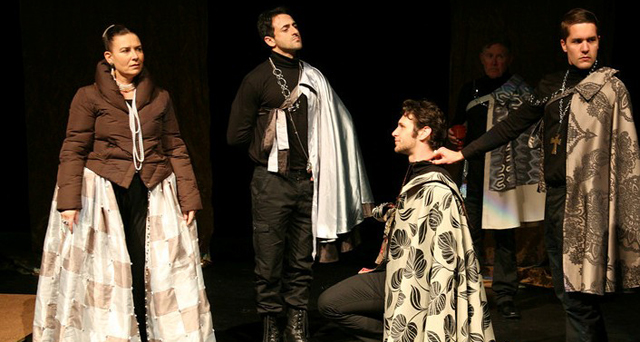
The story of Queen Elizabeth I and her cousin Mary, Queen of Scots is a well-known one. Torn apart by politics and religion, their feud remains a poignant tale about the ties that bind, and the ways they can break. Emma Willis’ script is an update of Schiller’s play from 1800. The language feels contemporarised, but still poetic and nuanced. The narrative is well structured, and detailed. The complex sequence of events and relationships are relayed to dramatic effect, but it works also as a history lesson for those might be unfamiliar with the saga.

The show is put together with enthusiasm, but the material is challenging. The team is not an experienced one, and the production does not produce enough nuance or creativity for their show to captivate. Queen Mary is played by Michela Carattini who looks half the age of her character. Carattini provides delightful balletic lines with her physicality, but lacks the maturity required for portraying such dire and ominous circumstances. Dimity Raftos is a regal Queen Elizabeth, and we feel her frustration about the state of affairs, but the range of emotions depicted needs to be expanded for the Queen’s perspective to hit home. Notable supporting players include Samantha Beames who demonstrates solid authenticity as Hanna, and Daniel Csutkai who stands out with playful flamboyance, but he could benefit from a little restraint.

The tale is dramatic, but the show’s direction is simple and direct. In the hands of stronger members of the cast, we follow the plot adequately, but scenes become confusing when performances falter. Not all who love the theatre receives opportunities for formal training, but they should not be discouraged from participation. The selection of text is crucial, and on this occasion, the discrepancy between the group’s ability and the script’s demands is significant. Every moment on stage is a learning experience, and there is no doubt that these thespian talents will continue to flourish.

www.craftwaresolutions.com.au

Review: Love And Death And An American Guitar (Highway Run Productions)

highwayrunVenue: Hayes Theatre Co (Potts Point NSW), Jun 4 – 6, 2014
Playwright: Toby Francis
Director: Neil Gooding
Musical Director: Andrew Worboys
Cast: Toby Francis, Noni McCallum, Andrew Worboys

Theatre review
Jim Steinman is a living American rock legend. Best known for power ballads made famous by the likes of Meatloaf, Bonnie Tyler, Air Supply and Celine Dion, his music is deeply ingrained into pop culture the world over. Like many song writers responsible for the most popular music ever recorded, his fame has never matched those who are centre stage. Toby Francis’ new script is mainly a monologue that incorporates the cabaret format. He performs it with an accompanist, along with a support vocalist who provides a female voice for several numbers. The story gives us some background into Steinman’s work and subsequent estrangement with Meatloaf, then goes on to an imagined depiction of Steinman pitching to us, an idea for a rock opera. Neverland was the precursor to Steinman’s seminal Bat Out Of Hell, but Francis’ vision is assembled like a concerto of greatest hits.

The song list is selected wisely, with many of Steinman’s crowd-pleasers included. Francis is on stage, dressed in denim, wielding a guitar and a microphone stand. On his right is musical director Andrew Worboys on a grand piano. It seems an awkward arrangement, but the rock cabaret works. The glam quality in Steinman’s songs provide a romantic flamboyance that makes sense for the context. Pre-programmed backing tracks give the songs their arena style volume, but all vocals are sung live. There is no doubt that the strongest element of Love And Death And An American Guitar is its standard of singing. The notes that emerge from Francis and his female counterpart Noni McCallum’s voices are astounding. One of the great joys of live performance is to be in the presence of superhuman talent, and these singers’ abilities are beyond what any combination of iPod and earphones can encapsulate. Also accomplished is Francis’ storytelling and the script he has prepared for the show. There is a beautiful lyricism to his writing, although the story does lack vividness at times. His skills as an actor are persuasive enough for the production, but the command over his physicality requires training.

Much as Steinman is one of the greatest song writers ever to surface, he does not have the makings of a rock god. Successful rock stars lend style, attitude and personality to the stage. They need to resonate sexuality, danger, confidence and power. In his show, Francis is positioned somewhere between cabaret, musical theatre and rock. He has a vulnerability that is alluring, but there is a politeness that belongs to the more formal world of musicals. The songs belong to stadiums that seat thousands, but Love And Death And An American Guitar translates them for a much smaller venue, and an entirely different genre of show. Francis sheds new light on these classic tunes, allowing their many fans to fall in love all over again. To borrow from the man himself, “it’s so hard to resist and it’s all coming back…”

www.hayestheatre.com.au | www.highwayrunproductions.com

Review: La Ronde (Enigma)

enigmaVenue: Coronation Hall (Newtown NSW), Jul 2 – 12, 2014
Writer: Arthur Schnitzler
Director: Steven Hopley
Cast: Amy Scott-Smith, Peter Jamieson, Alison Lee Rubie, Jasper Garner Gore, Emily Elise, Leigh Scully, Emilia Stubbs Grigoriou, Brendon Taylor, Amanda Maple-Brown, Jaymie Knight

Theatre review
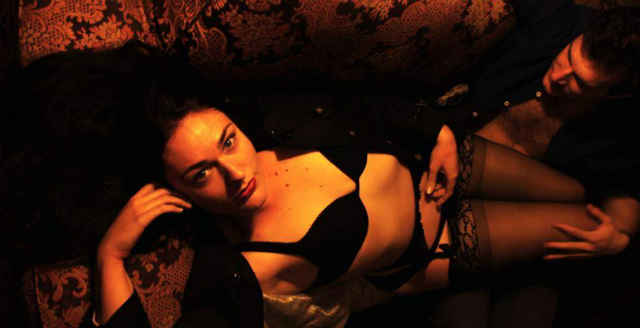
Arthur Schnitzler’s La Ronde was written over a hundred years ago. It is mainly about sex, but it is also about hypocrisy, deception and promiscuity. Not everything in the play has stood the test of time, which is an excellent signifier that the sexual revolution had successfully propelled civilisation forward. Schnitzler’s writing has an aura of scandal and taboo about the sex that happens in every scene, but this feels antiquated and childish by today’s standards. Fortunately, the text contains plenty more to explore that is timeless and universal.

Steven Hopley’s direction is straightforward, but the decision to stage the work, theatre-in-the-round, is a highlight. The intimacy he creates is fascinating. We are a fly on the wall, privy to the secret lives and exposed bodies of these comedic fornicators. We only see what happens before and after sex acts, of course, but Hopley manages to light up enough libidinal fire between actors so that we experience something quite unusual. It is certainly not everyday that we feel tension and energy of this nature without being a direct participant. The most entertaining feature of the show however, is its comedy. Hopley identifies the play’s irony well, but how effectively the laughs are delivered, depends largely on the proficiency of the players, which varies wildly on this stage. The director’s approach is too gentle. These characters inhabit a bawdy world, but the production is polite. Even though we do see some skin, and people kiss a lot, there is never a sense of transgression, which one would argue is necessary for dealing with taboo subjects.

With a flamboyance that is indulgent and delicious, Amanda Maple-Brown steals the show as The Actress. She has pitched her performance at just the right tone for the material, and the laughter she inspires is quite euphoric. The dramatic transformation of personality in two short scenes cannot be more extreme, but Maple-Brown is entirely convincing. Her performance is intelligent and brave, and the chemistry she creates with both her bedfellows is as madcap as it is sizzling. Also memorable is Emilia Stubbs Grigoriou as The Sweet Girl. The actor has marvelous presence, and delivers a surprisingly truthful performance. She can appear over earnest at times, which can obscure some funny lines, but the conflicting qualities of innocence and lust that define her character are balanced well. Brendon Taylor as The Writer is dynamic and precise. It is good to see him enjoy a joke about Belvoir as much as we do. Leigh Scully is a little coy in his portrayal of The Husband, but the energy he brings to the stage is valuable. His animated physicality provides a theatricality to a show that is sometimes oddly tranquil.

La Ronde does not comment on the implications of promiscuity. It merely puts it on display. We observe deception at every turn, but the production is not antagonistic towards any of its characters. The hypocrisy we recognise is infuriating, but that emotion is not imposed upon us. There are many ingredients that could be added to make the show a spicier experience, but what it serves up is clearly hot enough.

www.facebook.com/…

In Rehearsal: A Doll’s House

Rehearsal images above from A Doll’s House, by Henrik Ibsen.
The show is presented by Sport For Jove Theatre at Seymour Centre, Jul 17 – Aug 2, 2014
More info at www.sportforjove.com.au
Photography: Seiya Taguchi

Review: Hedda Gabler (Belvoir St Theatre)

belvoir

Venue: Belvoir St Theatre (Surry Hills NSW), Jun 28 – Aug 3, 2014
Playwright: Adena Jacobs (from Henrik Ibsen)
Director: Adena Jacobs
Cast: Branden Christine, Lynette Curran, Ash Flanders, Marcus Graham, Anna Houston, Oscar Redding, Tim Walter
Images by Ellis Parrinder

Theatre review (originally published at auditoriummag.com)
Not every audience member would know what Ibsen’s story is about, but virtually everyone who enters the Belvoir Street venue would be aware, even before the show commences, that the main woman on this occasion, is played by a leading man . Gender subversion remains controversial in the twenty-first century. We all invest on a deeply personal level, gendered concepts that are applied to our daily lives, both consciously and unconsciously. Adena Jacobs’ Hedda Gabler is strange. Like the unusual casting decision, Jacobs’ work resists conventions, expectations and sometimes, comprehension. It is easy to be dismissive of Jacobs’ artistic decisions when they are unexplained and mystifying, but to paraphrase the art critic Robert Hughes, “no painting that is of any quality can be easy to understand because the value of a painting is its ability to expand one’s experience, and so if it were easy to understand, then it would fall within what you already knew.”

Within the landscape of Australian theatre, Jacobs’ creation is a valuable one that deals with issues of feminism, transgenderism, racism, and social aspirations. Before the show begins, a television set on stage plays what looks to be a telenovela. We see a wedding taking place in the soap opera, as well as familiar archetypes arguing and displaying exaggerated emotion. The stories it tells have been told thousands of times before, with unchanging dramatic arcs and predictable conclusions. Jacobs’ work reinvents dynamics and mechanisms, using a 120-year-old text as starting point. What happens to Ibsen’s characters do not change, but how they are presented is drastically overhauled. The production bears a severe and muted tone, almost rejecting any empathy from its audience. We are encouraged to observe, but feelings are sacrificed for contemplation. We react in a way that is diametrically opposed to the experience of watching bad television. Impotent passivity becomes political action.

In an environment of “strangeness”, the viewer’s mind goes into overdrive, persistently questioning artistic choices, and ceases to be a receptacle for easy entertainment. The director’s hand is prominent. Much as we ponder the enigma of Hedda, we never stop wondering what Jacobs wishes to say. Her message is not a straightforward one, which results in a play memorable for its depth and complexity, although there is no question that many would find her approach daunting. Big issues cannot be reduced into easily digestible morsels if their essence are to be retained, but battles must be chosen wisely, and some might consider the aggressively alienating nature of Jacobs’ Hedda Gabler to be self-defeating.  The conviction of her vision however, is undeniable, and the idiosyncratic style evident in this staging demonstrates an originality that must not be buried.

Dayna Morrissey’s set design provides an appropriately sterile beauty to Hedda’s world. It conveys luxurious decadence, but also a distant coolness that is reflective of her disconnection from that world. Action is kept away from the audience. We want a better understanding of the characters but they are always around the house or in the car, both located far upstage, claustrophobic and inaccessible. These people do not connect with each other, and it follows that we too are estranged. Danny Pettingill’s lights are glamorous but rarely warm. It is a cruel and chilly kind of beauty that is achieved, one that speaks volumes about Hedda’s depressive state. Costumes by David Fleischer are oddly naturalistic, especially on the male characters. Thought is put into exposing Hedda’s body rather than concealing it, which is remarkably intriguing, but its aesthetics seem an uncomfortable match against the sophistication created by set and lights.

Performances in the piece vary subtly in style and tone between actors. Each appears almost to be starring in individual shows, thereby enhancing the quality of isolation in each character. Marcus Graham is an exuberant Judge Brack. Complete with toothy grin and a Hollywood tan, Graham plays up the role’s artifice and disingenuity with flair. Brack’s falseness is cunning and understated, but also doubtless. Eilert Lovborg is played with great conviction and vigour by the effortlessly magnetic Oscar Redding. His portrayal is the most dramatic of the group, leaving a strong impression with the only truthful outpouring of emotion in the production.

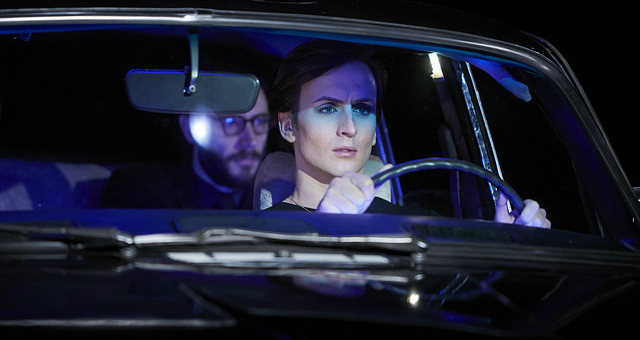
Ash Flanders as Hedda Gabler is highly provocative, but does not embody his character with great authenticity. His work is quite literally a drag act, where a performer pretends to be singing, dancing or acting, while pretending also to be “the opposite sex”. His work seems to emulate legendary film actors like Greta Garbo, Marlene Dietrich and Joan Crawford, which is an interesting fit for a production that often takes stylistic cues from classic cinema. Hedda’s famed mysteriousness suits Flanders’ method, as he hides more than is revealed, but his presence lacks the allure and power of those movie stars who were able to achieve a great deal while appearing to be doing very little. Flanders is seen half naked for most of the duration, which prevents us from forgetting the contentious dimension of gender being discussed. Having a man play an Ibsen woman is a novelty at this particular point in time, but it also makes a poignant statement. Hedda is a tragic heroine created by a man, with her victimisation and subsequent demise inflicted by her playwright. The surest way for a feminist interpretation of the text is either to reconstruct it radically, or simply not to have a woman play the part at all. Maybe this is a role that makes better sense when taken on by a man.

Branden Christine is the only actor not of Caucasian appearance. She plays Berta, the maid who barely speaks but exudes a silent but impactful tension. The colour of her skin, along with the stark degraded social position she occupies is challenging, if not purposefully antagonising. The production makes several powerful statements, and the one about ethnic discrimination is unintended by Ibsen, but is central to this staging.

This is a work about freedom, and its opposite. It exposes the way people come under each other’s control, and depicts the struggle for an idealistic life in the most pessimistic manner. There is however, more than a glimmer of hope that exists in the form of the production’s transgressions. Revolution happens when oppressive structures are dismantled. Jacobs’ efforts at inventing a new theatrical language, and her interpretation of the classic text, propels theatre towards something far greater than recreation. It improves culture and political discourse. Points of comfort in our shared notions of art are the canary in a coal mine, which this production of Hedda Gabler locates and unleashes upon them, ruthless waves of disruption.

www.belvoir.com.au

Review: Every Second (Michael Sieders Presents / Darlinghurst Theatre Company)

ensembletheatreVenue: Eternity Playhouse (Darlinghurst NSW), Jun 27 – Jul 27, 2014
Playwright: Vanessa Bates
Director: Shannon Murphy
Actors: Simon Corfield, Glenn Hazeldine, Julia Ohannessian, Georgia Symes
Image by Louis Dillon-Savage

Theatre review
Art emerges from all walks of life in Australia. The egalitarian nature of our society means that diverse voices are heard in theatres that reflect the many facets and classes that co-exist on this land. Correspondingly, stories are told that do not necessarily speak to all audiences across all spectrums of communities. Vanessa Bates’ Every Second is a well structured script with thoroughly explored characters, but their concerns are specific, and probably not as universal as initially hoped for; or perhaps, it is not always an artist’s priority and indeed responsibility, to consider how a work might be read and received. Bates’ expression of upper-middle class worries is valid, but finding the empathy from audiences might prove to be a challenge.

The story involves two married couples, both desperate to conceive. Through their crusade to fall pregnant, we observe the mechanics of the wife-husband relationship, discovering its resilience and points of weaknesses, its evolution, and struggle for longevity. Child-bearing and marriages can be alienating concepts for many, but the play does explore more general themes of love and self-fulfillment, although to a lesser extent. Shannon Murphy’s direction is careful to keep all her characters appealing in spite of their individual faults and annoyances. The people on stage, and their relationships, all feel genuine, and the pain they experience does manage to resonate even if contexts fail to connect. Indeed, Murphy’s strength is in creating vulnerability and palpable emotions that are immediate and powerful.

Andy McDonnell’s set is a visual representation of the quagmire being played out. The circular structure, reminiscent of a whirlpool or tornado, is a constant reminder of the pressure and volatility that overcomes the characters. The greatest effect of McDonnell’s design is the focus it puts on the actors by shrinking the stage, and literally containing them within the structure itself. With the assistance of lighting by Verity Hampson, the vast venue becomes intimate, thereby enhancing intensity of the dialogue and amplifying energy of performances.

Julia Ohannessian as Meg is powerful and exuberant. The woman she portrays is at time exasperating, but Ohannessian works hard to provide dignity, and manages to elevate her role from mere baby-making machine. She wins our understanding and affections, transforming a neurotic housewife into an authentic persona. Meg’s husband is played by Simon Corfield who bravely embodies a man buckling under the stress of a fractured home life. We catch Tim at a time when he can do no right, but Corfield’s portrayal is full of humanity and compassion that allows us to see him in the same forgiving light. Glenn Hazeldine delivers many surprising moments of laughter. His comic abilities are impeccable, and he keeps the show buoyant as Bill. Hazeldine’s chemistry with stage wife Jen (played by Georgia Symes) is touchingly tender, and a scene that sees their declaration of love for each other leaves a beautiful impression.

Every Second is compelling entertainment, performed by a skilled and thoughtful cast. Their story does not cater to a very wide audience, which depending on your perspective, could be a good or bad thing. Art should have no rules about social acceptability and conventions. Theatre should exist for all, even for the bourgeoisie.

www.darlinghursttheatre.com | www.michaelsiederspresents.com

5 Questions with Dan Graham

SONY DIGITAL CAMERAWhat is your favourite swear word?
Money (or lack thereof)! This from someone who paid $50 to wrap an entire set in Gladwrap when all else failed.

What are you wearing?
My lucky purple jumper (aka my security blanket).

What is love?
The spirit of Monty, my dog who passed (my spirit guide).

What was the last show you saw, and how many stars do you give it?
The Pet Shop Boys Concert at Carriageworks, part of Vivid Festival. I’ll give it 4/5. Would have had the extra star but my feet hurt having to stand for the whole show (I must be getting old!)

Is your new show going to be any good?
Like anything I obsess about, this has been two and a half years in the making. Orphans by Dennis Kelly is a great play. I have a talented and committed cast, and a wonderful crew. Of course it’s going to be brilliant.

Dan Graham is directing Orphans by Dennis Kelly.
Show dates: 5 – 20 Jul, 2014 (Update 05/07/2014: show is now cancelled)
Show venue: The Old 505 Theatre