5 Questions with Graeme McRae

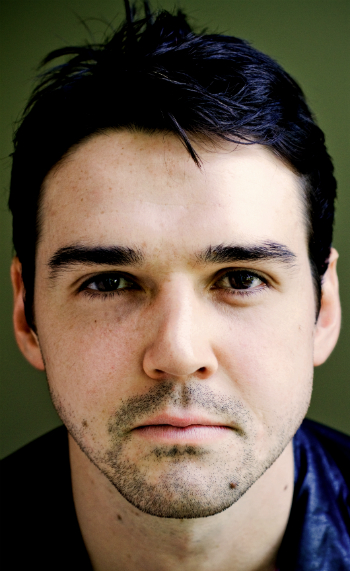
graememcraeWhat is your favourite swear word?
Seeing as it’s a kid’s show it’s probably best to keep that one to myself.

What are you wearing?
A red hoodie and some old jeans, very comfortable.

What is love?
An amazing thing to have in life. It keeps you going and is very much worth pursuing.

What was the last show you saw, and how many stars do you give it?
I saw 8 Gigabytes Of Hardcore… (again, kids show) at the Griffin. I give it a 4.5/5. Loved it.

Is your new show going to be any good?
It’s going to be great. I know it’s a cliché but it really is fun for the whole family. It has a good amount of varying levels of humour that should keep everyone entertained.


Graeme McRae is appearing in The Gruffalo, for children aged 3 and up.
Show dates: 25 Jun – 5 Jul, 2014
Show venue: Seymour Centre

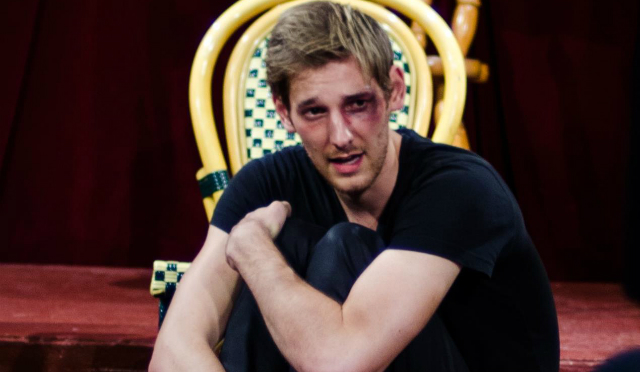
Review: Trafficked (Darling Quarter Theatre)

traffickedVenue: Darling Quarter Theatre (Darling Harbour NSW), Jun 13 – 15, 2014
Playwright: Carli Carey
Director: Carli Carey
Cast: Sorcha Harrop, Amy Fisher, Michael Smith, Jace Pickard, Isaac Reefman

Theatre review
The play begins with television news reports from a commercial station about the subject of human trafficking and modern slavery. As is often the case with commercial news, the stories are sensationalist, and the network’s watermarked logo exists almost as a reminder to take everything we see with a grain of salt. Of course, its themes are genuine, but we have learned as a society to remain sceptical about the things we are told, and we demand concrete evidence before outrageous claims can be believed.

Trafficked tells horrific tales of young Australians in captivity and enslaved. They look and sound like any young adult we know, and are even of Caucasian appearance. The play subjects them to incredible cruelty, and tells their stories with earnest fervour. The characters are intertwined and build relationships with each other, but everything they say is addressed directly to the audience. It feels like documentary, but there is absolutely no indication that their words are not entirely fiction. Their stories are unbelievable, and we struggle to be convinced by anyone.

Performances are uneven, but Michael Smith and Sorcha Harrop work hard to make their parts meaningful. They have good focus, and show excellent commitment in tricky moments of melodrama. Smith has a good presence that makes him the most memorable element of the production. Harrop succeeds in encouraging some empathy, and impresses with the stamina she displays for her arduous role.

Technical aspects are very lacking. Light and sound design are poorly judged, and execution seems to go awry from start to end. It is obvious that there is a serious lack of experience in the crew, and it is unfortunate that a more accomplished production manager had not been assigned to assist and nourish this young crew.

Every project in the arts is an opportunity to grow. Director Carli Carey and her team have not created a masterpiece on this occasion, but they have succeeded in turning talk into action. They have put money where their mouths are, and are therefore one step ahead of those who dream but do nothing.

www.traffickedproject.com

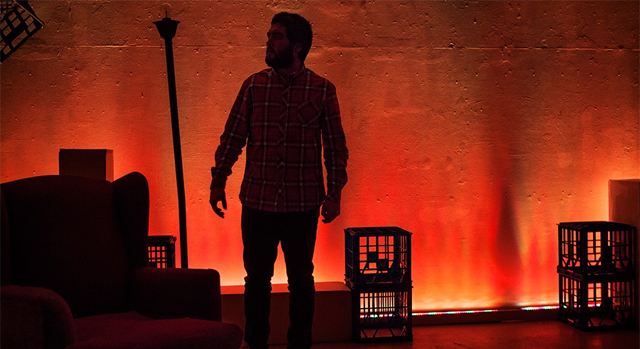
Review: The Boat People (Rock Surfers Theatre Company / The Hayloft Project)

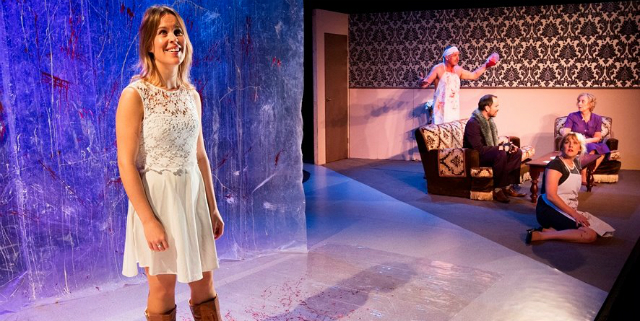
hayloftVenue: Bondi Pavilion Theatre (Bondi NSW), May 29 – Jun 21, 2014
Playwright: Benedict Hardie
Director: Benedict Hardie
Actors: Susie Youssef / William Erimya / Emily Rose Brennan / Luke Joseph Ryan
Image by Zakarij Kaczmarek

Theatre review
One of the exciting facets of theatre is the way it is able to deal with social issues. The stage provides a membrane of safety, where artists can venture into dangerous territory, and say things that are controversial, or even, fictional. In this unique space of expression, the audience is able to examine ideas with their own free will, and perhaps have opinions swayed, or maybe come to new realisations about the world.

Benedict Hardie’s The Boat People is a script that we desperately need. It tackles subjects that are prominent in news and politics, but approaches it from an artistic perspective. What results is a discussion about themes that we care passionately about, but unpacked in an unconventional way. Its story and characters present to us a refreshing way at looking at Australia’s obsession with asylum seekers and our ever-changing stance on immigration policies. It is neither journalistic reportage nor realistic documentary. It is imaginative, and in its “what ifs”, we are able to observe and judge our personal responses to some of the ideas brought up by the work. Hardie’s writing is sardonic and sophisticated. There are surprises everywhere, and its characters connect deeply with the way we look at ourselves today. Hardie’s direction however, is slightly lacking. The pace of the piece misses a certain fluidity. There are many gear changes that occur from constant shifts in comic tone, which is conceptually exciting, but experientially, a little awkward. Our emotions and attention are prevented from becoming more deeply invested, which might be intellectually interesting, but in reality, quite frustrating. We like the characters and want to feel more for them.

Susie Youssef’s performance as Sarah is extraordinarily centred and strong. Playing a character that is unable to anchor herself morally, Youssef is surprisingly authentic. She presents a truth that we relate to, one that appeals to our humanity; the part of us that lives in shades of grey, and where life forces us to move within these shades, refusing to let us hold on to black or white regardless of our desire for certainty and convenient truths. The level of conviction in Youssef’s work is impressive. The confidence she brings to a role that is characterised by its power and wealth is very persuasive indeed.

Karl is played by William Erimya, who is memorable for his immense affability. Karl is absolutely adorable, and Erimya’s performance is hilarious, but his final scene attempts to shock, only to leave us bewildered and unconvinced. Melanie is another role who goes through a confusing transition, but Emily Rose Brennan’s performance is engaging and enjoyable. Brennan’s work is precise, with an exquisite polish, and she brings an intense energy that is deceptively subtle. Luke Joseph Ryan is the live wire of the group. He is outlandish, buoyant and effervescent, giving us a lot of silliness that contrasts effectively with the gravity of the work. He does seem to be slightly detached from the ensemble who are comparatively subdued, but we do catch glimpses of great chemistry when situations are conducive.

The production is designed intelligently and efficiently. Michael Hankin’s set is simple but arresting. His construction of “windows” is a stroke of genius. Sound designer and composer Benny Davis makes us laugh with pop music made “ethnic”. Costumes by Elizabeth Gadsby helps tell the story well, and her work for Karl and Melanie are particularly attractive but Sarah’s stature requires further finesse.

The complexity of The Boat People is unapologetic and essential. Hardie’s writing resists simplification, so we are forced to grapple with the difficulty of issues at hand. Art is not always about truths, but this show hits the nail on the head. The accuracy at which it portrays contemporary Australian beliefs is staggering, and the results are not always easy to digest. Theatre must not always be a walk in the park, and on this occasion, the ride is bumpy, for good and bad.

www.rocksurfers.org | www.hayloftproject.com
Review: Love Song (Gamut Theatre Co)

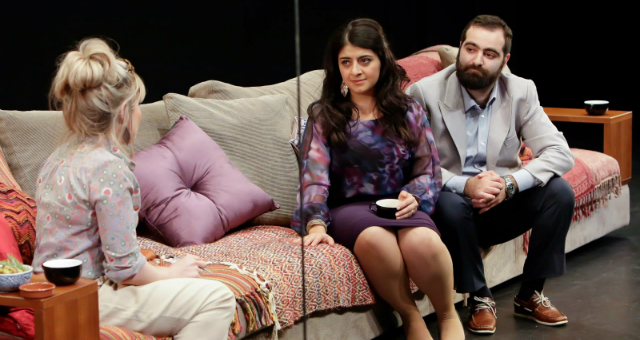
gamut1Venue: TAP Gallery (Darlinghurst NSW), Jun 11 – 22, 2014
Writer: John Kolvenbach
Director: Glen Hamilton
Cast: Melinda Hyde, Ford Sarhan, Ben Scales, Romney Stanton
Image by Farland Photography

Theatre review
John Kolvenbach’s Love Song is beautifully written. Witty and thoughtful lines, colourful characters, imaginative scenarios with humour and poignancy, and surprising plot trajectories, all make for a play that is irresistibly charming, and rich with potential for creative interpretation. Kolvenbach’s script about relationships and eccentricity is crafted with intelligence. It has a refreshing originality, but it also bears a universality that ensures a wide appeal.

Direction by Glen Hamilton is elegant but fairly subdued. There is some attention placed on lighting effects, especially during scene transitions, but Hamilton focuses almost entirely on working with his actors to form interesting and dynamic personalities. The four main characters are distinct and memorable, each with their own rhythms and quirks. Ford Sarhan plays Beane, the young protagonist, and he is completely delightful. Sarhan is charismatic, understated, and tremendously funny. His comic timing is a highlight of the production, often delivering big gleeful laughs at unsuspecting moments. Ben Scales’ work as Harry is sensitively considered yet playful. He has a thorough connection with the text, and his articulation of the writer’s ideas is clear and powerful. This is a cast with good presence and buoyant energy, and their performances have created a show that is entertaining and consistently engaging.

Love Song does talk a little about romance, but that is not the whole of its message. It is interested in the way people’s lives are nourished through relationships, and through love. The concept of love is explored at depth. We watch how it affects us comprehensively, and how we transform in its presence. Most significantly, we learn how it (love) is essential for life to flourish, no matter what form it may take, and no matter how much effort is required for it to materialise.

gamuttheatreco.wordpress.com

Review: Winter (Persophia / The Old 505 Theatre)

winter2Venue: Old 505 Theatre (Surry Hills NSW), Jun 7 – 22, 2014
Playwright: Jon Fosse
Director: Jonathan Wald
Cast: Susie Lindeman, Berynn Schwerdt

Theatre review
Extramarital affairs remain a taboo subject in the twenty-first century. Marriage is still considered sanctimonious, and of course betrayal in any relationship will never be greeted with nonchalance. Taboos are by nature difficult to discuss, and language often escapes those who transgress. When one is acting against better judgement, explanations struggle to find logic, and words fail. In the space of impulse and emotion, expression is not always best achieved through speech.

Jon Fosse’s Winter demonstrates those inadequacies in the theatre, with a script that uses words to propel action, and to evoke sentiments, but not to describe motives or to divulge feelings. The nameless characters, a woman and a man, speak in incomplete sentences, and with repetitive words that reveal little. Under Jonathan Wald’s direction, the play is surprisingly digestible. A clear sense of narrative is achieved in spite of the text’s poetic style. Assisted by Stephen Colyer’s expertise as a movement choreographer and an accomplished design team, the dynamic and inventive use of space creates an experience that is visually exciting and charged with sensuality.

Susie Lindeman’s performance is suitably quirky, creating a refreshing character with an intriguing allure. Qualities of desperation and desire are beautifully conveyed. Lindeman introduces a vulnerability that gives the story complexity, and keeps us engaged. Berynn Schwerdt’s presence is genuine and weighty. His style is minimal but effective, which adds an air of sophistication to the production. The actor seeks to build meaning into his character’s silences, with quite powerful results.

Winter makes us see and hear from an alternate perspective. It experiments with the way meanings are formed from all that occurs on stage. It is concerned with convention, and the lack of it, in relation to how our senses and minds function. This is not an emotional work, but it does not leave you cold. It is more about the nature of art than it is about relationships and illicit affairs, and fortunately, art can sometimes be more seductive than the prospect of a secret rendezvous in a fancy hotel room.

www.venue505.com/theatre

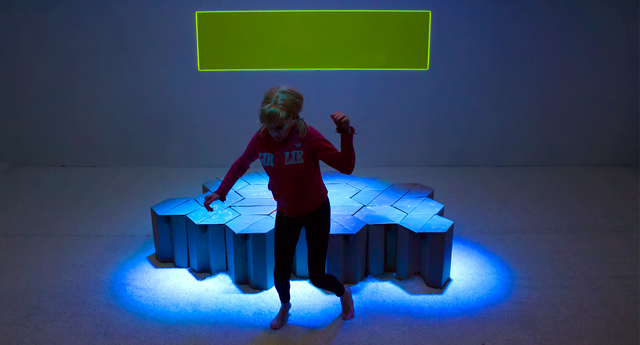
In Rehearsal: Every Second

Rehearsal images above from Every Second, part of Darlinghurst Theatre’s 2014 season.
At Eternity Playhouse, from Jun 27 – Jul 27, 2014.
More info at www.darlinghursttheatre.com
Photography by Louis Dillon-Savage

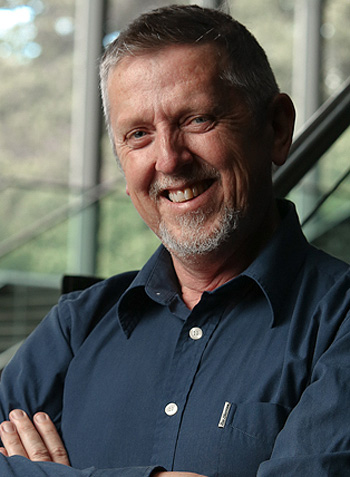
5 Questions with Stephen Sewell

stephensewellWhat is your favourite swear word?
“Abbott”, as in “holy Abbott!!” or “what the Abbott??!!” somehow it just seems to suit the times.

What are you wearing?
Nothing. What are you wearing?

What is love?
A good reason to stay on the diet.

What was the last show you saw, and how many stars do you give it?
Hamlet – 11

Is your new show going to be any good?
I believe we’ll all be sent to jail, it’s so good.


Stephen Sewell is playwright for Kandahar Gate, presented as part of NIDA Student Productions 2014.
Show dates: 17 – 24 Jun, 2014
Show venue: NIDA Parade Theatres

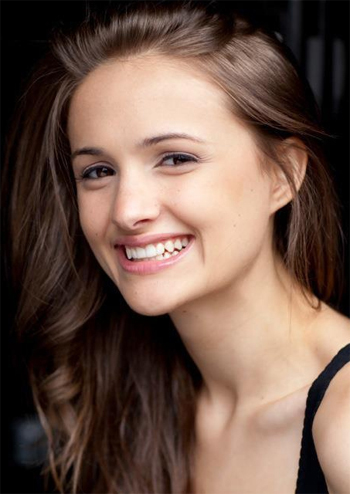
5 Questions with Hilary Cole

hilarycoleWhat is your favourite swear word?
Fuck because it can go before or after any word and always makes sense.

What are you wearing?
Staple cold weather gear. X-Tall super thick stockings, socks, brown boots, a long sleeved dress and my favourite leather jacket (It’s made from off cuts of the meat industry, but still I’m a terrible vegetarian). I also just noticed I still have my aviators on because you can never be too careful, the UV lights in this artificially lit shopping centre are pretty dangerous…

What is love?
The deepest kind of obsession.

What was the last show you saw, and how many stars do you give it?
The last show I saw was Violet on Broadway and it was beyond brilliant. I’m gonna give it 4.5 stars, just a tiny notch down from Lady Day At Emerson’s Bar and Grill which I’d give a 5. Perfection.

Is your new show going to be any good?
Hah! What a fantastic question. Yes it is. (Gotta be confident in this industry right?) It’s completely original and I think it presents these songs and stories in a way people probably haven’t seen before. It’s my first go at cabaret so I’m trying to be really truthful, unashamed and hopefully entertaining. Because it’s about me I don’t have the luxury that I usually do of hiding behind a character, which is scary as heck but it means that the audience will get a fair chunk of my soul each night.

Hilary Cole is starring in O.C. Diva, part of Hayes Theatre’s Cabaret Season 2014.
Show dates: 15, 22, 29 Jun 2014
Show venue: Hayes Theatre Co

5 Questions with Olivia Satchell

oliviasatchellWhat is your favourite swear word?
Fuck.

What are you wearing?
A black-and-white polkadot dress and a tartan cape.

What is love?
I’ve been struggling with this one for a while. I have to try and describe it in my show and I think the closest I can manage is this:

“If you don’t care about someone you don’t know where their scars are. You can’t describe the beauty of their smile.”

Failing that, the best definition I’ve read comes from Rochester in Charlotte Bronte’s Jane Eyre:

“It is a long way to Ireland, Janet, and I am sorry to send my little friend on such weary travels: but if I can’t do better, how is it to be helped? Are you anything akin to me, do you think, Jane?”

I could risk no sort of answer by this time: my heart was still.

“Because, he said, “I sometimes have a queer feeling with regard to you – especially when you are near me, as now: it is as if I had a string somewhere under my left ribs, tightly and inextricably knotted to a similar string situated in the corresponding quarter of your little frame. And if that boisterous channel, and two hundred miles or so of land some broad between us, I am afraid that cord of communion will be snapt; and then I’ve a nervous notion I should take to bleeding inwardly. As for you, you’d forget me.”

What was the last show you saw, and how many stars do you give it?
8 Gigabytes Of Hardcore Pornography at Griffin Theatre Company. Four stars.

Is your new show going to be any good?
Yes, I think it is. It’s about our need to understand our family and our need to make our lives meaningful, which I think nearly every person can relate to because it is, essentially, what makes us human.

Olivia Satchell new work is My Name is Truda Vitz, by Somersault Theatre Company.
Show dates: 25 Jun – 6 Jul, 2014
Show venue: TAP Gallery

Review: Why Torture Is Wrong, And The People Who Love Them (New Theatre)

newtheatreVenue: New Theatre (Newtown NSW), Jun 3 – 28, 2014
Playwright: Christopher Durang
Director: Melita Rowston
Actors: Peter Astridge, Romy Bartz, Ryan Gibson, Terry Karabelas, Alice Livingstone, Ainslie McGlynn, Annie Schofield
Photograph © Bob Seary

Theatre review
With a title as provocative and powerful as this, the play’s central concept hangs over everything that unfolds. We evaluate every situation, trying to decide what our personal definitions of “torture” might be, in relation to the statements that the writer makes. It is not a passive experience, sitting in the darkness of this theatre. The script seeks to involve and implicate us in its world. We look at its characters and wonder how we fit in, or indeed how the stories fit into our lives.

The production however, struggles to connect with us. The players are in their own world, always at a distance, and while there is a consistent semblance of poignancy and performances are all polished and precise, there is an uncomfortable inaccessibility that makes engagement difficult. Melita Rowston’s direction is wonderfully heightened and outlandish, but its strict structure seems to restrict her actors from playing with audience reactions and from using our presence as extensively as a comedy of this nature should. Nevertheless, Rowston’s work is suitably subversive in vision, and the courage at which she tackles the play’s difficult subjects is noteworthy.

Set design by Sasha Perri and Clarisse Ambroselli is imaginative and efficient. The action takes place in almost ten different places, and great lengths are taken to make every setting convincing and evocative. The play goes through many scene changes, and each transition is managed with elegance. From a production values perspective, the show scores very well.

Standouts in the cast include Peter Astridge, who plays Leonard, an extreme right winger of the nutty and violent variety. Astridge’s confident absurdity is refreshing and seductive. The caricatured roles are not written with much range or variance, but Astridge manages to find nuances to create a sense of dimension and unpredictability. Romy Bartz as Hildegarde plays up to the wildness in Christopher Durang’s comedy and delivers several big laughs. There are no weak performances in the show, and all roles are cast well. The script seems to require its players to portray the duality of character and actor, and although some effort is put into creating a sense of “metatheatricality”, a more conventional approach is usually chosen. Immersed within their roles, they miss opportunities for a more post-modern style of commentary on the situations being depicted.

A play that examines our moral compasses with torture and terror, should never leave us cool, or cosy. Its elements of controversy and iconoclasm should take precedence, and their disruptive nature should spawn discomfort, or disquiet. The play shows itself thinking things through; it is concerned with the use of intelligence, and it wishes to be challenging. The edge of the envelope can be pushed further.

www.newtheatre.org.au